Gaza’s Eid al-Adha marked by economic collapse and displacement as traditional rituals vanish
The Gaza Ministry of Health reports nearly 73,000 deaths as families navigate extreme poverty and the erasure of holiday traditions.
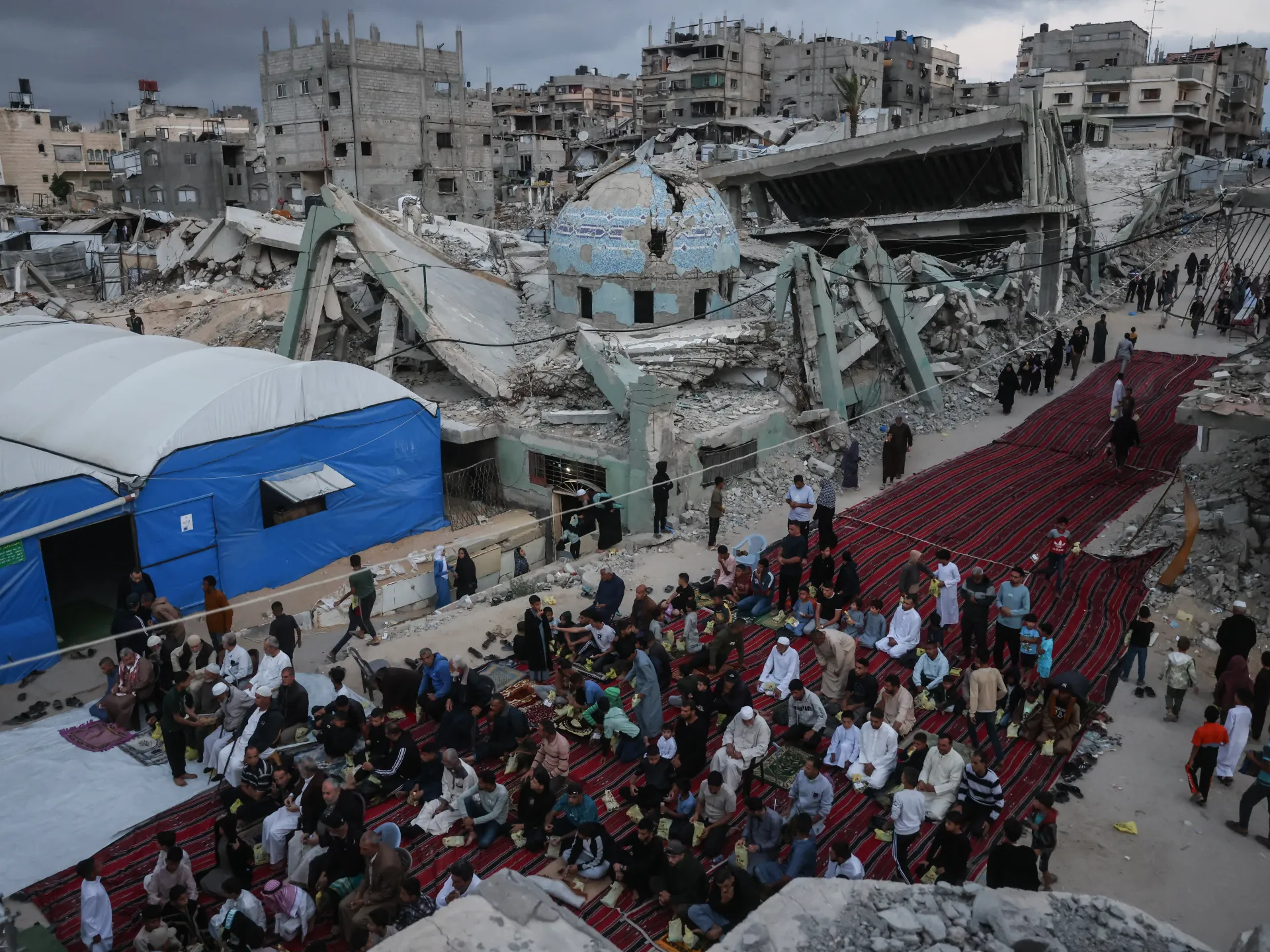
Palestinians in Gaza are observing Eid al-Adha under conditions of severe displacement and economic collapse, with traditional celebrations largely erased. The Gaza Ministry of Health reports that nearly 73,000 people have been killed in Israel’s military operations in Gaza, a toll that has fundamentally altered the social fabric of the enclave. Families in refugee camps and tents are mourning relatives killed in Israeli strikes, with some establishing mourning tents even during a reported truce.
Traditional sacrificial rituals have halted due to the near-absence of live livestock and skyrocketing prices. The price of a single sheep in local markets has jumped to between $4,500 and $6,000, a stark contrast to the approximately $350 cost before the war. Karam Khaled, coordinator of sacrificial animal projects at the Ru’ya charitable foundation, stated that carrying out sacrifices in the traditional way has become financially impossible for both institutions and ordinary residents.
In response to the logistical and financial constraints, charitable organisations are distributing frozen meat instead of live animals. The Ru’ya foundation has allocated nearly 10 tonnes of frozen meat for Eid distribution. Mohammed al-Najjar, a meat trader, noted that approximately 80 percent of the frozen meat in Gaza’s markets comes from Israel, sourced primarily from Argentina or Uruguay, while the remaining 20 percent enters from Egypt, often of Brazilian origin.
The economic strain extends beyond food, with shipping costs rising eightfold. Amjad Akram, a merchant in the Remal neighbourhood, reported that shipping a single box of clothes now costs about 2,000 shekels, compared to 250 shekels pre-war. This surge has drastically reduced purchasing power and retail activity, with many families unable to afford basic necessities, let alone holiday preparations. Customers are reportedly asking for prices only to leave in shock without buying.
Personal accounts from residents underscore the depth of the crisis. Walaa Baroud, whose family lost 13 of 22 members in Israeli strikes, described being trapped between eras as he mourns his brother during the holiday. Similarly, Hajja Shama al-Zorbatli, an elderly widow living in a tent without electricity or connectivity, stated that “Eid does not enter tents.” Mohammed Obeid, an amputee who lost his home and wife, noted that the war has crushed his dignity, reversing his role from provider to recipient of charity.