Gaza dental care crisis: Supply restrictions and inflation force treatment delays
With 84 per cent of healthcare facilities damaged or destroyed, clinics in Gaza report that patients are delaying care until infections worsen, as treatment costs now compete directly with food security.
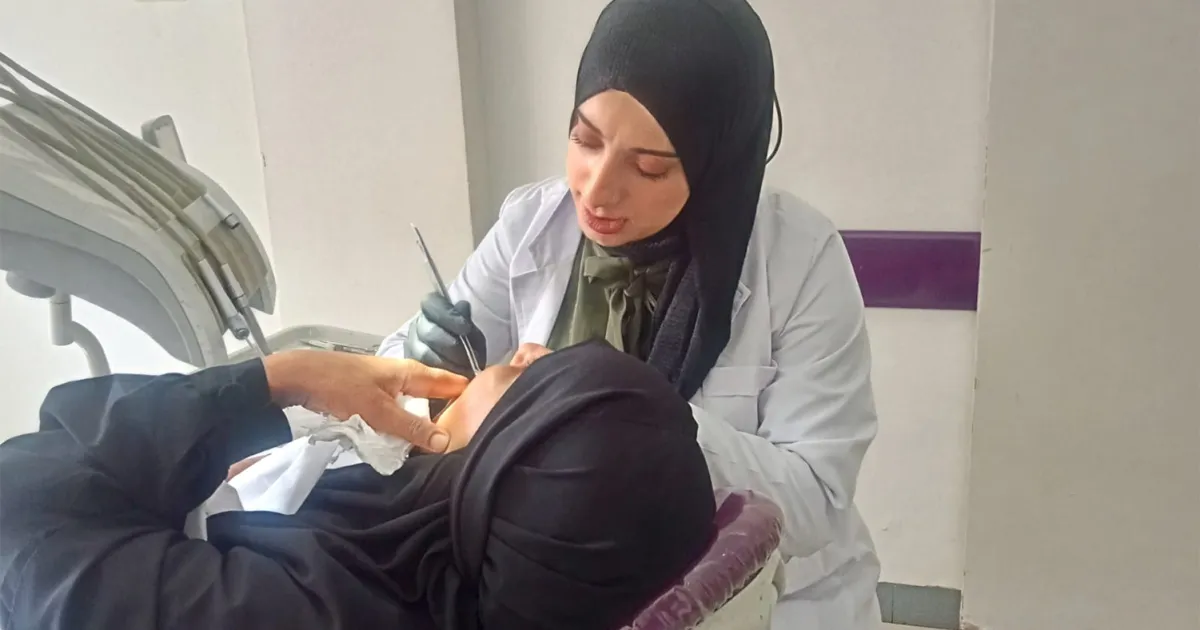
Residents in Gaza are increasingly forgoing essential dental treatment as the cost of care has surged due to Israeli import restrictions and broader economic inflation. Dentists in the enclave report that patients such as Murad Haji, a 50-year-old resident of the Nuseirat refugee camp, are delaying procedures until conditions become critical, as the price of materials and surgeries has increased sharply.
The financial burden on families has become acute, with the cost of basic treatments now rivaling the price of food. Haji, who faced a quote of 400 shekels ($142) for treatment, initially chose to delay care because the amount could have fed his children for four or five days. When the pain became unbearable, he returned to the clinic, but the delay had allowed a simple toothache to develop into a complex infection requiring extensive surgery, painkillers, and antibiotics.
Dentist Liza Hassouna, who treated Haji, noted that many patients arrive only after infections have significantly worsened because they could not afford earlier intervention. What begins as a straightforward procedure often becomes a more complicated and expensive operation by the time patients seek help. Hassouna stated that under these financial constraints, patients often request cheaper extraction options, but even these have become unaffordable for most.
A primary driver of these price hikes is the classification of essential dental equipment as “non-essential” or “cosmetic” by Israeli authorities, which has led to severe supply shortages. This tight supply environment has allowed local suppliers to control prices, with some items costing up to 40 times their pre-war value. For instance, a box of anaesthetic has risen from approximately 150 shekels ($53) to 500 shekels ($178), while Zeta Plus dental impression material has jumped from 150 shekels to between 5,000 and 6,000 shekels.
Clinic manager Dr Nidal al-Sindi highlighted the operational strain on providers, citing rising costs for rentals and single-use instruments. He expressed distress at watching patients leave in pain due to an inability to pay, while his own clinic struggles with high overheads. Pre-war costs for a simple extraction ranged from 30 to 150 shekels, and surgical extractions from 100 to 300 shekels, figures that are now largely inaccessible to the local population.
The dental care crisis mirrors a broader collapse in Gaza’s healthcare infrastructure. The World Health Organization reports that approximately 84 per cent of healthcare facilities have been damaged or destroyed since October 2023. With 1,800 facilities affected, many medical providers have been forced to operate from temporary tents or spaces with minimal care, lacking proper sterilisation and equipment.
In this landscape, Palestinians face difficult calculations between medical needs and basic survival. Clinics continue to receive patients enduring pain and delay, operating in a system where essential procedures are often disregarded due to cost, leaving long-term health consequences for those who cannot afford timely intervention.