Gaza children face physical toll from daily struggle for water and food
In the Maghazi refugee camp, young residents are developing muscle strain, hernias, and scoliosis as they assume adult responsibilities to secure basic necessities amidst infrastructure collapse.
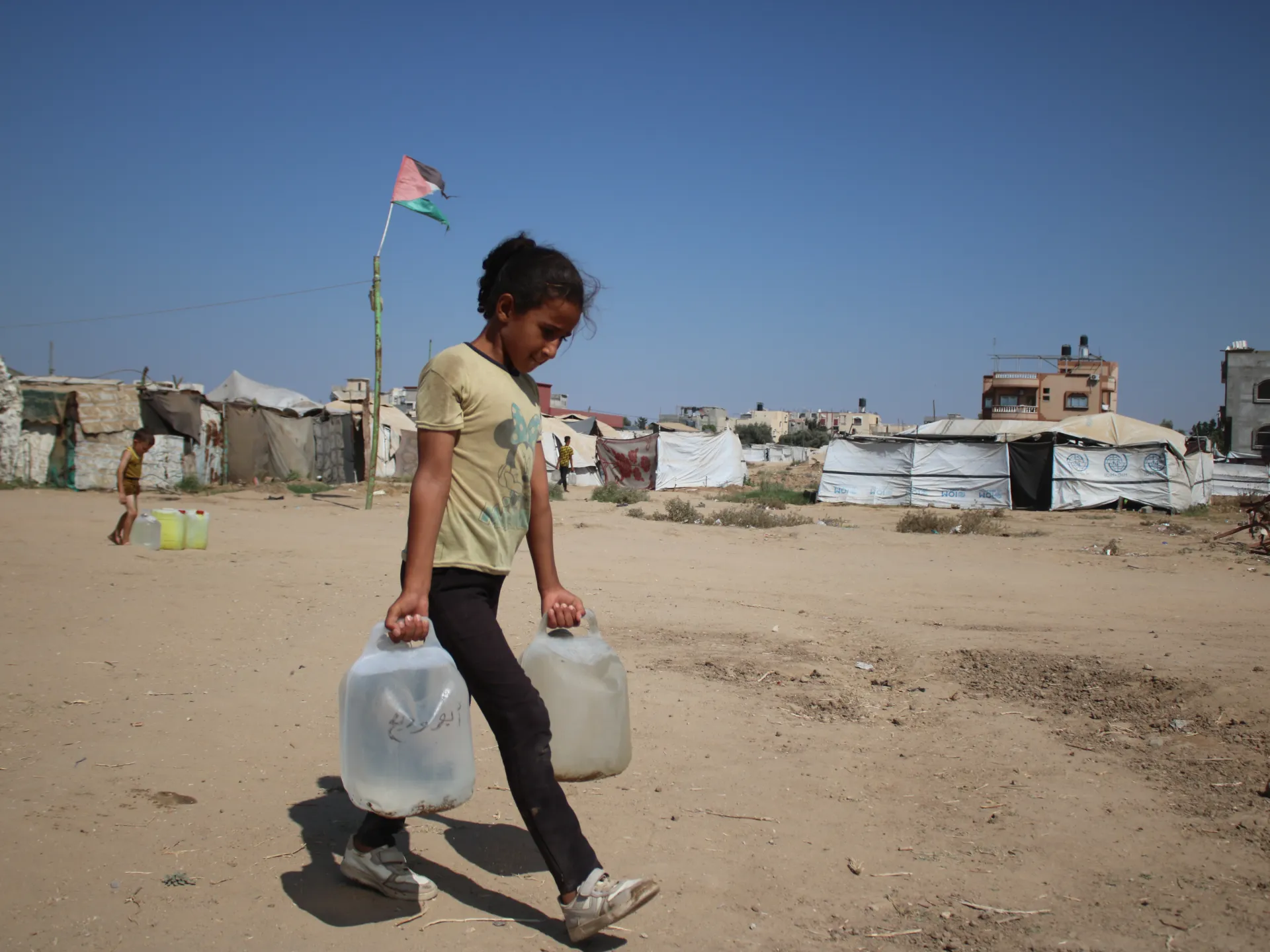
Children in the Maghazi refugee camp in central Gaza are suffering significant physical and psychological consequences from the daily burden of securing water and food. Young residents, including 10-year-old Maysara Zaqout and 12-year-old Yamen Saleh, spend hours waiting for water trucks and carrying heavy containers. This routine has resulted in muscle strain, hernias, and scoliosis, conditions that medical staff report were rare before the war began in October 2023.
Dr Sumaya Salah, a medical clinic worker in central Gaza, notes that children are now developing these issues due to daily strain. She cited the case of nine-year-old Raghad, who was diagnosed with scoliosis from carrying water over long distances in northern Gaza. Salah stated that such cases are now common, whereas they were previously uncommon among the child population.
The infrastructure supporting these families has largely failed. UNICEF estimates that 82 percent of families in Gaza are water insecure, with up to 70 percent unable to access six litres of water per person per day. The United Nations body adds that nearly 90 percent of Gaza’s water and sanitation infrastructure has been destroyed. These figures highlight a critical gap between minimum emergency standards and current access levels.
Local governance faces severe logistical constraints. Mohammed Mosleh, the mayor of the Maghazi camp, stated that the municipality operates only one water tanker to serve more than 5,000 families. He attributed the shortage to a lack of spare parts and oil for generators and water pumps caused by the Israeli blockade. Mosleh also noted that the expansion of areas under Israeli control, which he said contradicts last year’s ceasefire stipulations, restricts municipal access to water wells.
International aid organisations have also scaled back operations. Groups including World Kitchen and UNICEF have reduced services in Gaza this year due to Israeli access restrictions and funding shortages. Meanwhile, Israel has refused to allow reconstruction to begin despite an October ceasefire, a decision that continues to impede recovery efforts for the displaced majority of the population.
The cumulative effect is a shift in the social fabric of the camp. Families report that children have adopted adult-like responsibilities, disrupting their education and play. While the camp committee has established educational tents and recreational activities to mitigate stress, the physical toll of survival remains a defining feature of daily life for the region’s youngest residents.