FT questions cultural lag amid global turbulence
A Financial Times commentary titled 'The exciting boring decade' asks why real-world chaos has not yielded more compelling art, as US equities rise on the back of the Trump-Xi summit.
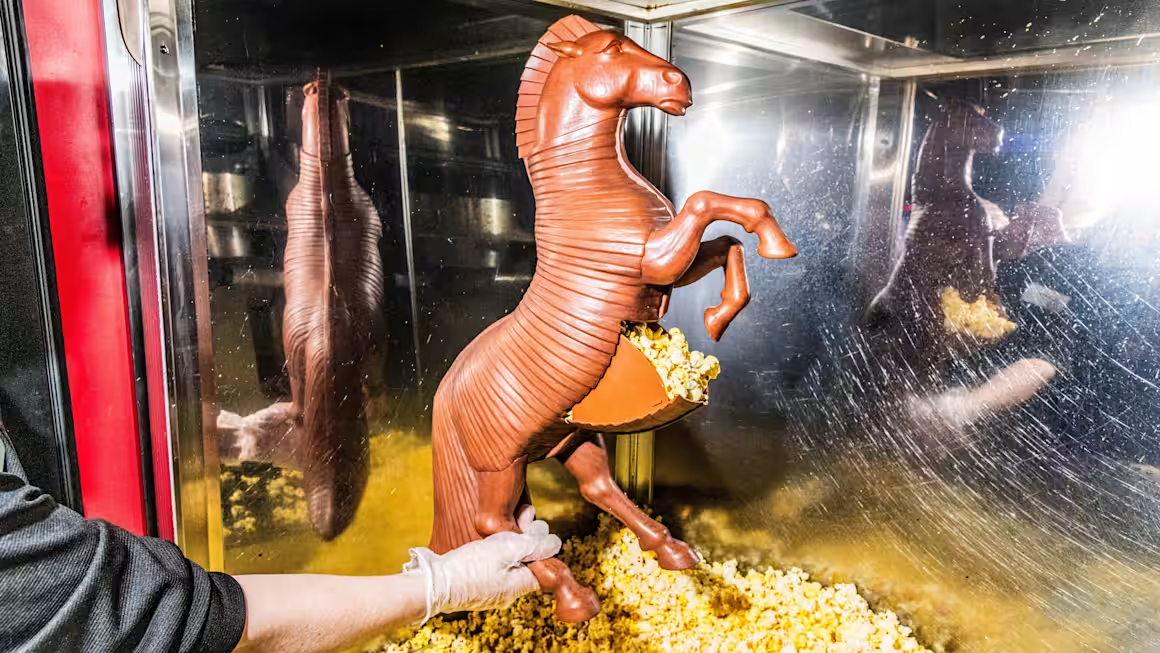
The Financial Times has published a commentary titled 'The exciting boring decade', which poses a central question regarding the cultural output of the current era. The article asks why the significant chaos in the real world has not inspired more interesting art.
This cultural critique emerges against a backdrop of heightened geopolitical activity, specifically the summit between US President Donald Trump and Chinese President Xi Jinping in Beijing. The event, which focuses on trade, artificial intelligence, and tensions regarding Iran, has coincided with positive movements in US stock markets.
As the summit began on Thursday, US stock markets rose. The Dow Jones Industrial Average gained 0.8 per cent, the S&P 500 rose 0.3 per cent, and the Nasdaq Composite climbed 0.2 per cent.
The summit involves major technology executives, including Elon Musk, Tim Cook, and Jensen Huang. Nvidia shares surged more than 2 per cent following US approval, contributing to the broader market gains observed during the opening of the two-day meeting.
The Financial Times article is categorised under the topic of markets, linking the financial and geopolitical landscape to broader cultural observations. The specific arguments, evidence, or conclusions presented in the article are not provided in the source text, only the headline and the central rhetorical question.
The connection between the art critique and the specific geopolitical events is implied by the retrieval context but not explicitly stated in the article summary provided. The exact date of the article's publication is not specified, though it appears contemporaneous with the Trump-Xi summit events.
The source material does not provide the specific arguments or evidence used in the Financial Times article, only its headline and central rhetorical question. The date of the article's publication is not explicitly provided, though it appears contemporaneous with the summit events.