Franco-German defence unity fractures as Airbus backs two-fighter split for €100bn jet project
Germany’s refusal to fund nuclear-capable aircraft and a leadership battle between Airbus and Dassault Aviation have prompted German Chancellor Friedrich Merz to warn that the joint project may not survive without structural change.
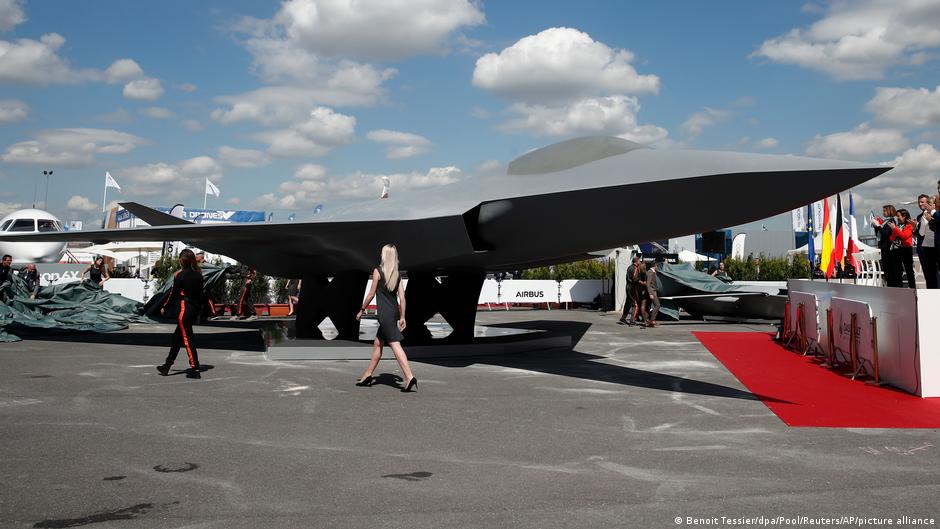
Disputes over industrial leadership and military priorities are threatening to fracture Europe’s €100 billion Future Combat Air System (FCAS) fighter jet project, with tensions now affecting the Main Ground Combat System (MGCS) tank programme. Airbus, representing German and Spanish interests, has signalled openness to restructuring the FCAS program, including a "two-fighter solution" where France and Germany develop separate combat aircraft while cooperating on drones, sensors, and digital systems.
Airbus Chief Executive Guillaume Faury stated that the deadlock regarding a single fighter jet should not jeopardise the wider high-tech European capability, supporting a two-fighter option if governments request it. "The deadlock of a single pillar should not jeopardize the entire future of this high-tech European capability," Faury said, noting that work remains ongoing with French, German, and Spanish governments to determine the project's way forward.
The core conflict stems from France's requirement for nuclear-capable carrier-based operations, which Germany does not share. German Chancellor Friedrich Merz publicly acknowledged the strategic divide, noting that France requires a nuclear-capable next-generation aircraft, whereas Germany does not currently require this capability for the Bundeswehr, having already decided to purchase US-made F-35 jets for NATO nuclear-sharing missions. Merz warned that if the sides could not resolve these differences, "then we can't maintain the project."
The political disagreement is rooted in an industrial power struggle between Dassault Aviation, which seeks clear leadership over the new combat aircraft, and Airbus Defence and Space, which desires a larger role. Several mediation efforts have failed to produce a breakthrough. Consequently, defense expert Christian Mölling highlighted that the "combat cloud" – the digital system linking aircraft, drones, and sensors – is increasingly viewed as the most critical element for European cooperation, given Europe's heavy dependence on the United States in this field.
The turmoil surrounding FCAS is now spilling into the MGCS project, launched in 2017 as a political bargain where France led the fighter jet and Germany led the tank. MGCS, intended to replace Germany's Leopard 2 and France's Leclerc tanks, has faced delays and is not expected to enter service before around 2040. If FCAS is split or weakened, it could upset the balance behind MGCS, potentially causing governments to become more cautious about launching multinational weapons projects on this scale.