France honours historian and Resistance fighter Marc Bloch in Panthéon ceremony
The inductee’s dual legacy as a pioneering academic and a member of the French Resistance is recognised in a state ceremony held on Tuesday, 23 June 2026.
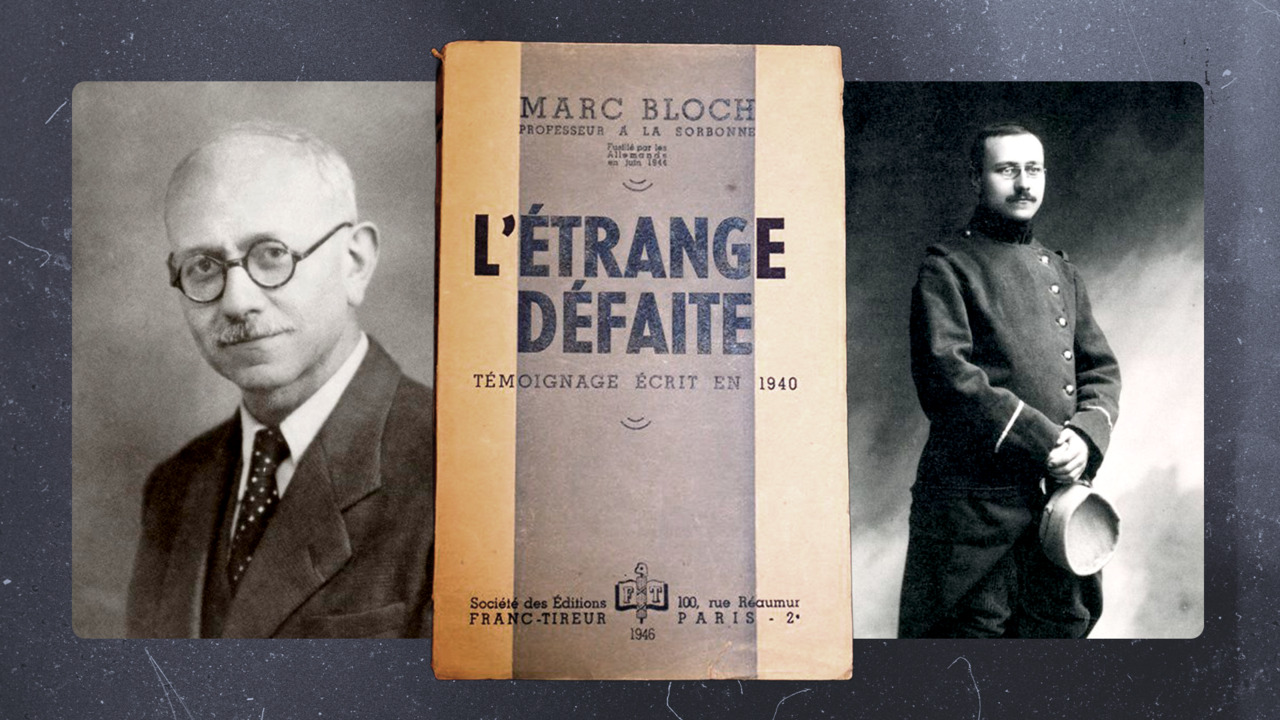
France has formally inducted historian and World War II Resistance fighter Marc Bloch into the Panthéon, eighty-two years after his execution by Nazi forces. The ceremony, held on Tuesday, 23 June 2026, places Bloch among the nation’s most distinguished citizens, including Voltaire and Jean-Jacques Rousseau, recognising his service in both world wars and his influential academic contributions.
Bloch, a professor of medieval history, was executed on 16 June 1944 at Saint-Didier-de-Formans alongside 29 other Resistance fighters. His induction honours his role in the French Resistance under the alias "Narbonne" and his scholarly works, such as the posthumously published essay "The Strange Defeat," which analysed the causes of France’s rapid military collapse in 1940.
Born in Lyon in 1886 to a family of Alsatian Jews, Bloch developed a profound sense of duty to France, viewing it as the country that granted his family citizenship after the annexation of Alsace-Lorraine. He served as a sergeant in the 272nd infantry regiment during World War I, earning the Croix de Guerre medal and multiple citations for bravery. He later became a full professor at the Sorbonne and co-founded the influential historical review "Annales d’histoire économique et sociale" in 1929.
When World War II broke out, Bloch, then a father of six, enlisted again, jokingly referring to himself as "the oldest captain in France." Following the Fall of France, he fled to the United Kingdom but returned to French soil to avoid capture. Expelled from his position under the Vichy regime’s anti-Semitic statutes, he joined the "Liberté" resistance movement and the General Studies Committee, tasked with planning reforms for a liberated France.
Bloch was arrested by the Gestapo in Lyon on 8 March 1944 while living under the alias "Professor Blanchard." He was held and tortured at Montluc Prison for over three months. Despite the brutality, he refused to reveal sensitive information and even taught history lessons to fellow prisoners. His remains were not identified until 8 November 1944.
Experts cited in the report, including historian Stéphane Nivet and French Army Chief of Staff Pierre Schill, emphasised Bloch’s enduring relevance. Schill described Bloch’s writings as a source of inspiration for clarity in military strategy, while Nivet noted that the ceremony aims to heal contemporary wounds by honouring a figure who embodied a unity of reason and action.
The Panthéon interment serves as a formal acknowledgment of Bloch’s impact on French academia and his moral stance during the occupation. His induction underscores the state’s recognition of his dual legacy as a pioneering historian and a brave resister who paid the ultimate price for his convictions.