Former South Korean President Yoon Sentenced to 30 Years for Drone Operation
The former leader faces a 30-year term for ordering military drones into North Korean airspace, a move prosecutors allege was designed to fabricate a pretext for his 2024 declaration of martial law.
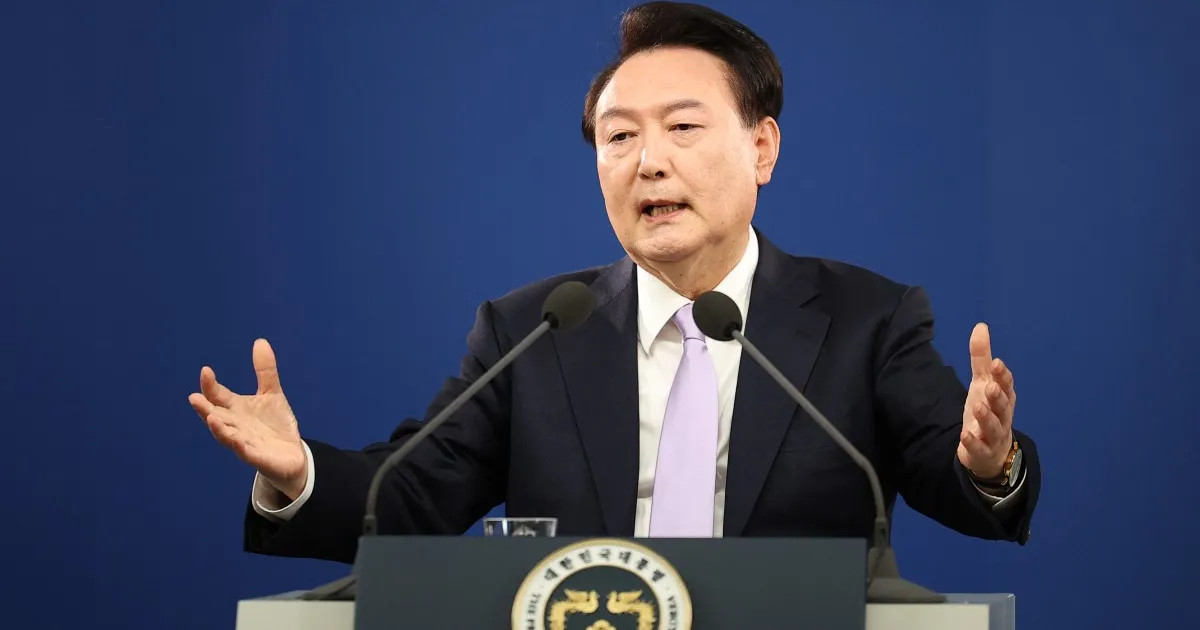
The Seoul Central District Court has sentenced former President Yoon Suk Yeol to 30 years in prison for ordering military drones into North Korean airspace. A court spokesperson confirmed the ruling to the AFP news agency on Friday, noting that Yoon was given the term for charges related to the drone operation, though specific legal sections were not detailed in the immediate announcement.
Prosecutors argued that the operation, which took place in October 2024, was intended to "fabricate wartime conditions" and create a justification for Yoon’s subsequent declaration of martial law. Special prosecutors had sought the 30-year term, asserting that the flights undermined state security. Pyongyang reported that the drones dropped propaganda leaflets, triggering a significant spike in military tensions between the two Koreas.
Yoon, who is already serving a life sentence for insurrection linked to the martial law attempt, denies ordering the drone flights. His legal team maintains that he neither ordered nor approved the operation, arguing it was unrelated to the political crisis and was instead a response to months of North Korean balloon launches stuffed with rubbish. Yoon retains the right to appeal the lower court’s decision.
The sentencing adds to a series of legal judgments against the ousted conservative leader, who was removed from office last year after the Constitutional Court upheld his impeachment. This triggered a snap election won by liberal President Lee Jae Myung. In February, a South Korean court sentenced Yoon to life in prison for leading an insurrection connected to the martial law order, which plunged Asia’s fourth-largest economy into its deepest political turmoil in decades.
Drone flights remain a persistent flashpoint in tensions between the two Koreas, which remain technically at war. Earlier this year, President Lee expressed regret after an investigation found government officials had sent drones into North Korea in January. While North Korean leader Kim Jong Un’s sister described Lee’s statement as “wise behaviour,” hopes for rapprochement have faded after North Korea designated South Korea as its “most hostile” enemy.