Former MEP Honeyball sees policy reset in Burnham premiership
Mary Honeyball argues Andy Burnham’s arrival at Downing Street offers a chance to restore public confidence and rebalance central-local relations after years of institutional fatigue.
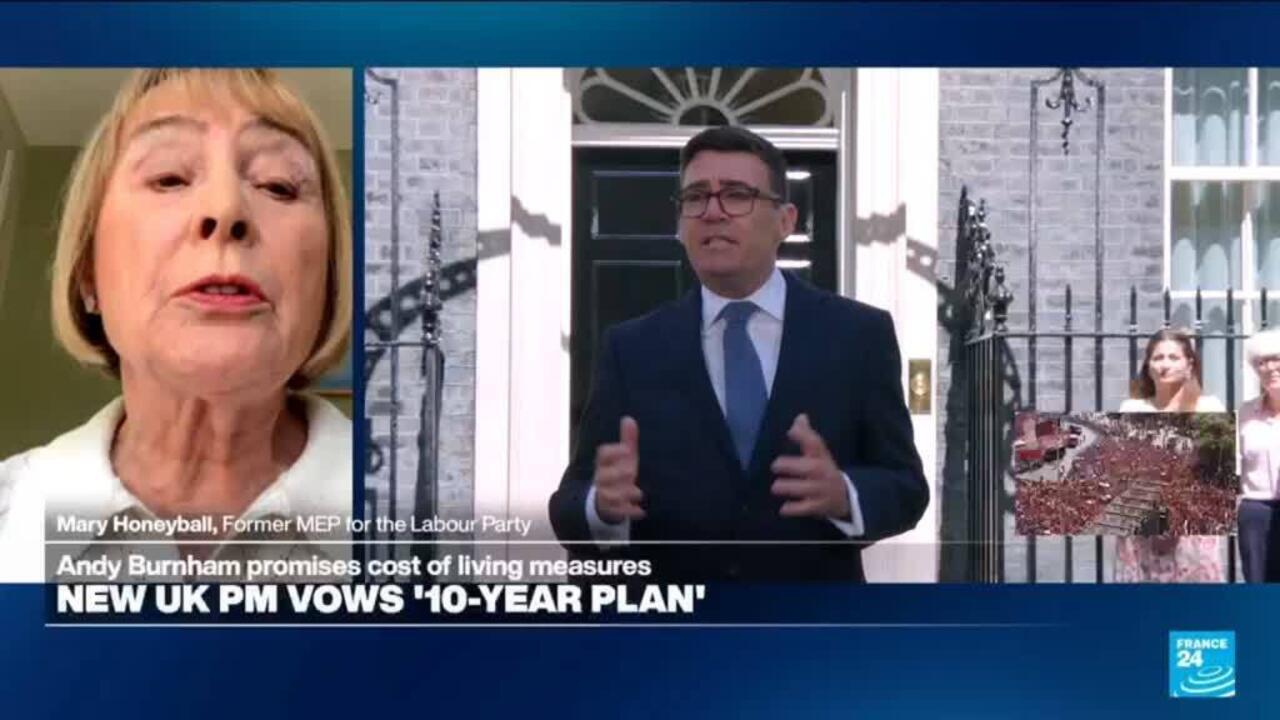
Former Labour Member of the European Parliament Mary Honeyball has offered a cautiously optimistic assessment of Andy Burnham’s arrival at 10 Downing Street as the new UK Prime Minister. In a report issued by France 24 International on 20 July 2026, Honeyball argued that the significance of the new premiership lies in its potential to restore public confidence and rebalance the relationship between central and local government.
Honeyball, who represented London in the European Parliament from 2000 to 2019, framed the current political moment not as a simple reset following years of institutional fatigue, but as an opportunity to inject optimism into the United Kingdom. Her assessment suggests a focus on governance structures and national narrative rather than immediate political performance metrics.
The former MEP highlighted the need to address the political and economic dislocation associated with Brexit. She posited that Burnham’s administration could provide a more hopeful national narrative, moving beyond the disruptions that have characterised recent UK political history. This perspective positions the new leadership as a stabilising force in a period of ongoing structural adjustment.
While the report presents Burnham’s status as Prime Minister as a factual development within the 2026 timeline, the context remains rooted in the long-term consequences of the UK’s departure from the European Union. Honeyball’s comments reflect a broader concern among former political figures regarding the need for coherent policy direction and restored trust in public institutions.
The commentary underscores a shift in focus from short-term political manoeuvring to long-term institutional repair. By emphasising the rebalancing of central and local government relations, Honeyball’s assessment points to a potential recalibration of the UK’s administrative framework under the new leadership.