Former BOJ Governor Shirakawa argues rates should have risen sooner
The former central bank chief told NHK that monetary policy has lagged behind domestic inflation and economic conditions, while current leadership acknowledges the need for discussion on rate adjustments.
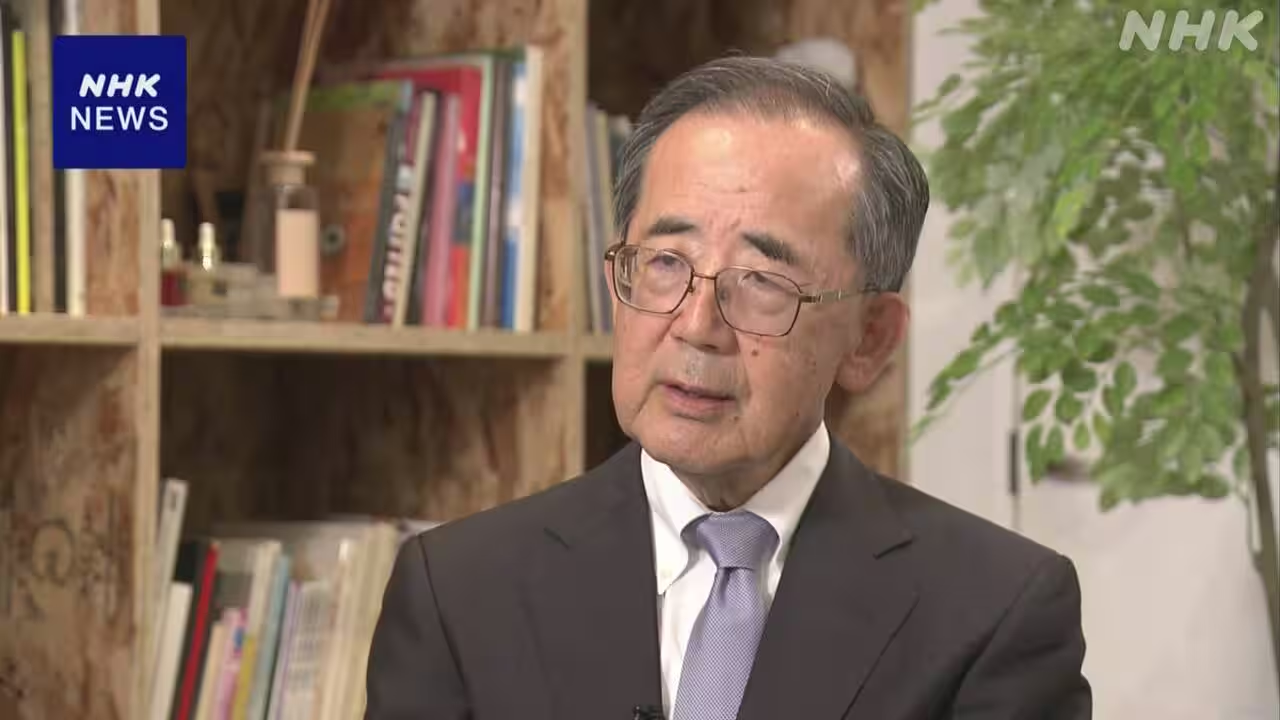
Former Bank of Japan Governor Masaaki Shirakawa has called for a retrospective review of monetary policy, stating in an NHK interview that the central bank should have increased interest rates at an earlier stage. Speaking on 9 June 2026, Shirakawa argued that the current policy rate is not commensurate with the prevailing domestic economic situation or inflation levels.
Shirakawa, who served as governor before the current administration, provided a historical perspective on the central bank’s approach to monetary tightening. He explicitly stated that the existing interest rate levels are misaligned with the realities of the Japanese economy and price stability targets, suggesting that the window for earlier action has passed.
The commentary comes as the Bank of Japan, currently led by Governor Ueda, faces ongoing scrutiny regarding its monetary stance. Governor Ueda has previously indicated that discussions on raising interest rates are necessary, acknowledging the evolving economic landscape. Shirakawa’s remarks highlight a continuity in the debate over the timing of policy normalization, even as the specific timeline for when he believes the hikes should have occurred remains undefined in his public statements.
This policy debate unfolds against a backdrop of broader economic and geopolitical complexities. Recent reports have highlighted significant shifts in financial markets driven by artificial intelligence, alongside persistent geopolitical tensions in the Middle East. These external factors have added layers of complexity to the domestic economic environment, influencing how monetary policy is perceived and implemented.
While Shirakawa’s assessment reflects a former official’s view rather than a definitive statement on current policy failure, it underscores the ongoing tension between maintaining low rates to support growth and raising them to combat inflation. The Bank of Japan continues to navigate these challenges, with current leadership emphasizing the need for careful deliberation on future rate adjustments.