Fitzgerald Enshrined in Hall of Fame Amidst Personal Loss
The Pro Football Hall of Fame ceremony on August 8, 2026, honoured Larry Fitzgerald’s legacy as the league’s second-all-time leading receiver, following a collegiate career that redefined the wide receiver position at the University of Pittsburgh.
Larry Fitzgerald was inducted into the Pro Football Hall of Fame on August 8, 2026, capping a 17-year National Football League career that established him as the sport’s second-all-time leading receiver and an 11-time Pro Bowler. The ceremony, broadcast on ESPN, honoured a career characterised by institutional discipline and athletic longevity, set against a backdrop of significant personal loss for the inductee.
Fitzgerald’s father, Larry Sr., died in June 2026, two months prior to the enshrinement ceremony. His mother, Carol, had passed away in April 2003 during Fitzgerald’s sophomore season at the University of Pittsburgh. The induction highlights a career trajectory that began with academic hurdles, requiring a year at Valley Forge Military Academy before Fitzgerald enrolled at Pitt in 2002.
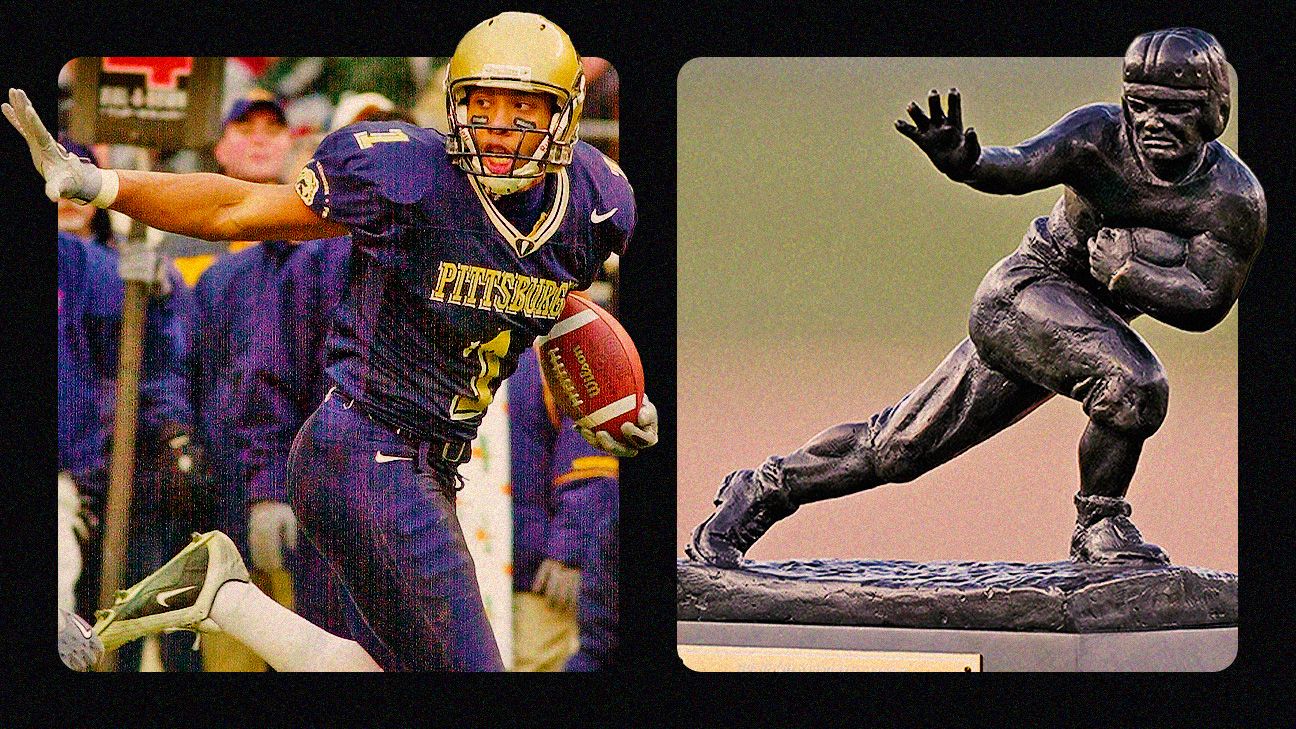
At Pitt, Fitzgerald redefined the wide receiver position, setting NCAA records including the most consecutive games with a touchdown, a streak of 18 games that concluded in the 2003 Orange Bowl against Miami. He finished his collegiate tenure with 161 catches for 2,677 yards and 34 touchdowns. His performance earned him second place in the 2003 Heisman Trophy voting behind Oklahoma quarterback Jason White.
Selected third overall by the Arizona Cardinals in the 2004 NFL Draft, Fitzgerald’s professional success was underpinned by a rigorous work ethic and strategic mindset. Former Pitt coaches and teammates noted his ability to analyse defensive schemes and his relentless preparation, traits that allowed him to maintain elite performance levels throughout his two-decade tenure in the league.
The event also underscored Fitzgerald’s transition into institutional leadership. Beyond his athletic achievements, he serves on the boards of publicly traded companies and manages his own investment fund. The induction recognises not only his statistical dominance but also his sustained influence within professional governance and corporate structures.