Financial Times launches US affordability tracker ahead of 2026 midterms
The Financial Times has introduced a new tool to monitor cost-of-living data points that may shape voter sentiment in the upcoming United States midterm elections.
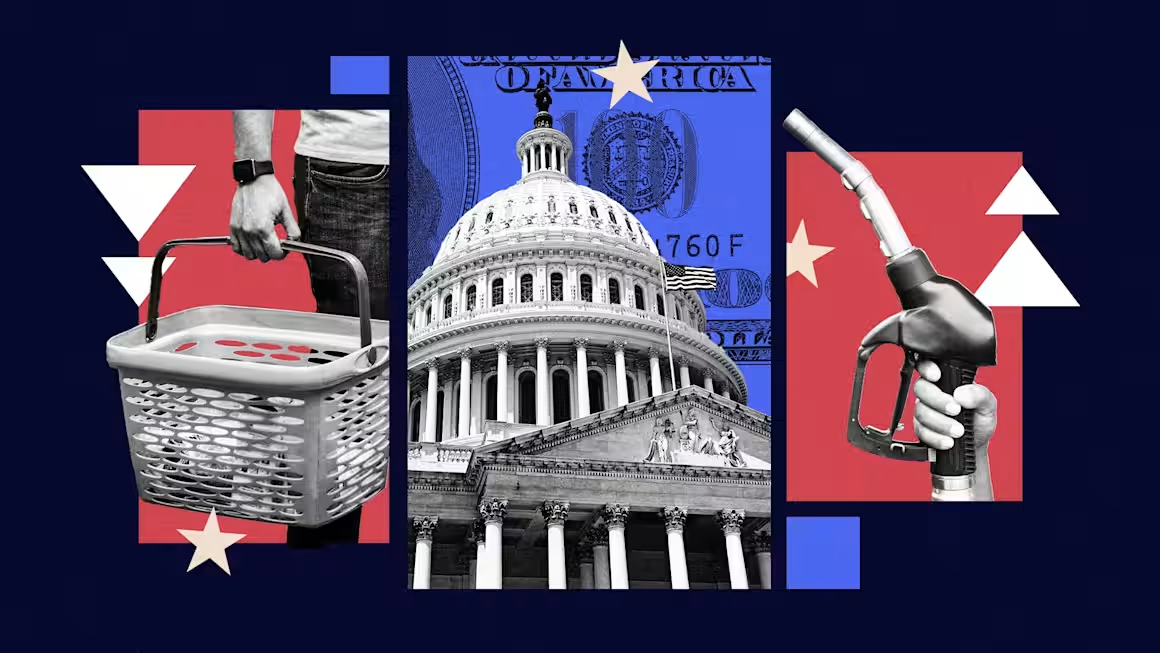
The Financial Times has begun tracking changes in the cost of living in the United States, identifying specific data points that could influence American voters in the 2026 midterm elections. The new tracker is designed to monitor economic indicators that are increasingly viewed as a focal point for voter sentiment as the election date approaches.
The launch of the tracker coincides with broader economic pressures facing US consumers. Recent geopolitical tensions, including attacks on vessels in the Red Sea and the Gulf of Oman, have driven up oil prices. These supply disruptions are contributing to inflationary trends that add to existing cost-of-living pressures.
While the specific metrics and methodology behind the tracker are not yet detailed in public reports, the initiative is explicitly framed as a tool to identify factors that may impact the outcome of the 2026 midterms. The data is expected to provide a clearer picture of how economic conditions translate into political leverage.
The timing of the tracker’s release is significant, coming just weeks after oil prices rose following deadly attacks in the Gulf of Oman and the Red Sea. These events have heightened fears of supply disruptions, further complicating the economic landscape for American households.
For investors and institutions, the tracker offers a new lens through which to view the intersection of macroeconomic data and political risk. As the 2026 midterms draw nearer, the ability to quantify the impact of daily living costs on voter behaviour will be a critical component of market analysis.
The Financial Times’ move underscores the growing importance of affordability as a political issue in the United States. By isolating specific cost-of-living data points, the tracker aims to cut through the noise of broader economic reporting to highlight the variables most likely to sway the electorate.