FIFA World Cup 2026: Institutional scale and statistical benchmarks defined by expanded format
As the 2026 FIFA World Cup commences in Canada, Mexico, and the United States, the event establishes new records for host nations, matches, and prize money, while introducing significant shifts in team composition and player demographics.
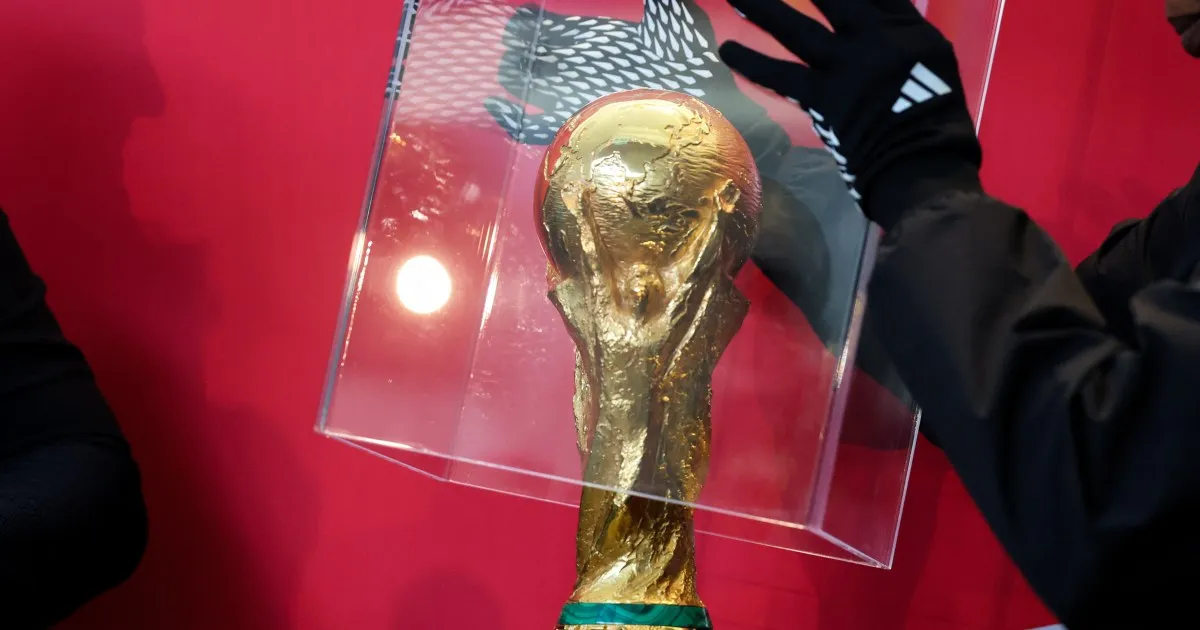
The 2026 FIFA World Cup has commenced with a structural expansion that redefines the tournament’s operational scale. Hosted jointly by Canada, Mexico, and the United States, the event features an expanded 48-team format across 16 cities, resulting in 104 matches. This configuration sets new benchmarks for the number of host nations, total matches, and prize money distribution. FIFA has projected that cumulative attendance will surpass the 3.5 million record set in 1994, although reports of slow ticket sales suggest this target may face challenges.
The tournament’s governance structure is reflected in its participant diversity. Four nations—Cape Verde, Uzbekistan, Jordan, and Curacao—are making their World Cup debuts, the largest number of debutants since 2006. Curacao is noted as the smallest nation ever to qualify for the event. The field includes 891 players participating in their first World Cup, with squads drawn from 71 different nationalities.
Institutional dominance remains concentrated among traditional powerhouses. Brazil retains the record for the most World Cup titles, having won five tournaments in 1958, 1962, 1970, 1994, and 2002. They are also the only team to have appeared in every edition since 1930, with seven final appearances and 11 semifinals. Germany and Italy are tied for fourth most titles, though Italy missed this tournament. On an individual level, Pelé holds the record for most World Cup wins in a career, while Lothar Matthäus holds the record for most appearances with 26.
Demographic shifts within the squads highlight the changing landscape of international football. Ivory Coast fields the youngest squad average age at 25.48 years. Conversely, age records are being tested, with Mexico’s Gilberto Mora, aged 17 years and 240 days, becoming the youngest player at the tournament. Scotland’s Craig Gordon, aged 43 years and 162 days, is among the oldest participants, marking a 22-year gap between his first international cap in 2004 and his World Cup debut.
The commercial and logistical dimensions of the tournament also present distinct contrasts. Cristiano Ronaldo is reported as the first billionaire footballer, with a net worth of $1.4 billion driven by brand endorsements and his contract with Saudi club Al-Nassr. Squad composition varies significantly, with Cabo Verde, DR Congo, Ivory Coast, Curacao, Senegal, and Uruguay fielding entire squads from overseas leagues, while Qatar and Saudi Arabia field 25 of their 26 players from domestic leagues. The tournament began on June 11, with coverage provided by Al Jazeera.