Fiery Autumn Tones Illuminate Magallanes Hillsides in New Landsat 9 View
NASA Earth Observatory imagery reveals how subalpine trees mark the upper limits of forest growth in southern Chile's unique temperate zone.
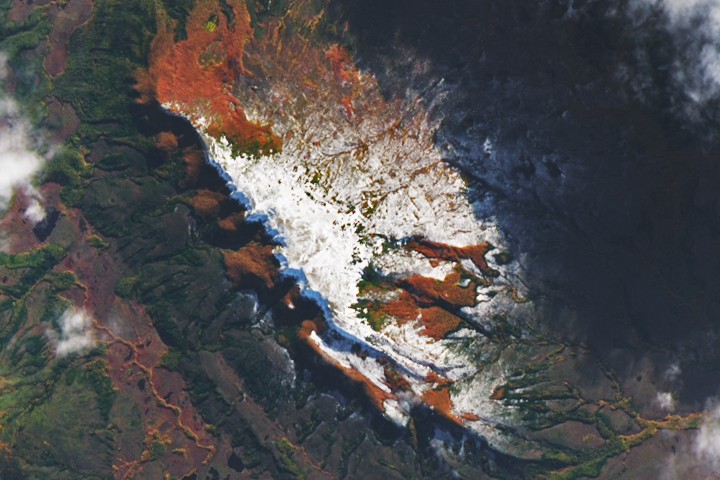
On 12 April 2026, the Landsat 9 satellite captured a vivid snapshot of the Magallanes region in southern Chile, revealing fiery autumn colours that contrast sharply with the surrounding landscape. The image, made possible by a temporary break in cloud cover, highlights reddish hillsides where lenga beech forests (*Nothofagus pumilio*) display warm tones against the bright whites of mountain snow, the muted browns of arid plains, and the gem-like blues of glacial lakes.
This specific scene is located approximately 100 kilometres northwest of Punta Arenas, at an elevation of about 600 metres above sea level. In this cooler southern climate, these deciduous trees populate lower areas compared to their northern counterparts, marking the highest elevation where tree growth occurs in this subalpine environment. The visual display captures the unique biodiversity of Patagonia, where southern beech species have adapted to thrive in freezing temperatures and almost desert-like levels of rainfall.
Patagonia contains the southernmost temperate forests in the world, home to many species found nowhere else on the planet. Among these are several types of southern beech tree, genus *Nothofagus*, that form the foundations of Andean forests. The lenga beech ranges from about 36 degrees south latitude down to Tierra del Fuego at around 55 degrees south, stretching roughly 2,000 kilometres along the spine of the continent. Where these trees grow, they often form the predominant or only type of forest in an area.
While the lenga beech is a subalpine-loving species, its elevation varies significantly by latitude. In the warmer, northern part of its range, the trees occur at higher elevations, around 1,700 metres. However, in the cooler, southern climes shown in this image, they populate lower areas, creating a distinct colour palette that differs from other iconic Patagonian locales. In places like Torres del Paine and Tierra del Fuego, other species such as *Nothofagus antarctica*, known as ñire or "Antarctic fire", also lend touches of blazing colour to the landscape.
The imagery serves as a reminder of the fleeting nature of autumn in the austral hemisphere, where shorter, colder days set in to trigger the foliage display. The bright whites of mountain snow and the arid plains typically dominate the Patagonian colour palette, but for a short time in the autumn, these temperate deciduous forests add splashes of warm tones to the region. The Landsat 9 data, provided by the U.S. Geological Survey, continues to offer critical insights into these dynamic environmental changes.