Federal Reserve Pauses Rate Cuts as Geopolitical Tensions Threaten Inflation Targets
The decision to maintain current interest rates has triggered a sell-off in the Australian dollar, which dipped to its lowest level in three weeks as markets reassess the impact of regional instability on global energy costs.
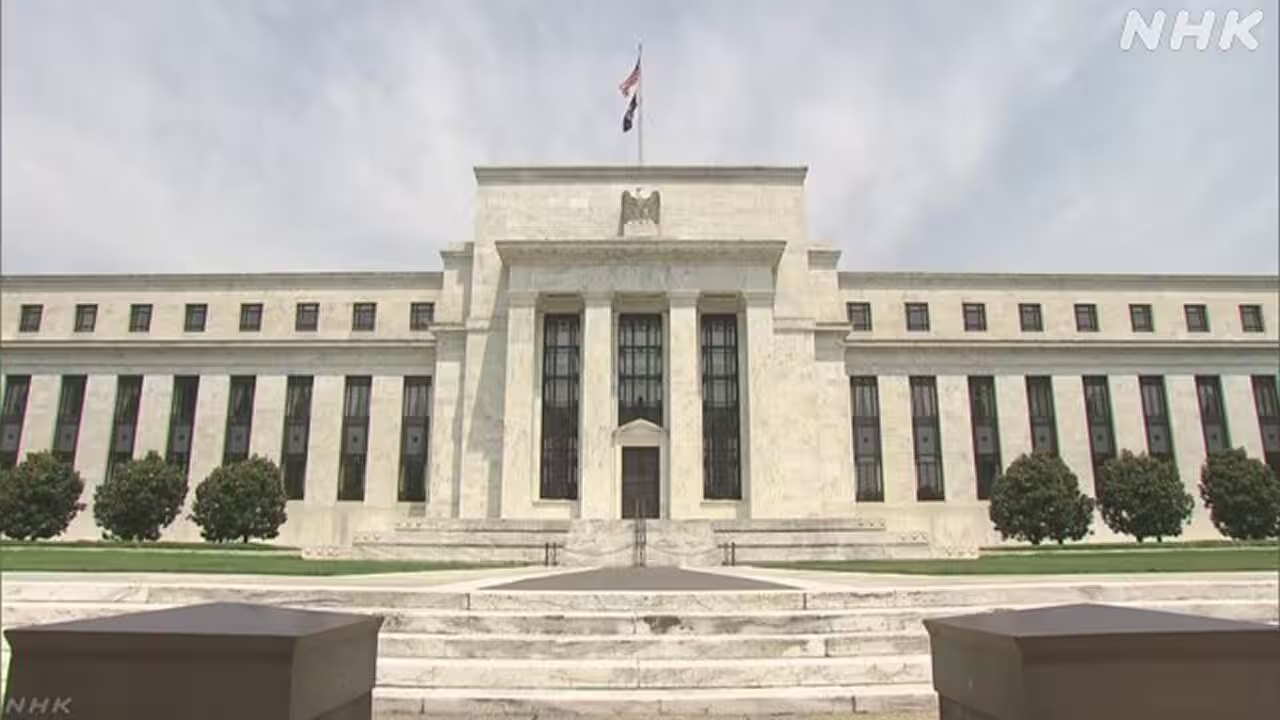
The US Federal Reserve announced on 29 April 2026 that it would hold interest rates steady, marking the third consecutive meeting without a rate cut. This decision halts the anticipated easing cycle and signals a shift in the central bank's stance as it prioritises the containment of inflationary pressures over further monetary accommodation.
The primary driver cited for this policy shift is the risk of inflation re-acceleration, specifically linked to sustained high crude oil prices. According to NHK News Japan, these elevated energy costs are directly attributable to the ongoing situation in Iran, which has disrupted global supply chains and kept fuel prices from declining despite broader economic trends.
Global markets are now closely monitoring the stability of the Strait of Hormuz, where any further disruption could spike energy costs even higher. The Federal Reserve's assessment suggests that the geopolitical volatility in the region poses a material threat to price stability, necessitating a pause in rate reductions to prevent inflation from gaining momentum again.
The immediate market reaction to the announcement has been a decline in the Australian dollar, which briefly fell to the 1.60–1.61 USD range. This movement marks the currency's lowest level in approximately three weeks, reflecting investor caution regarding the outlook for US monetary policy and the sensitivity of commodity-linked currencies to fluctuations in global oil prices.
While the Federal Reserve has been considering rate cuts, the correlation between the Iran situation and the timing of this decision underscores the complex interplay between geopolitical events and domestic economic policy. The central bank's forward-looking assessment indicates that the persistence of these tensions remains the critical variable in determining future interest rate trajectories.
As the situation in the Middle East remains fluid, the extent to which current geopolitical developments will force a reversal in Federal Reserve policy remains uncertain. Investors continue to weigh the potential for a prolonged period of elevated energy costs against the broader economic landscape, with the Australian dollar's recent dip serving as a tangible indicator of this reassessment.