Fact-check reveals recycled footage fuelling Houthi-Saudi conflict
Deutsche Welle’s investigation identifies two viral clips as artificially generated or outdated, highlighting the governance challenges posed by disinformation in the Yemen conflict.
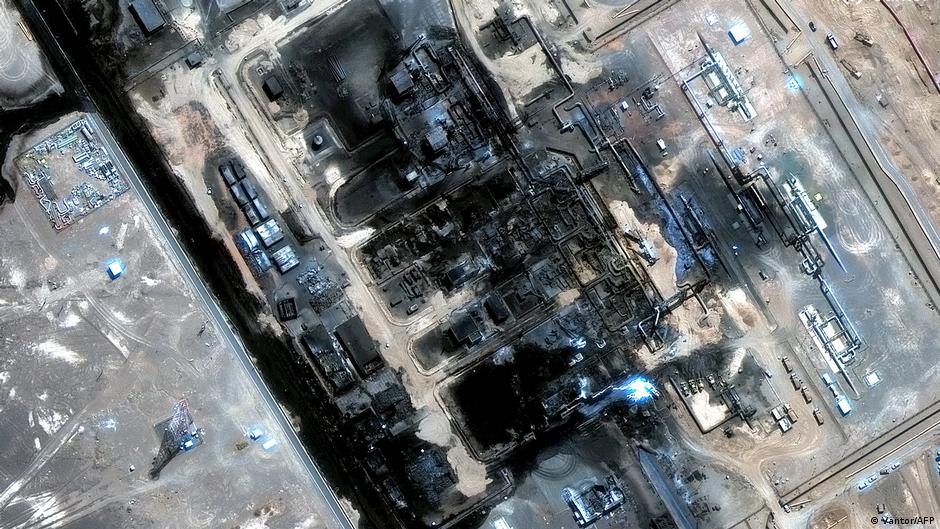
As hostilities intensify between Yemen’s Houthi rebels and Saudi Arabia, social media platforms have become saturated with unverified footage. The conflict has escalated sharply, with Houthi forces advancing along the Red Sea coast and securing key areas around the Bab el-Mandeb Strait. In response, Saudi Arabia has conducted airstrikes, while Houthi forces have targeted Saudi territory with drones and missiles. This renewed fighting has raised concerns regarding global trade, while simultaneously creating a fertile environment for online disinformation.
Deutsche Welle’s fact-checking team has examined two prominent viral clips circulating on X. The first is a nine-second video depicting a massive explosion between buildings, accompanied by fireballs and screaming. The clip was shared with the caption that Yemeni forces were carrying out their strongest strikes in Saudi Arabia, including in Abha, and has garnered over 340,000 views. However, the investigation found that the video is not only old but also artificially generated.
Technical analysis by Hive Moderation confirmed the artificial nature of the explosion clip. Visual inconsistencies, such as the uniform spread of smoke and the sudden appearance of a lamppost, contradict the physics of a large-scale detonation. Furthermore, the audio lacks the expected reaction to such a significant event. A reverse image search revealed that the same video had been circulated in June, falsely claiming to show explosions in Iran. This demonstrates a pattern of recycling unrelated media to fit current narratives.
The second clip examined by Deutsche Welle is a 30-second video showing a military convoy ambush in a desert environment. Posted with a caption describing an ambush on Saudi-backed mercenaries, the footage was traced to a Houthi military exercise dated 10 March 2024. The original video, published by Yemeni War Media, depicted a simulated ambush on Israeli positions and attacks on US and British forces, with Israeli and American flags visible in the footage.
Notably, the audio in the circulating version of the convoy clip has been manipulated. The original sound has been replaced with dramatic commentary from a football match played in 2018. This substitution of audio further illustrates how genuine footage can be repurposed to create a misleading impression of current events. The recycling of such material is not new to the Yemen conflict, where the information environment has long been contested.
Hannah Porter, a researcher specialising in Yemeni disinformation, attributes the spread of these clips to the difficulty of independent reporting in the region. She noted that reduced international attention allows disinformation to spread both within Yemen and globally. Porter highlighted that journalists face threats and independent media outlets are under intense pressure, making it extremely difficult to obtain reliable information, particularly in the north.
The findings underscore the need for institutional scrutiny of digital media in conflict zones. With much of Yemen’s media landscape weakened, the ability to independently assess footage is compromised. Porter advised that viewers should remain sceptical of any video purported to show specific battles in Yemen, emphasising the necessity of fact-checking to establish the facts on the ground.