Expert attributes European wildfire crisis to governance and ecological failures
As mass evacuations continue across France and Spain, a senior resilience expert warns that the current crisis is a predictable outcome of long-standing scientific warnings and institutional neglect.
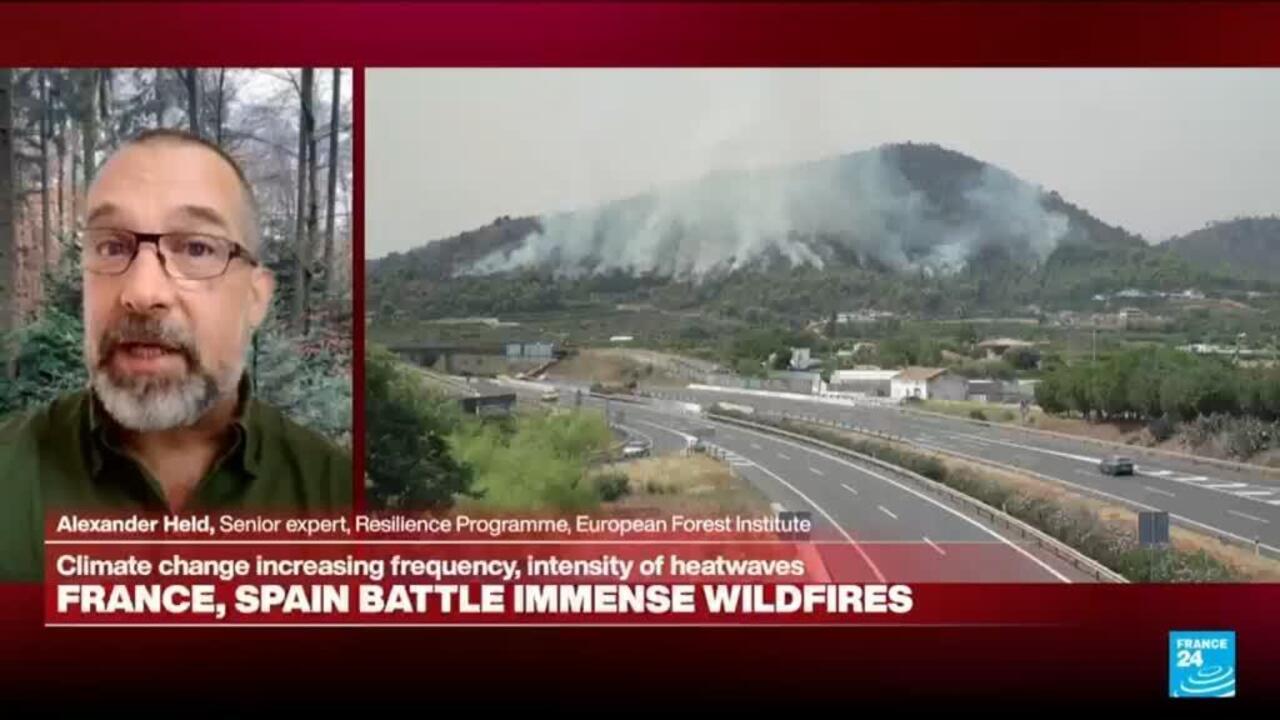
Alexander Held, Senior Expert of the Resilience Programme for Integrated Fire Management, has reframed the narrative surrounding Europe’s current wildfire crisis, arguing that the central issue lies in ecological and governance failures rather than the flames themselves. Speaking to France 24, Held asserted that these events are not unforeseeable natural disasters but rather the predictable result of decades of scientific warnings regarding the devastating effects of climate change.
Held described the current situation as unprecedented but unsurprising, emphasising that the continent’s response has been hampered by a lack of prevention and a failure to adapt to changing environmental realities. He presented the crisis as a critical opportunity to fundamentally rethink the relationship between society and forest landscapes, suggesting that current management strategies are insufficient for the scale of the threat.
The expert’s commentary comes amid severe emergency conditions in southwestern France, where over 110,000 people have been evacuated as wildfires have destroyed 14,000 hectares of forest. In response to the escalating danger, French President Emmanuel Macron has mobilised the military, while Prime Minister Sebastian Lecornu has chaired a government crisis meeting to coordinate the response.
Simultaneously, Spain has declared a national emergency after two major wildfires west of Madrid merged into a single blaze. The conflagration has forced the evacuation of more than 19,000 residents, highlighting the cross-border nature of the extreme heat and dry conditions affecting the region. These operational responses underscore the immediate pressure on state institutions, even as experts point to deeper structural causes.
While Held’s analysis focuses on the systemic roots of the disaster, the immediate reality on the ground involves significant displacement and resource mobilisation. The merging of fires in Spain and the widespread destruction in France illustrate the intensity of the current weather patterns, which Held links directly to the broader climate crisis.
The Resilience Programme for Integrated Fire Management’s assessment suggests that without a fundamental shift in policy and landscape management, similar crises may become the norm. Held’s intervention shifts the focus from reactive firefighting to a more critical examination of how European institutions manage risk and ecological sustainability in an era of climate change.
As governments in France and Spain continue to manage the immediate fallout, the debate over long-term governance and prevention strategies is likely to intensify. The current evacuations and military deployments serve as a stark reminder of the costs associated with what Held describes as a failure to act on long-standing scientific evidence.