Expert analysis frames Aoun’s Washington visit as strategic repositioning
Nadim Houry, executive director of the Arab Reform Initiative, told France 24 International that President Joseph Aoun’s recent visit to Washington is primarily aimed at repositioning Lebanon within the regional order, rather than securing immediate policy breakthroughs.
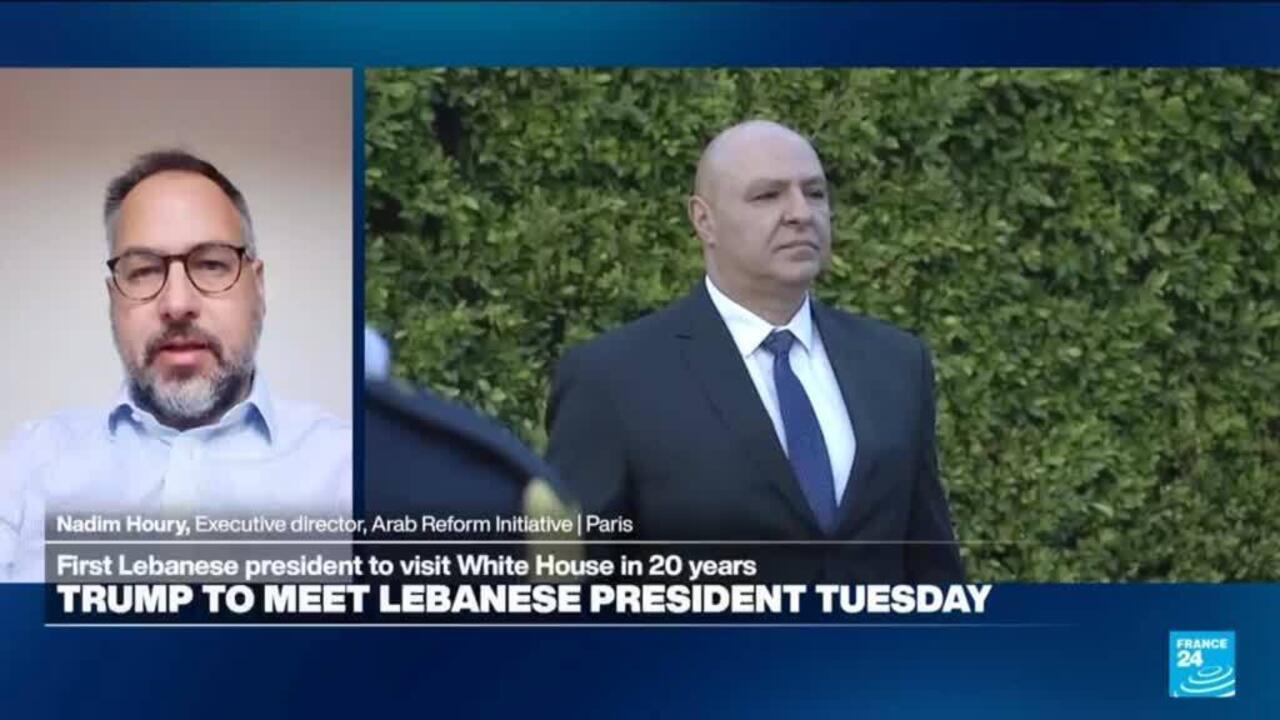
Nadim Houry, executive director of the Arab Reform Initiative, has characterised Lebanese President Joseph Aoun’s recent visit to the White House as “mostly symbolic.” Speaking on France 24 International, Houry suggested that the diplomatic engagement is less about achieving immediate policy breakthroughs and more about repositioning Lebanon within an evolving regional order.
The analysis provided by Houry underscores the complex interplay of factors shaping Lebanese foreign policy. He argued that Lebanese politics, Israeli security calculations, US regional strategy, Iranian influence, and the role of Hezbollah are deeply interconnected. According to his assessment, these elements cannot be understood in isolation from one another.
Houry’s commentary highlights the long-term strategic challenges facing Lebanon. The executive director’s nuanced view suggests that the visit serves a broader diplomatic function, aiming to align Lebanon’s position with shifting dynamics in the Middle East rather than delivering concrete legislative or security agreements during the trip itself.
The discussion also touched upon the potential implications for US strategy towards Iran. While the original reporting from France 24 International raised questions about whether the visit signals a new containment strategy, Houry’s analysis focuses on the symbolic nature of the repositioning. He did not provide a detailed definition of any such new strategy, instead emphasising the interconnected nature of the regional powers involved.
This assessment comes as Lebanon navigates a delicate geopolitical landscape. By framing the Washington visit as symbolic, Houry implies that the primary outcome is diplomatic alignment and signal-sending to regional actors, including Israel and Iran, rather than tangible shifts in policy or security arrangements.
The focus on repositioning suggests that President Aoun’s administration is prioritising long-term strategic placement over short-term gains. This approach aligns with Houry’s view that the current regional order requires a comprehensive understanding of how Lebanese internal politics intersect with external security concerns and great power competition.
Ultimately, Houry’s evaluation presents the White House visit as a calculated move to stabilise Lebanon’s standing in the region. By acknowledging the inseparable link between Lebanese politics and broader regional strategies, the analysis points to a future where diplomatic engagement is measured by strategic alignment rather than immediate policy outputs.