Expedition 74 crew monitors SpaceX Dragon docking from International Space Station
Sophie Adenot and Jack Hathaway observe the SpaceX Dragon spacecraft as it docks with the orbital outpost on 17 May 2026.
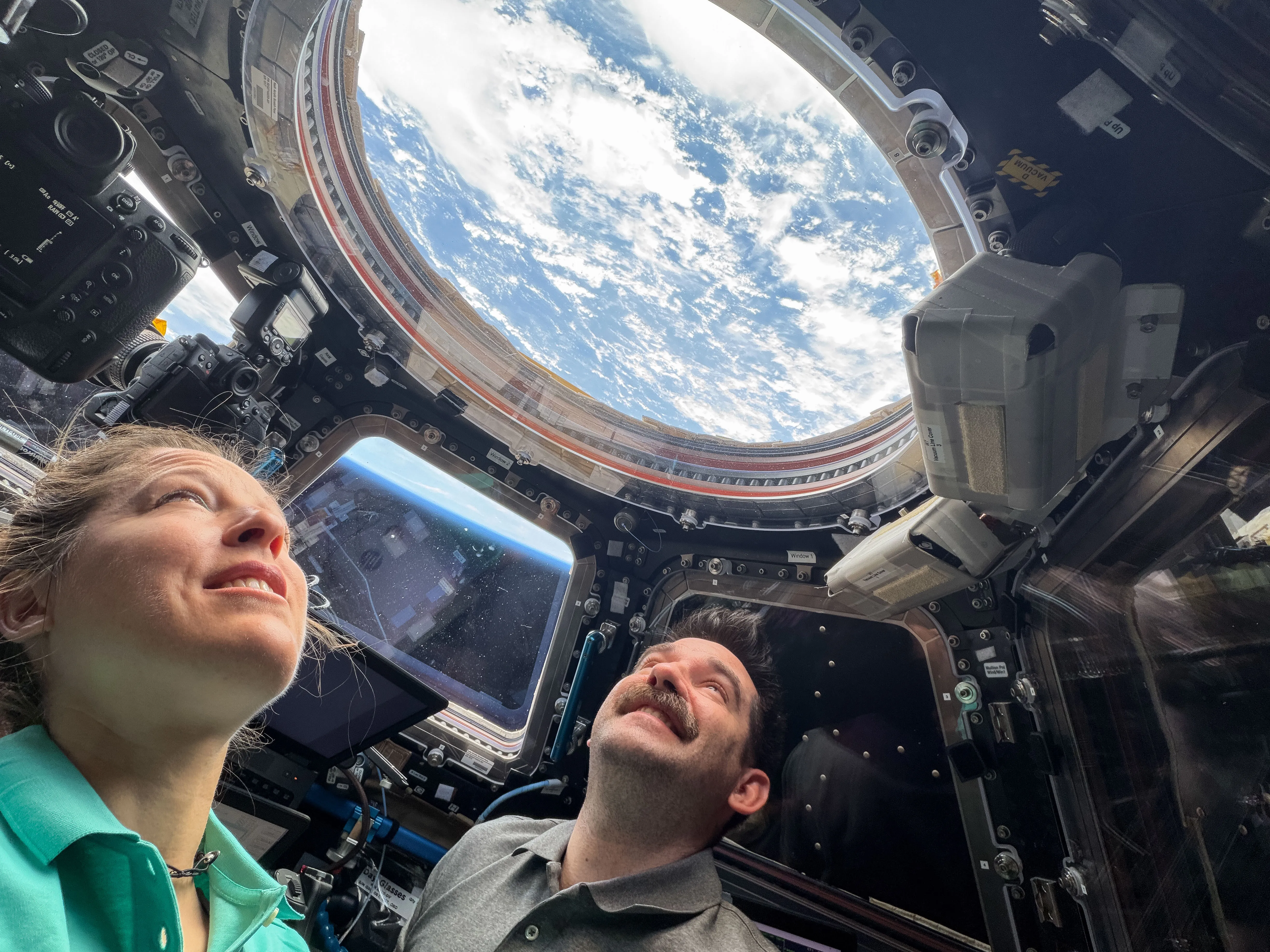
ESA astronaut Sophie Adenot and NASA astronaut Jack Hathaway, serving as flight engineers on Expedition 74, monitored the automated approach and docking of a SpaceX Dragon cargo spacecraft to the International Space Station on 17 May 2026. The event was captured via a photograph taken from the station’s cupola module while the ISS orbited approximately 259 miles (417 km) above the Indian Ocean, west of the Maldives.
The image, credited to ESA/Sophie Adenot, shows the two crew members looking out through the cupola windows as the cargo vehicle completed its approach. The cupola is a module on the ISS known for its large windows, often used for Earth observation and monitoring external activities.
This mission continues the routine resupply operations conducted by SpaceX for the ISS. The automated docking process requires careful monitoring by the onboard crew to ensure the safety and integrity of the station during the approach phase.
The source date for this report is 2 June 2026, indicating the event occurred in the past relative to the publication date. The specific operational status or outcome of the docking beyond the monitoring phase is not detailed in the provided text, though the term 'docking' implies successful completion.
The photograph provides a visual record of the routine yet critical logistics that sustain human presence in low Earth orbit. The location of the station at the time of the image, over the Indian Ocean west of the Maldives, highlights the global nature of the ISS's orbital path.