Exile leader warns Germany against Chinese state investments on Tiananmen anniversary
Speaking to Deutsche Welle from Tokyo, the former student leader criticises past Western appeasement policies and urges caution over German infrastructure ties with Beijing.
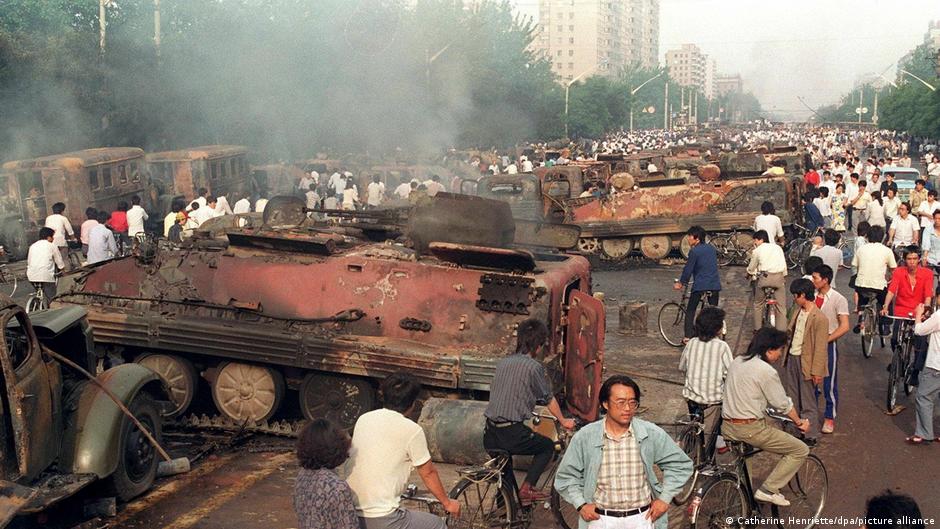
Wu'er Kaixi, a former student leader of the 1989 Tiananmen Square protests, has issued a stark warning to Germany regarding its economic ties with China, describing the Chinese Communist Party as a "criminal group" motivated by profit rather than ideology. Speaking to Deutsche Welle in Tokyo on Wednesday, a day before the anniversary of the crackdown, Kaixi argued that China poses a direct threat to global civilisation and called for nations to abandon policies of engagement that he claims have failed to foster democracy.
Kaixi, now 58 and residing in Taipei, criticised the United States and other Western nations for their historical approach of appeasement towards Beijing. He noted that the inclusion of China in the World Trade Organization was predicated on the hope that economic integration would lead to a civil society and eventual democracy, a outcome he stated has not materialised. He suggested that while previous administrations misunderstood China's leadership as being driven by nationalism or communism, the reality is that the party is focused on enriching its own ranks.
The former dissident specifically cautioned Germany against investments in Chinese state-owned enterprises, citing the Port of Hamburg as a primary example. He pointed out that China is now the port's largest trading partner, with the state-owned Cosco Shipping Ports holding a nearly 25 per cent stake in the Tollerort container terminal. Kaixi also highlighted the presence of Chinese logistics and rail freight firms maintaining distribution hubs in the city, linking them to Beijing's Belt and Road initiative.
While acknowledging that Germany is "waking up fast" to the challenges posed by Chinese firms, Kaixi noted a shift in the US approach under President Donald Trump. He described the US president as approaching the situation from the perspective of a businessman willing to apply leverage, contrasting this with the previous era of engagement. He asserted that Japan, the US, and other countries had fundamentally misunderstood the nature of the Chinese leadership, which he claims cares little for national rejuvenation and is instead focused on increasing personal wealth.
Reflecting on 37 years of exile, Kaixi shared the personal toll of his separation from China, including the inability to attend his father's funeral due to travel restrictions imposed by Beijing. He described the experience of exile as "mental and spiritual torture," noting that his parents were refused permission to travel abroad to see him for nearly four decades. Despite the personal loss, he maintained that China is a "bully" that the international community must stand up to, warning that failure to resist its political pressure and territorial ambitions will only embolden the regime.