European press label UK premiership ‘impossible job’ after Starmer’s resignation
Outlets from Germany to Spain attribute political instability to Brexit’s legacy and internal party fractures, with little expectation of substantive change under incoming leader Andy Burnham.
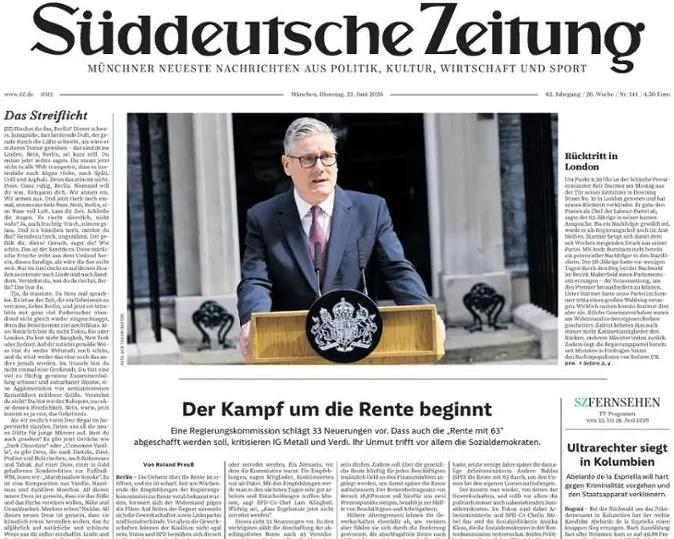
European media outlets have reacted to Keir Starmer’s resignation as the seventh UK prime minister to leave office since the 2016 Brexit referendum, describing Downing Street as a “revolving door” or “transit station.” The prevailing narrative across the continent is that political instability has become the new normal in British governance, with the premiership widely characterised as an “impossible job.”
Publications such as Spain’s La Vanguardia and Germany’s Der Spiegel highlighted the rapid turnover of leadership, with the latter likening the residence to a bustling railway interchange. La Vanguardia noted that Starmer’s departure confirms the fragility of the political system, while Der Spiegel recounted the recent departures of David Cameron, Boris Johnson, and Liz Truss to illustrate the volatility of the role.
Germany’s Frankfurter Allgemeine Zeitung (FAZ) attributed the turmoil to a combination of internal party discontent and the lingering consequences of Brexit. The newspaper’s analysis suggested that even before a successor is chosen, it is clear that many fail at the task, echoing the sentiment that the office has become untenable due to the structural challenges left by the 2016 vote.
Spain’s El País offered a more blunt assessment, headlining its coverage with the statement that Brexit promises were “broken” and that neither the economy nor the welfare state are better off. An accompanying commentary lamented that the political right which drove the referendum is now stronger than ever, while the UK’s global influence and economic standing have declined.
France’s Libération concluded that Starmer was elected primarily through voter rejection of the Conservatives rather than support for his own programme, leading to a leadership collapse under its own contradictions. Denmark’s Børsen noted that Starmer had been “chased down by both the recent and the distant past,” linking his struggles to the tenth anniversary of the Brexit vote.
While the Dutch newspaper Trouw offered sympathy, arguing that Starmer’s achievements were overlooked due to poor communication skills, most outlets remained sceptical about the future. FAZ predicted “new head, old problems” regarding Andy Burnham’s imminent elevation, suggesting little substantive change is expected despite the leadership transition.