Euclid Telescope Pauses Cosmology Mission to Preview Milky Way Core for Roman Survey
A one-day observation by the Euclid space telescope in March 2025 provides a critical two-year head start for NASA’s Nancy Grace Roman Space Telescope, enhancing the detection of isolated cosmic objects through gravitational lensing.
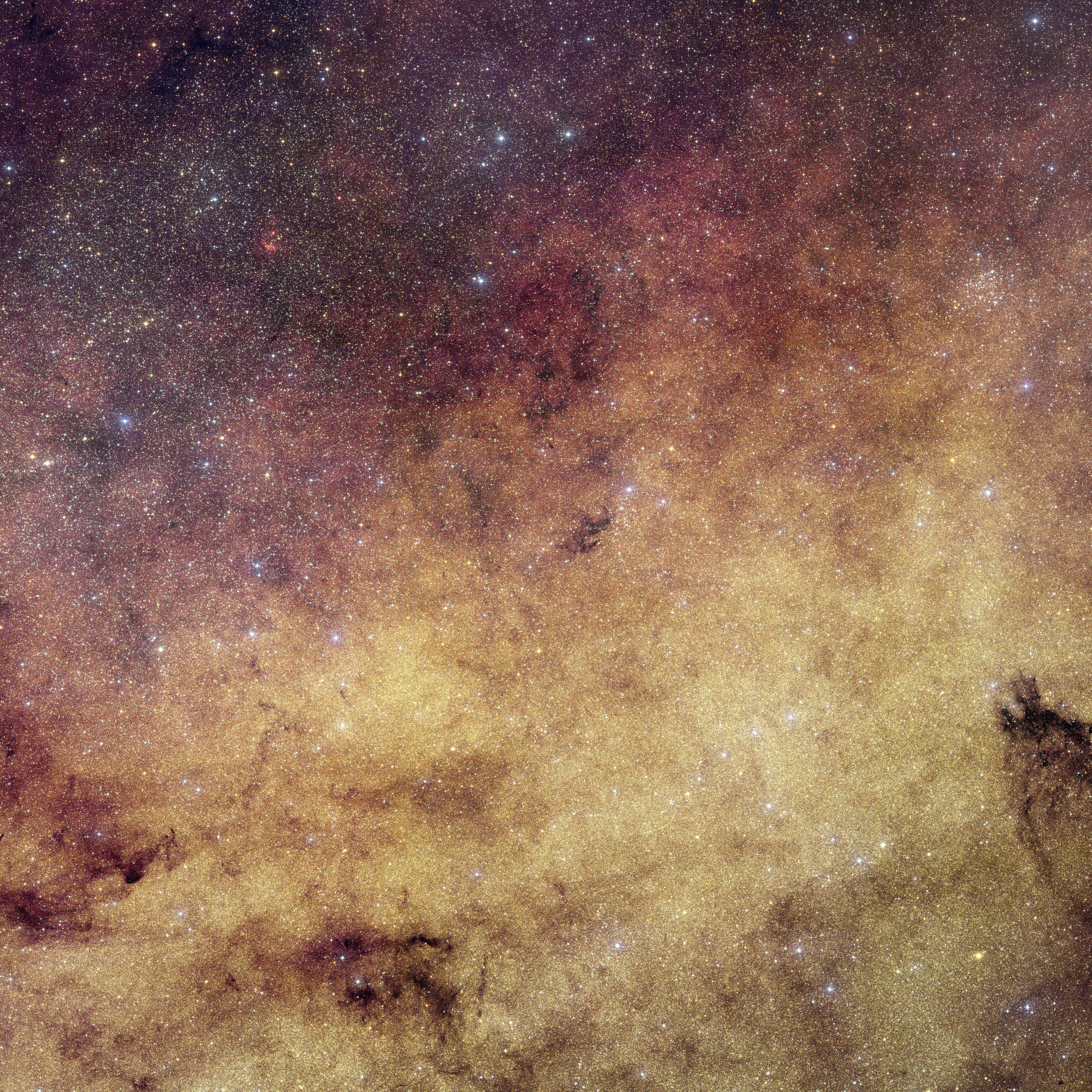
The European Space Agency’s Euclid mission, which receives contributions from NASA, conducted a targeted one-day observation of the Milky Way’s central region in March 2025. This activity marked a deviation from Euclid’s primary six-year cosmology survey, which is designed to map the geometry of the dark universe. The observation was undertaken to preview the specific area of the sky that NASA’s Nancy Grace Roman Space Telescope will study after its scheduled launch later in 2026.
Jason Rhodes, a senior research scientist at NASA’s Jet Propulsion Laboratory who serves as both the U.S. Euclid science lead and the Roman project scientist, confirmed that this was the only time Euclid has paused its normal sky survey. He noted that such a deviation requires significant planning and is only undertaken when it offers high scientific impact. By adding Euclid’s snapshot to Roman’s future survey, astronomers aim to map the galaxy more effectively and identify elusive cosmic objects such as isolated black holes and rogue planets.
Euclid’s observation covered approximately 5 square degrees, an area roughly equivalent to 25 full moons. This region is larger than the 1.7 square degrees (about 8.5 full moons) that Roman will specifically target for its Galactic Bulge Time-Domain Survey. Although Euclid’s one-time observation is shallower and lacks some of the colour detail Roman will capture, it possesses similar resolution. The survey area for Roman’s specific bulge study had not yet been determined when Euclid conducted its observation, necessitating the broader coverage.
The data from Euclid effectively extends Roman’s monitoring baseline by two years, as Roman’s galactic bulge observations are scheduled to begin in spring 2027. This extended timeline allows astronomers to track the drift between lensing objects and background stars over a longer period. Himanshu Verma, a postdoctoral researcher at Louisiana State University, explained that this additional time makes it easier to identify the lensing object and measure its mass as the stars move out of alignment.
Roman will monitor these regions for microlensing events, where the gravity of a massive object bends and magnifies light from a distant background star. While most lensing objects are stars, the survey aims to detect planets and isolated stellar-mass black holes, of which there are estimated to be 100 million in the Milky Way. David Bennett, a senior research scientist at NASA’s Goddard Space Flight Center, stated that cross-referencing Euclid’s earlier observations will help confirm whether detected planets are truly rogue or simply orbiting far from their host stars.
In addition to the bulge survey, Roman will utilise data from its Galactic Plane Survey, which covers an area 400 times larger than the bulge survey. This broader programme will unveil tens of billions of stars and help astronomers map stellar movements to refine models of the Milky Way’s structure. Matthew Penny, an assistant professor at Louisiana State University, highlighted that this combined approach allows scientists to test and improve existing galaxy models by observing how stars move across the sky.
Rhodes emphasised that the collaboration demonstrates how two telescopes can work together to achieve science that surpasses what either was originally designed for. The partnership establishes a model for future coordinated observations, suggesting that such teamwork can unlock significantly more discoveries than independent missions. The Euclid detour is expected to provide a scientific payout that lasts for years, enhancing the capabilities of both the European and American space agencies.