EU unlocks €16.4 billion in frozen funds for Hungary following political transition
The European Commission has agreed to unfreeze billions in assistance for Budapest, contingent on continued reforms, as the new government seeks to address economic stagnation and a widening budget deficit.
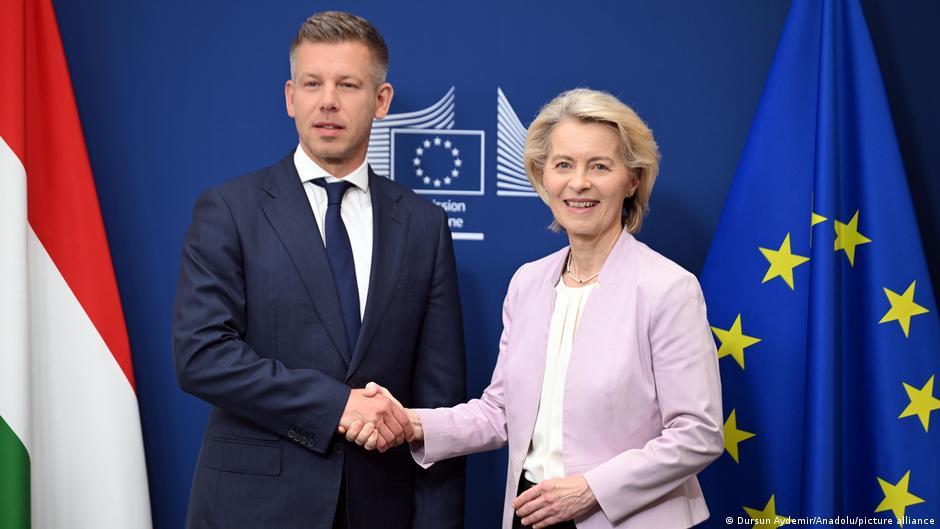
The European Commission has agreed to unlock €16.4 billion in previously frozen EU recovery and cohesion funds for Hungary, marking a significant shift in financial relations following the recent election of Prime Minister Peter Magyar. The announcement was made by Commission President Ursula von der Leyen in Brussels after discussions with the new Hungarian leader, who defeated his predecessor, Viktor Orban, in elections held last month.
The funding package is structured to provide immediate relief while incentivising further policy changes. Von der Leyen confirmed that €10 billion would be unfrozen from the Next Generation EU recovery fund, with an additional €4.2 billion allocated from cohesion funds. A further €2.2 billion remains contingent on the completion of specific reforms, a condition designed to ensure alignment with European Union standards.
Under the previous administration led by Orban, relations between Budapest and Brussels were frequently strained, leading to the freezing of various funds for years. Clashes occurred over domestic Hungarian issues and foreign policy matters, including Hungary’s stance on support for Ukraine amid Russia’s invasion. The current agreement signals a departure from that period of diplomatic tension, with von der Leyen praising the "outstanding work" undertaken by the new government to secure the release.
Magyar described the agreement as a "historic breakthrough," stating that the government had agreed on all necessary steps to allow the funds to be released. He pledged to utilise the money to rebuild the economy, restore public services, and strengthen the competitiveness of Hungarian small and medium-sized enterprises. The European Commission emphasised that the Hungarian people "deserve" the funds, acknowledging the political effort required to resolve the long-standing impasse.
The financial release comes at a critical time for Hungary’s economy, which has been stagnant for the last three years with minimal growth. The budget deficit is projected to reach 6.2% of GDP this year, exceeding EU targets, following heavy pre-election spending by the previous administration. Additionally, the central bank base interest rate stands at 6.25%, significantly higher than the European Central Bank’s rate of 2%. The national currency, the forint, has rebounded since Magyar’s election, partly due to anticipation of the renewed EU funding.