EU President Costa Urges Accelerated Western Balkans Accession Amid Regional Tensions
Antonio Costa describes enlargement as the bloc’s most significant geopolitical investment, calling for methodological improvements to speed up the process for six candidate nations without lowering standards.
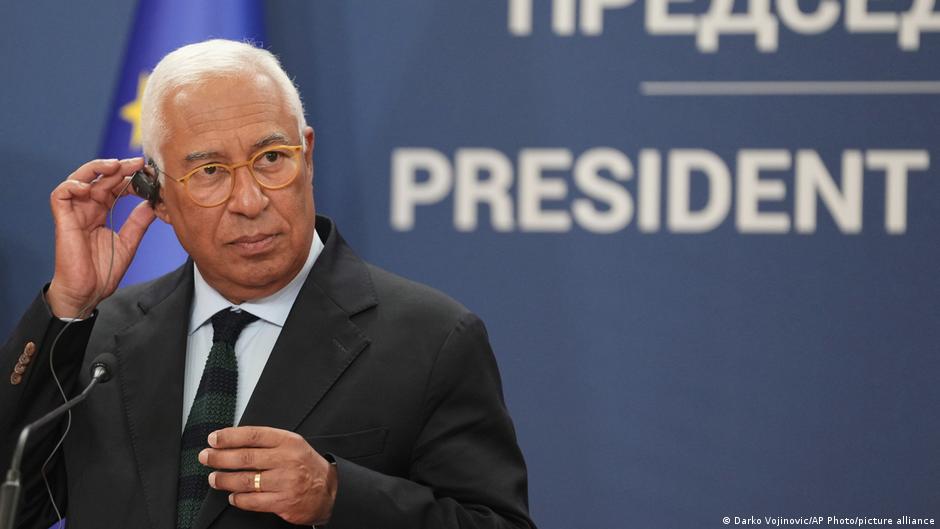
European Council President Antonio Costa has declared that the European Union must identify new mechanisms to accelerate the accession process for six Western Balkan candidate countries, characterising enlargement as the bloc’s most critical geopolitical investment. Speaking during a joint press briefing with Serbian President Aleksandar Vucic in Belgrade on Thursday, Costa emphasised that the goal is to improve methodology to move forward faster and more effectively, rather than diluting the rigorous standards required for membership.
Costa, who has been conducting a tour of the candidate states ahead of the upcoming summit, stated that enlargement is not a utopia but a tangible objective for the coming years. He argued that reducing frustration among acceding nations and within the EU itself is essential to building trust. The European leaders are scheduled to discuss these procedural adjustments with Western Balkan counterparts at a summit in Tivat, Montenegro, on Friday, aiming to assess progress on the path to full integration.
The European Union has issued a stark warning to Serbia regarding the pace of its reforms. Costa urged Belgrade to bolster democratic institutions and align its foreign policy with EU positions, noting that failure to halt democratic backsliding could result in the loss of approximately €1.5 billion ($1.8 billion) in EU funds. This financial leverage underscores the bloc’s insistence that political alignment and institutional stability remain non-negotiable prerequisites for membership.
Despite the push for accelerated integration, the summit faces significant diplomatic friction between candidate states. Host nation Montenegro banned 87 Serbian nationals from entering the country on Wednesday, citing security threats. The individuals had arrived on an Air Serbia flight carrying communication equipment and banners reading "Serbia wins," prompting authorities to view their presence as a potential destabilising factor.
The border closure has directly impacted summit logistics, with Serbia’s Security and Information Agency (BIA) advising President Vucic against attending the event in Tivat. The BIA cited a high security risk for the Serbian president, pointing to hostile activities by foreign secret services and the presence of a criminal clan in Montenegro. These tensions complicate the diplomatic landscape for a region where Montenegro, having seceded from a state union with Serbia 20 years ago, is considered a frontrunner for EU membership despite ongoing challenges with corruption and external political influence.