Ethiopia votes amid geopolitical rivalries in Horn of Africa
With over 50 million registered voters and more than 10,400 candidates, the poll unfolds against a backdrop of internal security challenges and heightened competition from Egypt, the UAE, Saudi Arabia, Turkey, and Israel.
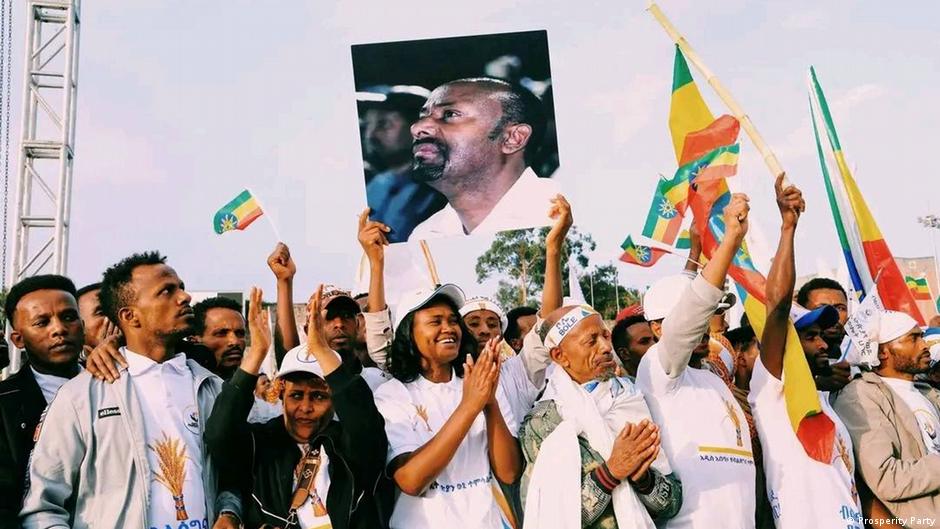
Ethiopians cast their ballots on June 1, 2026, in the country’s seventh national election, a vote that has unfolded against a backdrop of internal security challenges and heightened geopolitical competition in the Horn of Africa. More than 50 million citizens were registered to vote, with over 10,400 candidates from various political parties and independents competing at both federal and regional levels. The election takes place as regional powers, including Egypt, the UAE, Saudi Arabia, Turkey, and Israel, push for influence in this strategically vital region, which has been destabilised by Sudan’s conflict and disputes over the Red Sea.
Analysts have described the election as a mechanism for maintaining state legitimacy rather than a genuine democratic contest, citing the fragmentation and weakness of opposition parties. Kebour Ghenna, executive director of Initiative Africa and a former opposition candidate, told Deutsche Welle that the elections unfold in a context of weakened opposition, regional instability, and growing external geopolitical competition. The Ethiopian government has rejected claims that the political space is shrinking, pointing to reforms by the National Election Board of Ethiopia (NEBE), such as digital voter registration and new monitoring systems, and arguing that opposition parties are responsible for their own decline.
Despite the prominence of foreign policy issues in election debates, many voters remain primarily concerned with inflation, unemployment, and insecurity. Ghenna noted that foreign policy generally has limited influence on ordinary voters compared to immediate socioeconomic realities such as rising transport costs and declining living standards. However, the geopolitical landscape remains complex, with tensions persisting between Ethiopia and Egypt over the Nile River and the Grand Ethiopian Renaissance Dam, a dispute that continues to shape regional politics and competing alignments in Sudan’s civil war.
Regional security tensions have also escalated, with Sudanese officials accusing the UAE of launching drone strikes on Khartoum Airport from Ethiopia’s Bahir Dar airport. Ethiopia called these claims baseless and accused Sudan of backing armed groups within its borders. Sudan has repeatedly accused the UAE of supporting the paramilitary Rapid Support Forces in its three-year civil war, a claim Abu Dhabi denies while stating it seeks a negotiated end to the conflict. Meanwhile, Israel’s recognition of Somaliland in late 2025 has drawn threats from Yemen’s Houthi movement, with Houthi leader Abdul-Malik al-Houthi warning that any Israeli presence in the region would be considered a military target.
The United States recently lifted arms export restrictions on Ethiopia, ending measures imposed during the Tigray war, and is reportedly considering easing sanctions on Eritrea. Prime Minister Abiy Ahmed continues to advocate for landlocked Ethiopia’s access to the sea, with Eritrea’s Assab port being a point of contention. While the International Crisis Group has warned that disputes over sea access could push Ethiopia and Eritrea toward conflict, analysts suggest that wider tensions in the Middle East may make immediate conflict less likely, as major powers are currently distracted by broader regional rivalries.