Ethiopia heads to polls amid persistent regional violence and fragile peace
With over 50.5 million registered voters and 547 parliamentary seats at stake, Prime Minister Abiy Ahmed’s administration faces an election against a backdrop of resumed clashes in Tigray and ongoing insurgencies in other key regions.
Ethiopia is preparing for nationwide parliamentary elections on June 1, marking the first such vote since the formal conclusion of the Tigray war. The National Election Board of Ethiopia (NEBE) is expected to announce official results by June 11. The election will determine all 547 seats in parliament, with Prime Minister Abiy Ahmed’s Prosperity Party currently holding 457 of those positions. Over 50.5 million voters are registered to participate in the five-yearly poll, which takes place in a country of approximately 135 million people.
The electoral process unfolds against a backdrop of near-continuous conflict since 2020. Although the 2020–2022 Tigray war ended with the Pretoria agreement in November 2022, clashes resumed in January 2026 between the Tigray People’s Liberation Front (TPLF) and Ethiopian government forces. This development threatens the fragile peace established by the earlier accord and underscores the volatility of the northern region ahead of the vote.
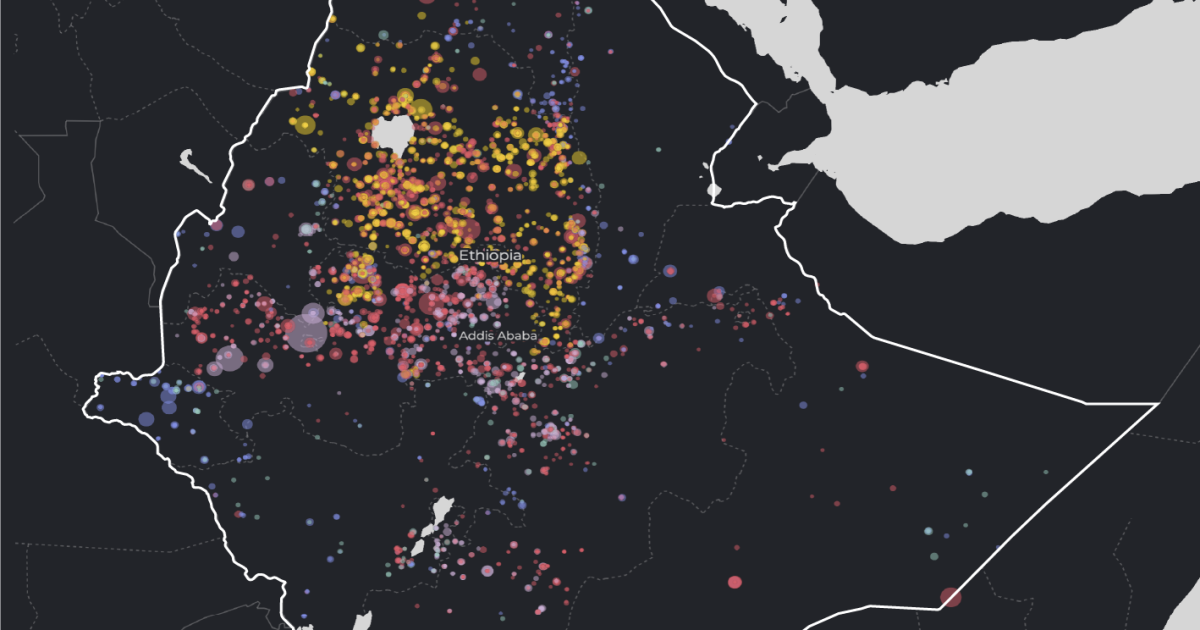
Violence persists across other major regions, with the Amhara area emerging as the most volatile. According to data from the Armed Conflict Location & Event Data (ACLED), more than 7,400 attacks have been recorded across Ethiopia between 1 January 2022 and 15 May 2026. The Amhara region accounted for 3,719 of these attacks, representing over half of the total. Fighting continues between federal forces and the Amhara Fano self-defence force, with battle events recorded across more than 31 districts spanning 11 zones.
In Oromia, the country’s most populous region, 2,735 attacks were recorded during the same period. The violence involves ongoing conflict between federal forces and the Oromo Liberation Army (OLA), as well as communal clashes. Despite a peace agreement signed in December 2024 with a faction of the OLA, reports indicate that government forces continue to commit enforced disappearances and attacks on civilians, including through air and drone strikes. Tigray registered 262 attacks, while the western Gambela region recorded 144.
The election occurs amidst significant economic pressures. The International Monetary Fund projects Ethiopia’s economic expansion at 9.2 percent for 2026, the highest on the African continent. However, inflation remains high at 11.7 percent as of April 2026, alongside foreign exchange shortages and the costs associated with post-war reconstruction. The country’s political structure, subdivided into 12 regional states largely organised around dominant ethnic groups, reflects the diversity of its more than 80 distinct ethnic communities.