England’s World Cup campaign ends in semi-final defeat as Tuchel’s tactics face scrutiny
Head coach Thomas Tuchel’s side were eliminated by Argentina, extending a 60-year wait for a final appearance and reigniting debates over squad selection and tactical DNA.
England’s men’s national football team have been eliminated from the 2026 World Cup following a semi-final defeat to Argentina, extending a 60-year wait for a final appearance. The loss came after a late collapse from a lead, with Argentina scoring three minutes into stoppage time after England had held the advantage since the 55th minute. The result adds to a recent history of near-misses for the national side, including successive European Championship final losses and a 2018 World Cup semi-final defeat by Croatia.
BBC Sport analyst Phil McNulty argues that while Thomas Tuchel’s team displayed significant effort and spirit, they lacked the all-round quality and possession control exhibited by finalists Spain and France. McNulty notes that the campaign was characterised by individual moments rather than consistent good performances, with the team relying heavily on late interventions from captain Harry Kane and Jude Bellingham. Of England’s 14 tournament goals, Kane and Bellingham have scored 12 between them, highlighting a tactical dependence on two outstanding performers.
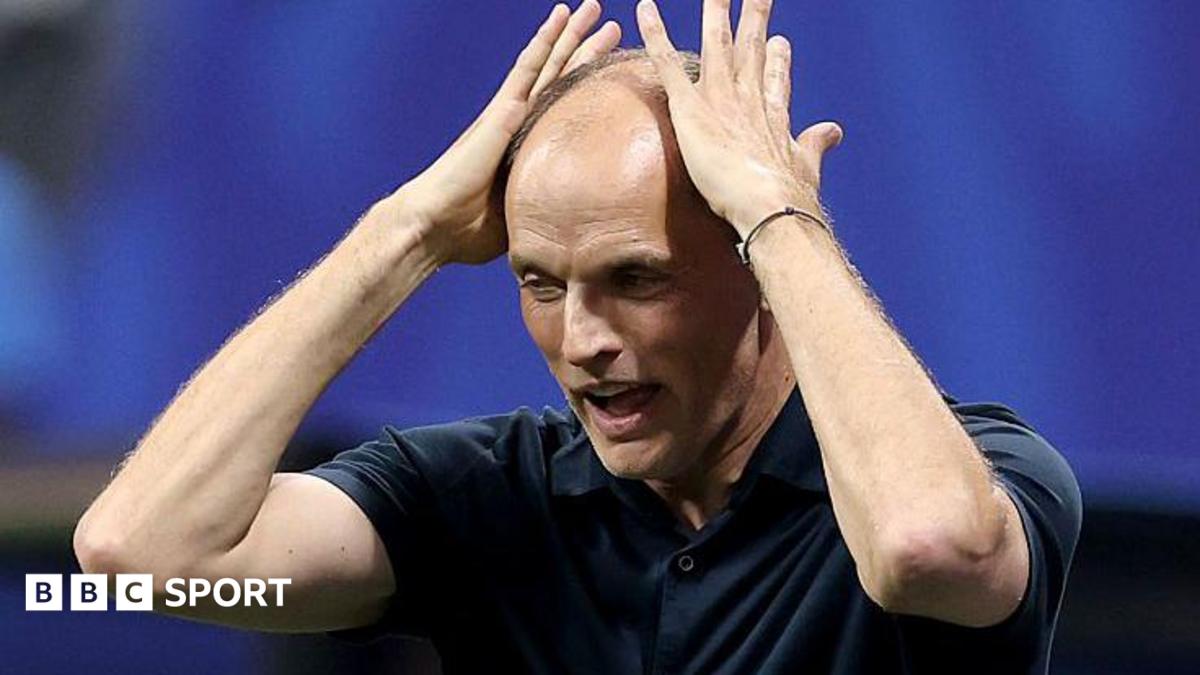
Tuchel himself has been critical of the team’s approach, publicly questioning the squad’s lack of possession “DNA” when compared to the styles of Spain, Argentina, and Brazil. The head coach stated that ball control plays a crucial role in elite football and admitted that taking the ball and dictating the game is not inherent in the English style. This critique follows an outspoken interview after the quarter-final win against Norway, where Tuchel praised the team’s mentality but lambasted their performance quality.
Statistical evidence from the semi-final has drawn sharp criticism of Tuchel’s strategic setup. England held only 12% possession during the period they were leading against Argentina, from the 55th minute to the stoppage-time winner. McNulty suggests that Tuchel’s tactical framework, described as a Premier League template with a back four and specific midfield anchors, failed at the elite World Cup level. The exclusion of key players such as Trent Alexander-Arnold, Cole Palmer, Phil Foden, and Morgan Gibbs-White has been cited as a factor in the team’s inability to control midfield tempo.
Injuries to Arsenal duo Declan Rice and Bukayo Saka further reduced the effectiveness of a squad that McNulty describes as solid and reliable rather than spectacular. While John Stones remains a class act, the team lacks the in-built desire and refusal to be beaten seen in Argentina, aided by Lionel Messi. The Football Association now faces the conundrum of how to address these structural weaknesses ahead of Euro 2028, as Tuchel’s pragmatic approach is scrutinised for falling short of the quality required to win major prizes.