El-Sayed links Muslim American identity to Michigan campaign priorities
The Democratic Michigan Senate candidate used a Detroit speech to address Islamophobia, overseas military action and domestic spending priorities.
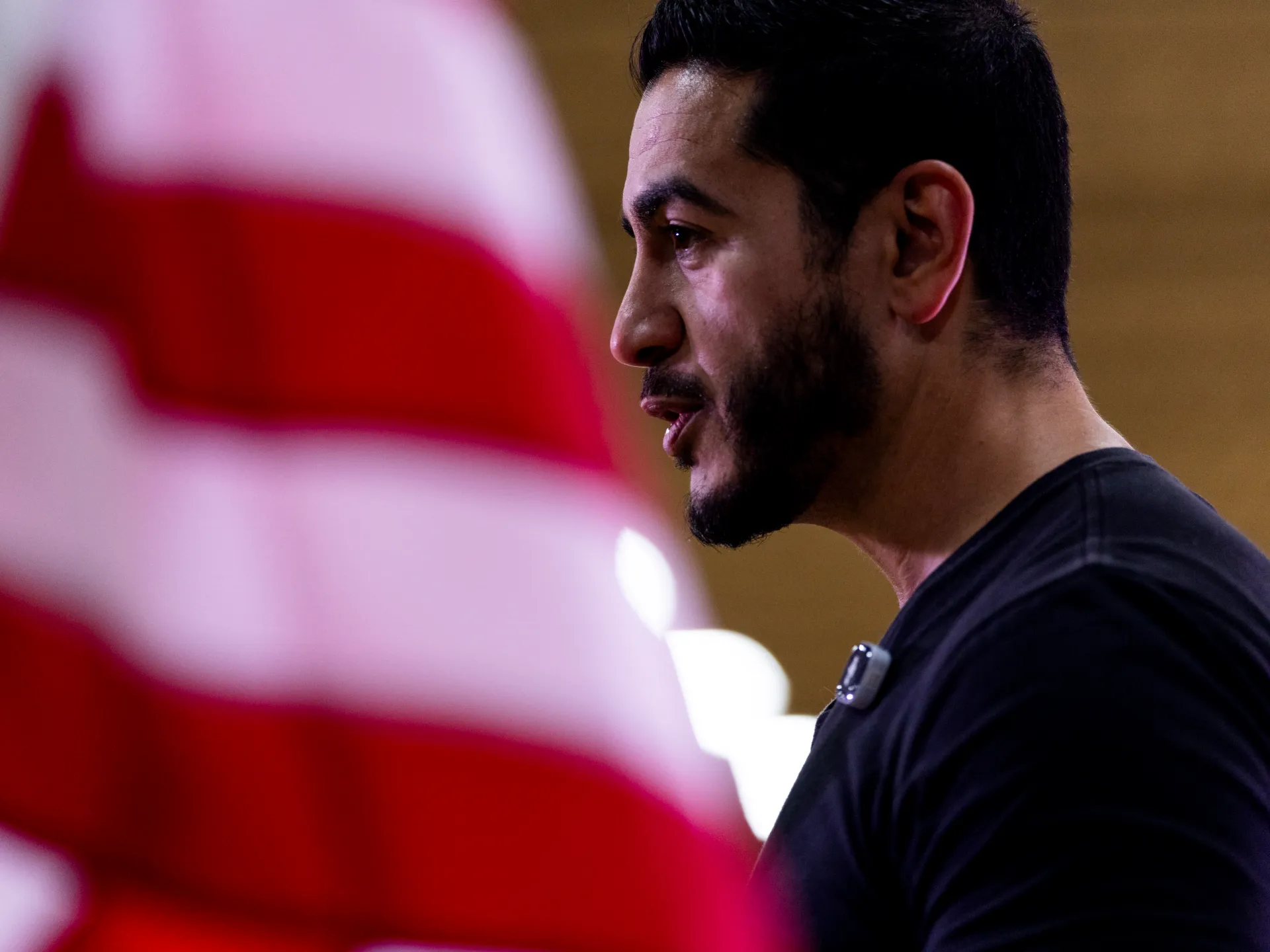
Democratic Michigan Senate candidate Abdul El-Sayed has used a speech in Detroit to argue that Muslim and American identities are compatible, while placing Islamophobia and government spending at the centre of his campaign message.
Speaking at the Annual Islamic Society Conference, El-Sayed said claims that Muslim Americans did not belong in the United States were Islamophobic. He said Muslim Americans contributed to the country and that being Muslim and American were “not mutually exclusive”.
El-Sayed, 41, is seeking the Democratic nomination for Michigan’s Senate seat in the November midterm elections. He is a public health advocate who has faced Islamophobic remarks during the campaign.
The candidate also questioned US spending priorities under President Donald Trump. Referring to what he called the “war in Iran”, El-Sayed asked how it could be funded while US infrastructure was deteriorating and literacy rates were falling.
He said conversations with Michigan residents indicated that concerns about the cost of groceries and petrol cut across religious, racial and geographic divisions. He contrasted those domestic pressures with US and Israeli military actions involving Iran and Gaza, describing the latter in terms including “apartheid” and “genocide”.
Republican Mike Rogers is expected to oppose El-Sayed in the general election and is backed by Trump. The two candidates are scheduled to take part in televised debates on 8 and 21 October, according to the campaign details reported by Al Jazeera.