Egypt prioritises economic survival over military alignment in Iran conflict
President Abdel-Fattah el-Sissi resists calls to expand the Abraham Accords and limit support for Iranian targets, citing domestic stability and regional security concerns.
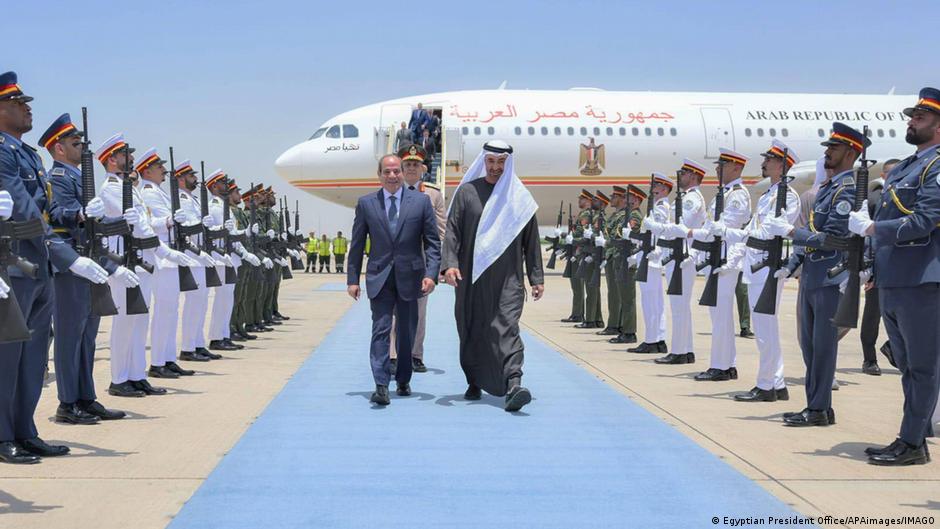
Egypt is navigating a complex diplomatic and strategic dilemma amid the escalating conflict between the United States, Israel, and Iran, prioritising the protection of its fragile economy over military involvement. Cairo faces growing criticism from Gulf allies, particularly the United Arab Emirates, for its limited support against Iranian attacks on regional partners. The Egyptian government is resisting US pressure to expand the Abraham Accords by normalising relations with Israel, citing domestic public opinion and regional security concerns. Egypt’s economy is under significant strain due to reduced Suez Canal revenues, which fell by 38 per cent in the first quarter of 2026, and declining tourism, despite receiving substantial financial injections from Gulf states to offset debt arrears.
The Egyptian government has publicly condemned Iranian attacks on Gulf states while offering limited military support, seeking to position itself as a mediator between Tehran and Washington. This approach mirrors parallel mediation efforts by Pakistan, Turkey, and Qatar. President Abdel-Fattah el-Sissi views the conflict primarily as a threat to domestic stability. Michelle Pace, a Middle East analyst and academic visitor at the University of Oxford, noted that Egypt’s core objective is to stay out of the Iran war while containing its economic and security fallout.
This cautious stance has caused tensions with Egypt’s Gulf partners, who expect support from their allies in the face of Iranian attacks on their territories, interests, and assets. Anwar Gargash, foreign policy adviser to the UAE presidency, posted a statement on X questioning where Arab allies stand during times of hardship, a remark analysts interpret as directed at Cairo. Timothy E. Kaldas, deputy director of the Washington-based Tahrir Institute for Middle East Policy, stated that there are not very subtle statements coming from the UAE indicating frustration and anger with Egypt’s perceived lack of solidarity.
Egypt’s economic recovery, which had shown tentative signs of improving after the consequences of the Ukraine and Gaza wars, is now worsening. The Iran-aligned Houthi militia in Yemen resumed attacks on shipping in the Red Sea and Bab al-Mandab Strait, reducing traffic through the Suez Canal. A recent analysis by the International Crisis Group found that Suez Canal revenues fell by 38 per cent in the first quarter of 2026. Tourism has also declined, and energy and food prices have increased. However, Gulf states have helped stabilise the economy by depositing billions with the Egyptian central bank and committing to major property deals, allowing Egypt to reduce arrears owed to oil and gas partners from approximately $6.1 billion in June 2024 to zero in June 2026.
The United States is also applying diplomatic pressure on Cairo. US President Donald Trump reportedly asked Saudi Arabia, Qatar, Pakistan, Egypt, Turkey, and Jordan to join the Abraham Accords on May 25, 2026, as part of a push for a potential agreement involving Iran. Egypt, which signed a peace treaty with Israel in 1979, has resisted further normalisation. Kaldas views Trump’s push as a desperate effort to claim achievement in the Iran conflict, noting that Egypt is concerned about the hostile posture of Israelis in the region. Furthermore, Cairo is wary of an outright collapse of Iran, which would strengthen Israel’s regional dominance, and must consider public discontent, as a large portion of the Egyptian population supports Iran.