Educators in Coastal Virginia Deepen Earth Systems Training Through NASA and GLOBE Partnership
A collaborative initiative brings authentic NASA data collection and citizen science protocols into regional classrooms, with CTE students assisting in equipment construction.
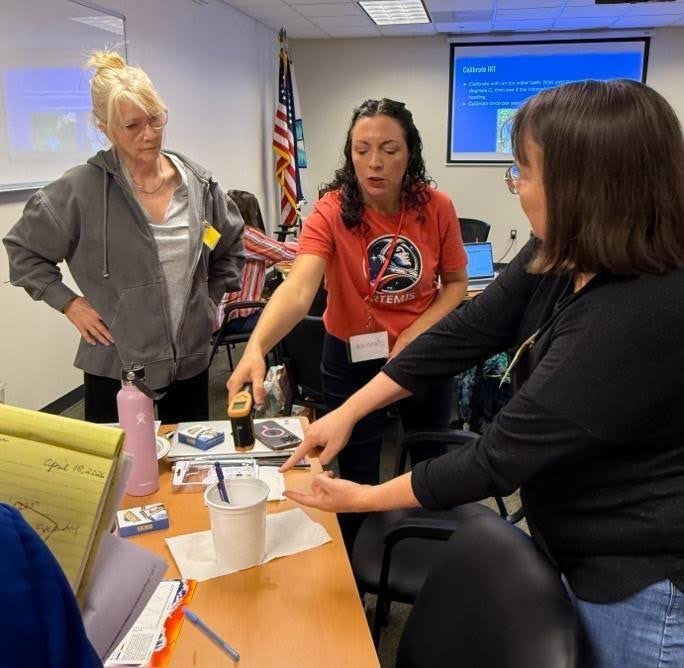
Thirty-eight science educators representing seven school districts across Virginia's Tidewater region have participated in professional learning sessions designed to strengthen the regional STEM ecosystem. The event, held at the National Institute of Aerospace in Hampton, marked a significant step in integrating authentic NASA science into local curricula through a dynamic collaboration between NASA eClips and the GLOBE Program.
The sessions, which took place on March 7 and April 18, 2026, focused on Earth Systems science and provided a three-hour immersive experience for participants. Educators engaged in hands-on investigations covering land cover, surface temperature, clouds, and soil, using scientific instruments such as infrared thermometers and multi-day minimum/maximum thermometers. These practical exercises allowed teachers to examine phenomena like the urban heat island effect and cloud opacity while adhering to GLOBE protocols.
Support for the initiative came from the Coastal Virginia STEM Hub, which secured grant funding to provide educator stipends and purchase essential equipment, including weather instrument shelters and soil kits. This financial backing was instrumental in expanding access to the program, ensuring that participating school divisions could fully integrate the resources into their teaching practices. The effort builds on two years of intentional collaboration between NASA eClips educators, GLOBE scientists from NASA Langley Research Center, and various regional partners.
Career and Technical Education students from Hampton City Schools and Norfolk Public Schools played a vital role in the project by constructing the instrument shelters according to GLOBE specifications. This cross-sector involvement connected younger students to the scientific process while directly supporting their peers' learning needs. Community organisations, including the Elizabeth River Project, also joined forces with the educators to deepen instructional practice and foster a lasting connection between classrooms and community science.
The program aims to bridge content knowledge with real-world application, bringing Earth Systems science to life for both educators and learners. By utilising NASA eClips resources and the GLOBE Observer app, participants gained confidence in collecting accurate environmental data and learned strategies for teaching key Virginia Science Standards of Learning related to weather, climate, and Earth's energy budget. This network of educators, students, and partners is working to ensure that all learners have access to data-driven science experiences that extend beyond the classroom.
As participating school divisions and community organisations continue to incorporate these resources into their outreach efforts, the initiative reinforces the goal of creating a connected, collaborative STEM ecosystem. This approach not only enhances science education but also promotes a deeper understanding of the world by activating minds through authentic scientific practices. The partnership demonstrates how institutional updates and research announcements can be transformed into clear, factual coverage that serves the broader educational community.