Ecuador faces scrutiny over 51 enforced disappearances linked to military operations
Amidst a surge in violence and heavy security deployments under President Daniel Noboa, allegations of human rights abuses have intensified, with the Ministry of Defence accused of refusing to cooperate in key cases.
Al Jazeera reports that 51 people have reportedly disappeared during Ecuadorian military operations since early 2024, prompting a series of human rights concerns under President Daniel Noboa’s administration. Acting Attorney General Leonardo Alarcon confirmed to the network that there are currently 34 preliminary investigations underway regarding these cases. Alarcon stated that while the cases are progressing, the investigations must be conducted rigorously to present compelling evidence to judges.
The allegations have placed significant pressure on the government, which has relied on heavy police and military deployments to combat skyrocketing homicide rates driven by international drug cartels. Despite the stated aim of reducing violence, the administration has been plagued by accusations of human rights abuses. Families of the missing argue that the judicial process is moving at a snail's pace, with many receiving no direct response from authorities for years.
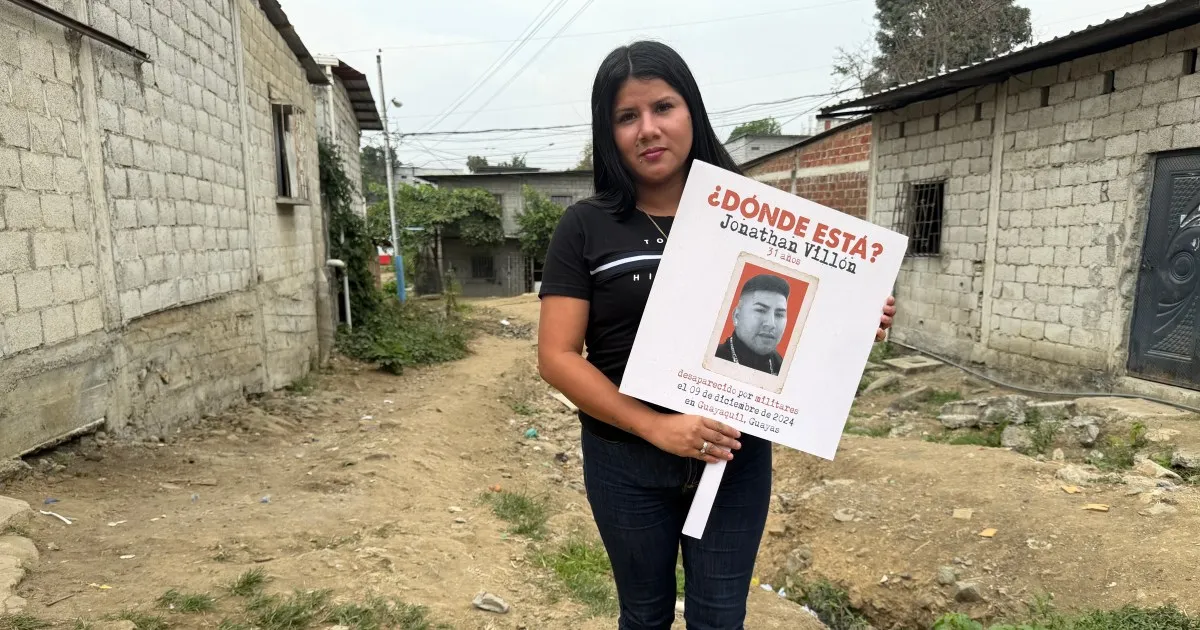
A prominent example of alleged institutional obstruction involves Jonathan Villon, a 31-year-old father of three who was detained by soldiers in Guayaquil on December 9, 2024. Security camera footage and a neighbour’s mobile phone video show soldiers forcing Villon into the bed of a municipal truck under a wooden bench. The family recorded the licence plate numbers of the vehicle, yet the Ministry of Defence has reportedly refused to cooperate with requests for information.
Lawyers representing the Villon family state that the military declared it had no operations in the Nueva Prosperina neighbourhood on the date of the detention, a claim contradicted by the visual evidence. Fernando Bastias, a lawyer with the human rights nonprofit CDH Guayaquil, described the case as completely paralysed by the Ministry’s refusal to hand over requested information to the Prosecutor’s Office. Villon’s partner, Yadira Bohorquez, expressed frustration over the lack of answers despite the available evidence.
In a separate case known as "The Malvinas 4", five soldiers received 30-month sentences and six others received over 30 years for the enforced disappearance and murder of four boys in southern Guayaquil. The conviction marks a significant moment for accountability in the region. Amnesty International campaigner Camila Ruiz Segovia noted that it is unusual for the military to be convicted for enforced disappearances in Latin America, suggesting the verdict could deter future violations.
Despite the convictions, the broader issue of impunity remains a concern for families like the Villons. Al Jazeera reached out to the Ecuadorian military and the office of President Noboa regarding the allegations of forced disappearances but did not receive a response. Families continue to push for the truth, with Bohorquez stating her hope that they will be victorious in their battle and that all missing family members are alive.