Economists challenge Unite’s stance on Miliband as Labour Treasury race heats up
More than 40 academics urge Sharon Graham to withdraw claims that Energy Secretary would destroy jobs, amid speculation over who succeeds Rachel Reeves.
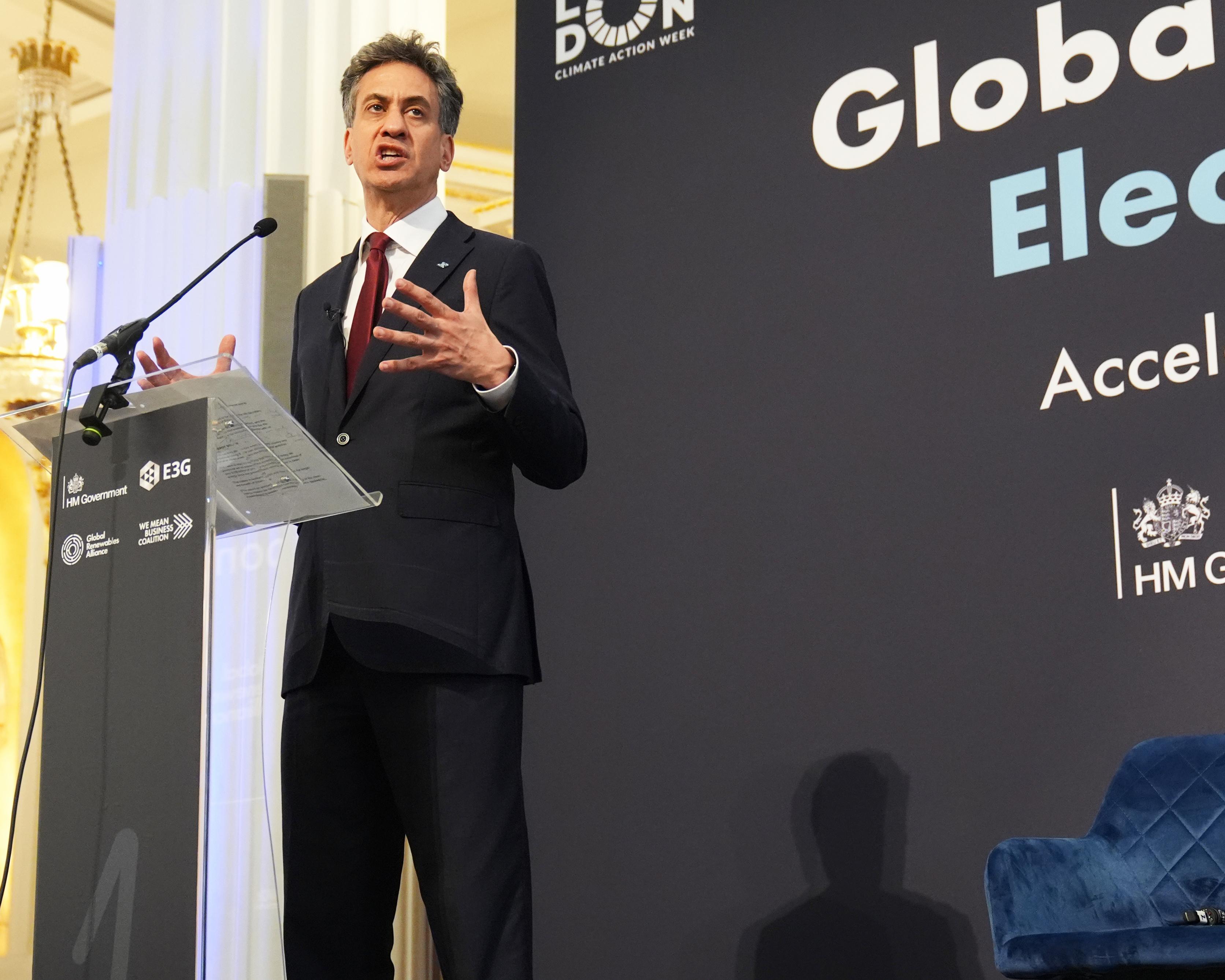
More than 40 progressive economists have issued an open letter to Sharon Graham, leader of the Unite union, urging her to retract claims that Energy Secretary Ed Miliband would jeopardise employment if appointed chancellor. The intervention comes as internal debates intensify within the Labour Party regarding who will succeed Rachel Reeves at the Treasury, with Miliband considered a frontrunner as Andy Burnham is expected to assume the role of prime minister.
Graham previously told the Sunday Times that Miliband’s commitment to net zero targets would act as a “noose around the neck” of job creation. She argued that the Energy Secretary has shown “almost no thought for jobs, skills and national security,” advocating instead for new licences for North Sea oil and gas extraction, a position shared by the GMB union. Unite has also expressed frustration over the closure of UK oil refineries and a perceived lack of British jobs in the offshore wind industry.
In response, the signatories to the open letter, including academics such as Kate Pickett, Danny Dorling, and Daniela Gabor, countered that the climate transition is a primary driver of industrial employment. They stated that the net zero economy generates output worth over £100bn and employs more than a million workers, figures they argue will grow as the sector expands. The letter emphasised that workers driving this transition require union representation and government champions.
The economists asserted there is “no alternative to the green transition,” citing the immediate effects of climate change. They supported Miliband’s opposition to further expansion of North Sea oil and gas, aligning with his recent speech at London Climate Week where he claimed the UK’s clean economy is booming. The group stressed that the economic benefits of green energy investment are already evident and expanding.
This academic pushback occurs against a backdrop of significant political manoeuvring. Burnham is expected to become Labour leader on 17 July if he does not face a challenge, a scenario that appears unlikely after Wes Streeting threw his weight behind the former Greater Manchester mayor. Other potential candidates for the Treasury include Streeting, Foreign Secretary Yvette Cooper, and former Defence Secretary John Healey.
Burnham’s adviser, Mathew Lawrence, recently published a paper calling for an ambitious programme of renationalisation for key utilities, signalling a desire for a significant shift in economic policy. Meanwhile, Rachel Reeves’s Treasury has continued to issue press releases, including the nomination of Jonathan Haskel as the next chair of the Office for Budget Responsibility, insisting on business as usual as the leadership transition approaches.