Eclipse Tourism Strains Infrastructure as Northern Spain Braces for Celestial Event
The first total eclipse in mainland Europe in two decades offers scientific insights but tests local emergency services amid scorching summer temperatures.
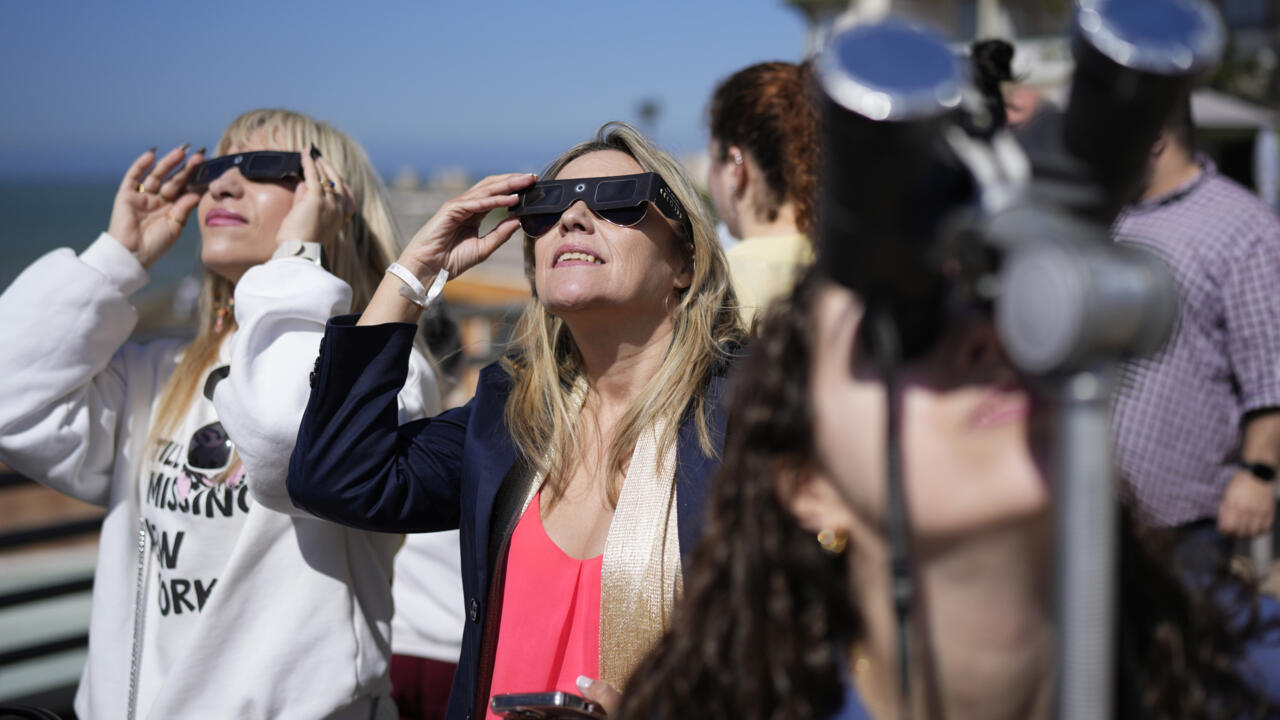
Spanish authorities have issued urgent public safety warnings as millions of skywatchers prepare to view a total solar eclipse on Wednesday evening, 12 August 2026. The event, described as one of Europe’s most anticipated astronomical occurrences of the decade, marks the first total eclipse in mainland Europe since 2006. Officials are managing a significant influx of visitors, with estimates suggesting an additional half a million people will travel to rural areas to witness the phenomenon.
The eclipse shadow is scheduled to begin in Russia’s remote Arctic north at approximately 1700 GMT. It will traverse an arc over Greenland and Iceland before crossing Spain diagonally from the northern Atlantic coast to the Mediterranean Sea, where it will vanish around 1830 GMT. In Spain, totality—the moment the moon completely obscures the sun—is expected to last less than two and a half minutes, briefly plunging parts of the Iberian Peninsula into daytime darkness.
The concentration of observers has placed considerable strain on local infrastructure in northern Spain, which is already grappling with scorching summer temperatures and existing wildfires. Spanish authorities have launched a large public safety campaign to mitigate risks, particularly concerning the potential for new fires sparked by crowds flocking to rural locations. Residents and visitors alike have been urged to exercise caution as the region balances the logistical demands of hosting a major international event with ongoing emergency responses.
Beyond the immediate spectacle and logistical challenges, the celestial alignment offers scientists valuable opportunities for research. Eclipses continue to provide insights into the sun’s corona and animal behaviour, a practice observed for more than two millennia. The event is expected to draw attention from the scientific community as well as the general public, who are rushing to acquire specialized viewing glasses to safely observe the rare occurrence.
While totality will be visible only along a specific path, a partial eclipse will be observable across most of Europe, Canada, the northern United States, and northwest Africa. The widespread visibility ensures that millions more will witness the celestial event, even if they do not experience the brief transition from day to night seen in the path of totality. The alignment of the sun, moon, and earth at sunset promises to be a significant moment for skywatchers across the affected regions.