Duke’s Meyer Emerges as Strategic Asset Amidst High-Profile Freshman Class
While Cameron Williams and Joaquim Boumtje Boumtje dominate headlines, Maxime Meyer’s physical profile and skill set suggest a calculated redshirt strategy to align with evolving centre requirements.
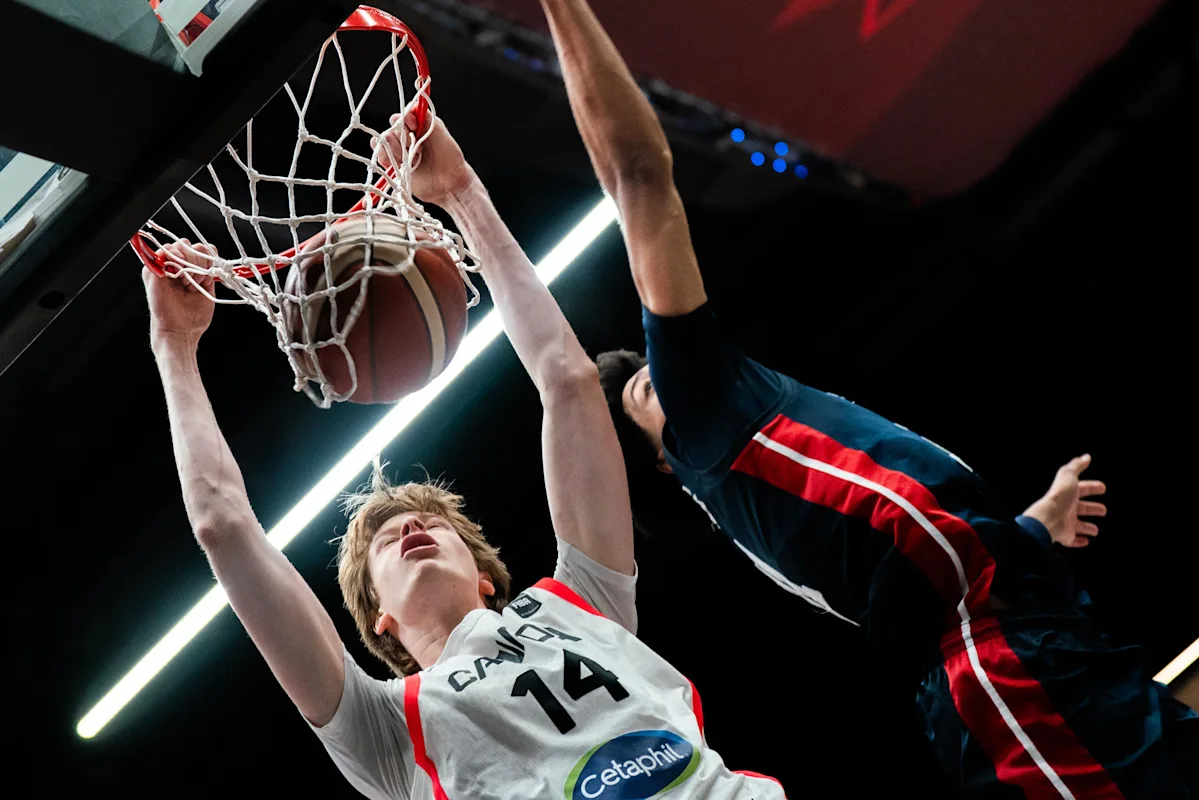
Duke University is preparing for a significant expansion of its athletic roster, with a freshman cohort that includes Cameron Williams, Joaquim Boumtje Boumtje, Deron Rippey, and Bryson Howard. While media attention has largely concentrated on these high-profile recruits, institutional assessment indicates that 18-year-old centre Maxime Meyer represents a critical component of the university’s long-term strategic planning. Meyer’s development trajectory suggests a deliberate approach to physical conditioning rather than immediate on-court deployment.
Standing at 7-foot-1, Meyer possesses a skill set that aligns with the current structural shift in basketball towards traditional big men. Video analysis confirms strong post skills, including the ability to score with either hand, effective passing mechanics, and distinct instincts for shot-blocking and rebounding. These attributes indicate a player who understands spatial awareness and defensive positioning, qualities that are increasingly valuable in modern institutional basketball frameworks.
However, the primary constraint on Meyer’s immediate utility is physical imposition. At his current stage of development, he struggles to exert force against established opponents, a common challenge for athletes who have undergone rapid growth. Institutional analysts note that players of this stature typically require several years to fully develop the muscle mass necessary to compete at the collegiate level. This physiological reality necessitates a patience-based approach to his integration into the team.
Recent evaluations suggest that Meyer may utilise a redshirt season to focus exclusively on gaining weight and muscle. Projections indicate a target weight of approximately 250 pounds, a threshold that would significantly enhance his ability to hold position in the post and protect the rim. By deferring his competitive debut, the university can ensure that Meyer enters the rotation with the physical durability required to sustain performance over a full season.
The absence of a visible three-point shot in current footage does not detract from Meyer’s value, as his primary function is rooted in interior play. With the game trending back towards the importance of centres, Meyer’s profile positions him to capitalise on this structural change. His combination of size, instinct, and potential physical growth offers Duke a versatile asset who can affect shots and dominate the boards once fully developed.