Dozens killed in Quetta train bombing claimed by Baloch separatists
A suicide car bomb detonated near a train carrying soldiers in Pakistan’s Balochistan capital, prompting claims of responsibility from a local separatist group and raising fresh concerns over governance and security in the province.
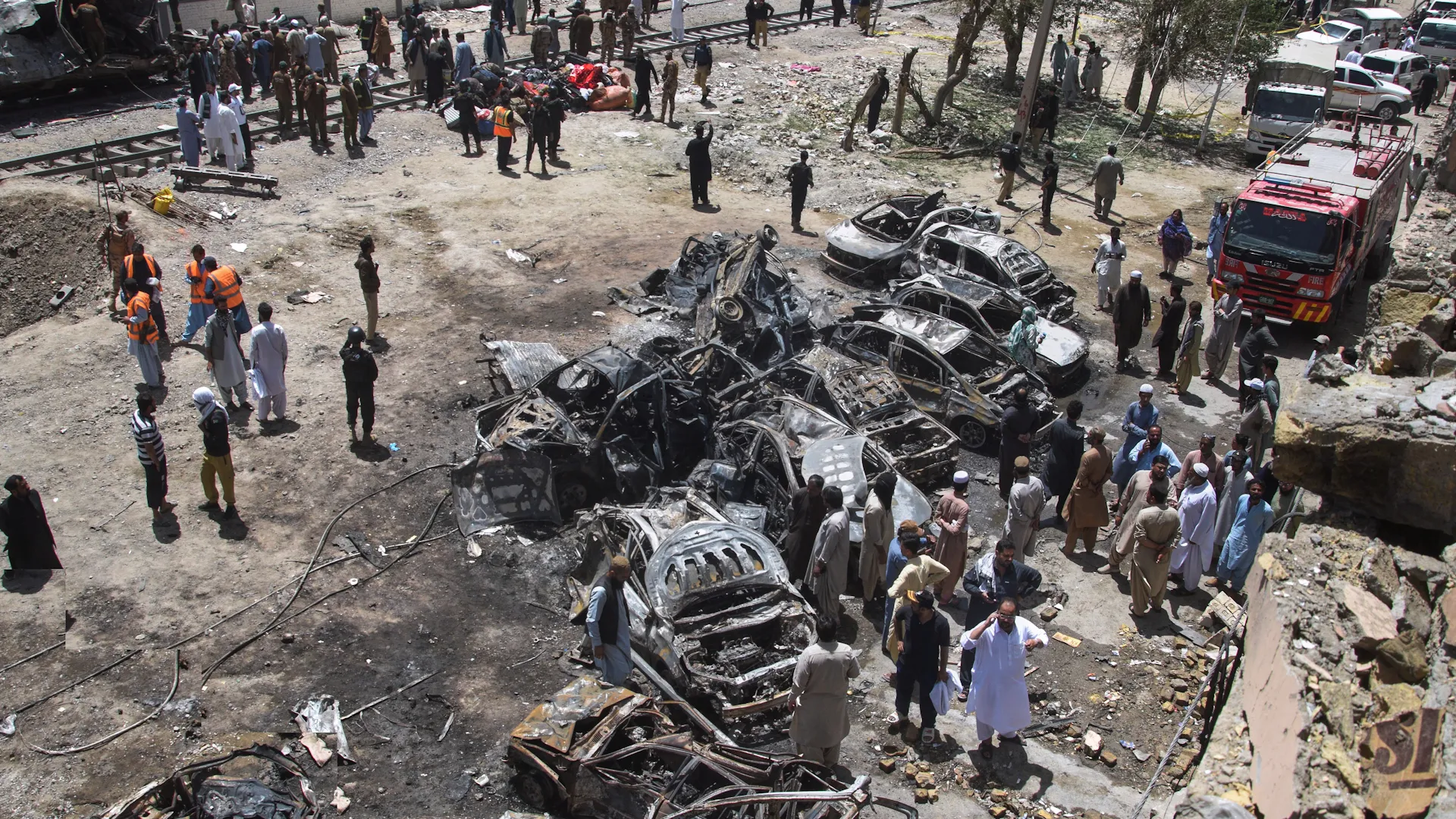
A suicide car bombing has struck a train carrying soldiers in Quetta, the capital of Pakistan’s Balochistan province, resulting in dozens of deaths. The attack, which targeted military personnel rather than infrastructure assets, has drawn immediate claims of responsibility from a Baloch separatist group, underscoring the persistent security challenges facing the region.
While the specific identity of the separatist group has not been explicitly named in the initial reports, the incident echoes previous violence in the area. The Balochistan Liberation Army (BLA), a prominent separatist organisation, has previously claimed responsibility for similar attacks in Quetta, including a past bombing that killed at least 20 people and wounded more than 50 others.
The detonation occurred as the train travelled through the city, a location that has historically been a flashpoint for separatist activity. The use of a suicide car bomb highlights the evolving tactics employed by insurgent groups in the province, which has long grappled with an insurgency driven by demands for greater autonomy and resources.
Although the broader security landscape in Balochistan is often linked to the China-Pakistan Economic Corridor (CPEC) and anti-Chinese sentiment, this particular incident focused on military targets. The CPEC, a flagship component of Beijing’s global infrastructure strategy, connects China’s Xinjiang region to Pakistan’s Gwadar port, but officials maintain that this attack was distinct from threats to economic infrastructure.
Casualty figures remain fluid, with authorities reporting dozens of fatalities. Precise numbers for both deaths and injuries have not yet been confirmed, and the exact mechanics of the blast—whether the vehicle struck the train directly or detonated nearby—are still being assessed. Claims of responsibility from separatist groups are typically treated with caution until corroborated by independent authorities or official Pakistani government statements.
The incident adds to a complex security environment in which the provincial government continues to struggle with maintaining order. With a history of high-profile bombings and ongoing unrest, the attack on the soldier-carrying train serves as a stark reminder of the fragility of security in Balochistan and the challenges inherent in governing a region with deep-seated political grievances.