Disinformation and funding cuts complicate Ebola response in DR Congo
The Democratic Republic of Congo’s 17th Ebola epidemic is being exacerbated by widespread rumours and reduced international health aid, according to reports from the Africa Centres for Disease Control and Prevention.
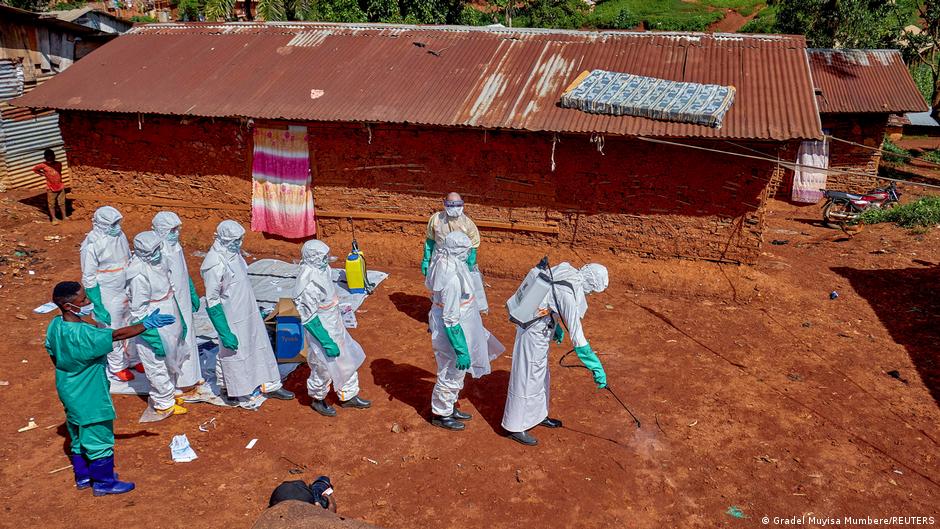
The Democratic Republic of Congo is currently managing its 17th Ebola epidemic, caused by the Bundibugyo variant, which has recorded 397 confirmed cases and 63 deaths. According to the African Union’s Africa Centres for Disease Control and Prevention (Africa CDC), containment efforts are being severely hindered by disinformation, particularly in Mongbwalu, Ituri province. Health officials report that community trust in scientific explanations has eroded, with residents initially attributing the deaths to common illnesses such as malaria or typhoid.
The National Institute for Biomedical Research (INRB) confirmed the Ebola diagnosis, yet local acceptance remains low. In Mongbwalu, rumours circulated that coffins were spreading the disease and that aid workers were transmitting the virus via vehicle antennas. These claims culminated in late May when an angry crowd gathered at the general hospital, demanding bodies and setting fire to a tent belonging to Doctors Without Borders (MSF). The organisation withdrew its staff, and hospital director Richard Lokudi confirmed that the resulting panic allowed 18 suspected patients under observation to disappear.
There is currently no vaccine available for the Bundibugyo variant circulating in the region. Christopher Nehring, who co-authored a report on the epidemic for the Konrad Adenauer Foundation, noted that such conspiracy theories are a recurring feature of health emergencies. He identified narratives claiming the disease is a bioweapon or that Big Pharma is concealing a cure. Nehring emphasised that these patterns are well-documented and vary across different crises, often exploiting public fear and uncertainty.
Economic and political factors further complicate the response. Ange Kasongo, founder of the fact-checking group Balobaki Check, highlighted that economic pressures in Ituri’s gold mining sector fuel myths about mystical acts being used to eliminate competitors. Additionally, WhatsApp messages circulated claims of a conspiracy between President Felix Tshisekedi and virologist Jean-Jacques Muyembe to wipe out the eastern population. Balobaki Check found no evidence to support these allegations.
International funding for health aid has also diminished, exacerbating the crisis. The United States withdrew from the World Health Organization in 2025 and implemented cuts to USAID and CDC crisis management programs. European governments have similarly reduced funding, partly due to costs associated with militarisation efforts following the war in Ukraine. Nehring argued that these budget cuts limit resources for health communication, while Kasongo noted that authorities face challenges in disseminating reliable information orally across diverse linguistic communities.