Diplomatic row deepens as China and Philippines summon ambassadors over South China Sea clash
Beijing lodges formal protests against Manila while Australian and US officials denounce Chinese conduct as destabilising in the disputed waterway.
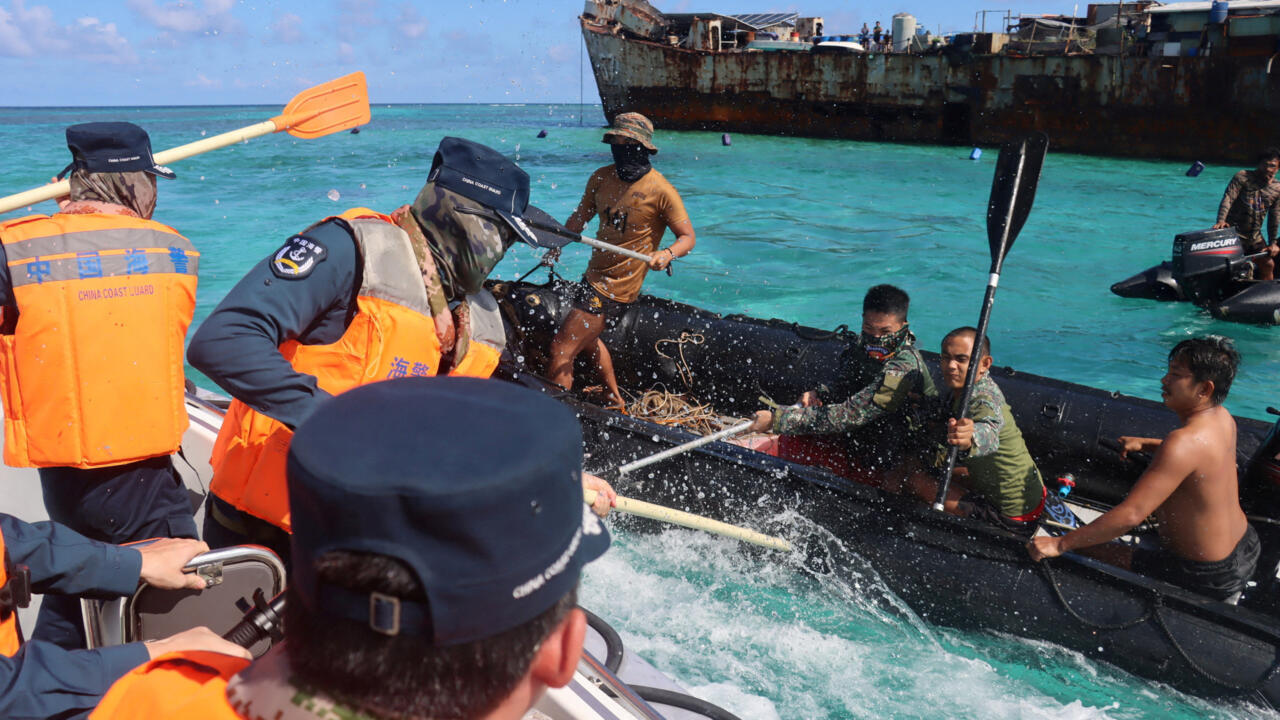
Beijing has summoned the Philippine ambassador to lodge solemn representations following a physical confrontation between naval personnel at Ren'ai Reef, also known as the Second Thomas Shoal, in the South China Sea. The diplomatic summons, issued on Tuesday, marks a significant escalation in tensions over the contested maritime zone, prompting Manila to reciprocate by announcing that President Ferdinand Marcos Jr will summon the Chinese ambassador in response.
The incident centres on allegations of physical aggression during a supply run to the grounded BRP Sierra Madre, a vessel that has long served as a Philippine garrison. The Philippine military accused the China Coast Guard of clubbing a Filipino sailor with a baton as personnel approached the ship. Conversely, the China Coast Guard alleged that two rubber boats rammed a Chinese patrol vessel and that Philippine personnel initiated "malicious attacks" using oars and long sticks. Beijing has firmly rejected Manila's claims, asserting that the Philippine side provoked the confrontation and distorted the facts.
In a statement released on Tuesday, China’s foreign ministry condemned the Philippine actions as a "deliberate provocation," arguing that Manila had turned the blame upside down. The China Coast Guard further stated that it allowed the transfer of injured personnel via small shuttle boats from the grounded warship "out of humanitarian consideration," while maintaining that its officers acted in self-defence against the alleged assault.
The clash has drawn sharp rebukes from key regional allies, highlighting the geopolitical stakes of the dispute. Australian Foreign Minister Penny Wong condemned China’s conduct as "destabilising and dangerous," aligning with the United States, which denounced Beijing’s actions as aggressive. The comments come as US Secretary of State Marco Rubio arrived in Manila for an Association of Southeast Asian Nations summit, underscoring Washington’s continued focus on the region.
Rubio, who published an op-ed reaffirming the US defensive umbrella and freedom of navigation in Southeast Asia, indicated openness to meeting Chinese Foreign Minister Wang Yi during the summit. While the two diplomats met previously in Kuala Lumpur last year and in Munich in February, talks have not been publicly confirmed. Rubio warned in his commentary that if the waters fell under the control of a power willing to use trade as a geopolitical weapon, it would pose serious threats to the sovereignty and economic future of ASEAN states.
The dispute remains rooted in overlapping territorial claims, with China asserting sovereignty over almost the entire South China Sea despite a 2016 international arbitration ruling that found its claims to have no legal basis. The Second Thomas Shoal lies within the Philippines’s exclusive economic zone under the United Nations Convention on the Law of the Sea, a provision China has ratified but continues to contest. Altercations in the heavily patrolled waterway remain frequent, reflecting the ongoing volatility of the region’s maritime security architecture.