Diplomatic friction escalates at UN Security Council as Tokyo and Beijing clash over maritime security
Japan voiced deep concern over Beijing's maritime expansion while China issued a direct rebuttal in a high-profile exchange at the United Nations.
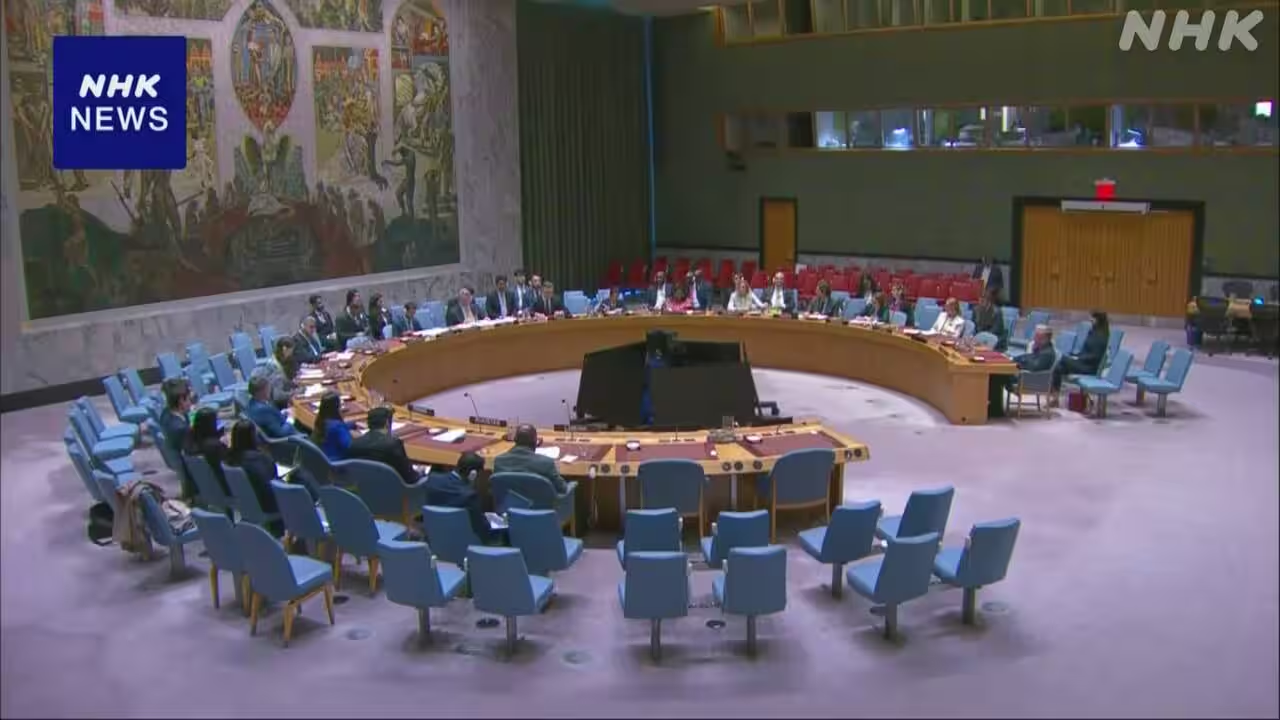
On 28 April 2026, a gathering convened at the United Nations Security Council to address maritime traffic safety took an unexpected diplomatic turn. The session, intended as a technical discussion on navigation, became the venue for a sharp confrontation between Tokyo and Beijing.
During the proceedings, Japan articulated deep concern regarding the ongoing situation in the East and South China Seas. The Japanese delegation attributed the instability in these critical waterways to continued Chinese maritime expansion, framing the issue as a significant threat to regional security.
China responded immediately to these assertions with a direct rebuttal. The exchange quickly escalated, resulting in a mutual exchange of criticism between the two nations. The United Nations Security Council, the primary body for addressing international disputes, thus witnessed a high-level diplomatic standoff rather than a collaborative dialogue.
This incident underscores the long-standing geopolitical friction that characterises relations between Japan and China in the region. Previous reports have highlighted recurring disputes over maritime boundaries, resource rights, and freedom of navigation, making the East and South China Seas persistent flashpoints.
The specific parameters of China's rebuttal were not detailed in the available reporting, though the nature of the response clearly rejected Tokyo's characterisation of its activities. The term "maritime expansion" used by Japan serves as a charged descriptor that contrasts with how Beijing likely frames its actions as legitimate defence or sovereignty enforcement.
No joint statement or resolution emerged from the session to mitigate the immediate tension. While the Security Council remains the principal forum for maintaining global security, this encounter suggests that diplomatic channels are currently strained by the competing narratives of the two powers.