Developing Low-Pressure System Triggers Violent Wind Warnings for Tohoku Amid Golden Week Travel Surge
The Japan Meteorological Agency monitors intensifying conditions in eastern Japan, with specific alerts issued for the Tohoku region regarding structural and logistical risks.
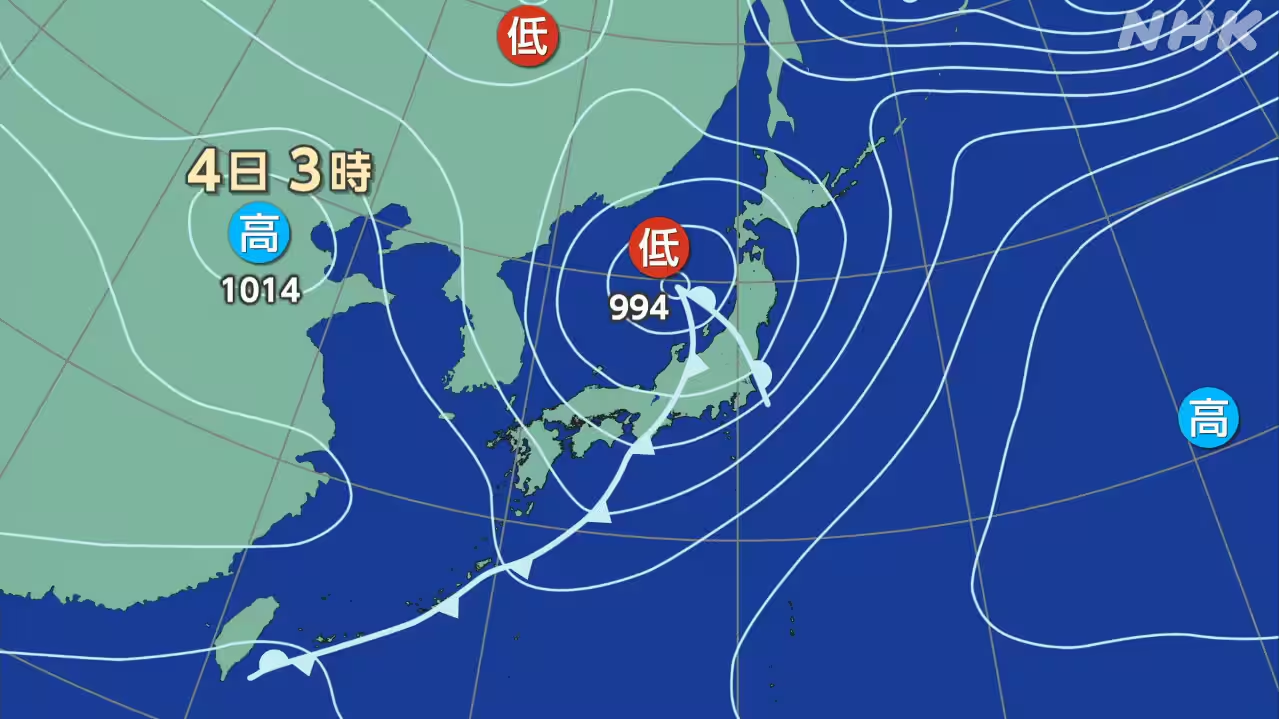
A developing low-pressure system has intensified rainfall and wind conditions across eastern Japan, prompting immediate concerns for public safety and infrastructure stability. According to reports from NHK, the weather event has already manifested as strengthened rain and winds since early morning on 4 May, creating a volatile environment for the region.
While the system affects a broad area, the Japan Meteorological Agency has issued a specific warning for the Tohoku region regarding the onset of violent winds starting from the evening of 4 May. This classification indicates a significant hazard level that poses a threat to structural integrity and could lead to severe travel delays or fallen trees, requiring authorities to monitor potential impacts on transport networks closely.
The timing of this meteorological event coincides with the Golden Week long holiday period, a time when travel volumes and the usage of transport infrastructure typically reach their peak. This convergence of high mobility and severe weather conditions has elevated the risk of widespread disruption, as the population concentrates on movement while the physical infrastructure faces the strain of violent atmospheric forces.
Initial impacts have already been observed in neighbouring prefectures, including Kanagawa, Ibaraki, and parts of Shizuoka, where approximately 8,500 households are currently experiencing power outages. Simultaneously, service suspensions have been recorded on major railway lines, specifically the JR Inobō Line and the Odakyu Odawara Line, highlighting the immediate vulnerability of critical transport links to the intensifying system.
Although the exact duration and peak intensity of the violent winds in the Tohoku region remain unspecified at this stage, the risk is described as imminent for the evening. Authorities caution that the actual occurrence of violent winds may vary by specific location within the region, yet the potential for damage remains high enough to warrant strict adherence to safety warnings issued by the meteorological agency.
As the system continues to develop, the focus remains on the governance of emergency response and the resilience of the transport grid. The situation underscores the necessity for continuous monitoring by the Japan Meteorological Agency to assess the full extent of infrastructure damage and manage the logistical challenges posed by the evolving weather pattern.