Deutsche Welle outlines rigorous standards for verifying AI-generated and political claims
The broadcaster has detailed its reliance on open-source intelligence and the two-source principle to combat disinformation, while acknowledging the limitations of automated detection tools.
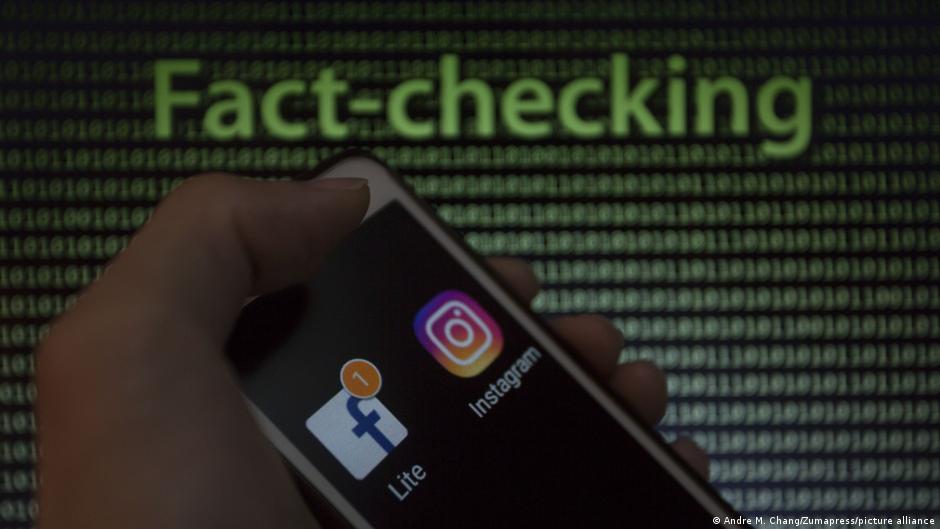
Deutsche Welle (DW) has published a comprehensive overview of its fact-checking methodology, detailing the institutional protocols used to verify online claims. The report, which was first published in 2023 and recently revised, outlines how the organisation investigates statements from politicians, government officials, and public figures, as well as content potentially generated or manipulated by artificial intelligence.
The verification process relies heavily on open-source intelligence (OSINT) tools and a strict adherence to the two-source principle. Journalists trace claims to their original sources, examining supporting evidence and comparing it against reliable data, documents, and expert assessments. DW maintains a dedicated website that details the specific workflows and techniques used to verify images, videos, audio recordings, and text-based claims.
Transparency remains a central pillar of the broadcaster’s editorial framework. Every fact check includes hyperlinks to the sources used, allowing readers to review the same evidence relied upon by journalists. Interviews are recorded with consent and archived, and sources are named by occupation wherever possible. Anonymity is granted only in rare cases where security is at stake, with the reasons for such decisions clearly disclosed.
The publication addresses the growing role of artificial intelligence in journalism and disinformation. While DW uses AI to improve workflows, accessibility, and data analysis, it maintains that humans remain responsible for every journalistic decision. The organisation explicitly labels content verified as AI-generated or manipulated and discloses when AI tools are used in the verification process. However, DW notes that AI detectors are used with great caution due to frequent inaccuracies, and findings are always reviewed by journalists using additional evidence.
DW Fact check has been a member of the International Fact-Checking Network (IFCN) since March 2024. Membership in the IFCN, which comprises more than one hundred organisations, requires annual confirmation and adherence to 31 criteria, including a commitment to non-partisanship and transparent corrections. Additionally, DW operates as part of the ARD Fact-Check Network, which aggregates the expertise of fact-checking teams from Germany’s ARD public broadcasters.
The broadcaster emphasises that while it encourages public submissions of claims, it cannot guarantee that every suggestion will be investigated. Editorial decisions are guided by specific criteria, available resources, and the feasibility of verification. DW states that any errors in its reporting are corrected transparently as soon as they are identified, with clear indications of changes made to the original content.