Deutsche Welle debunks viral claims of Zelenskyy’s death in Russian airstrike
President Volodymyr Zelenskyy is confirmed alive following a meeting with OECD Secretary-General Mathias Cormann, as experts warn of coordinated bot activity targeting the information environment.
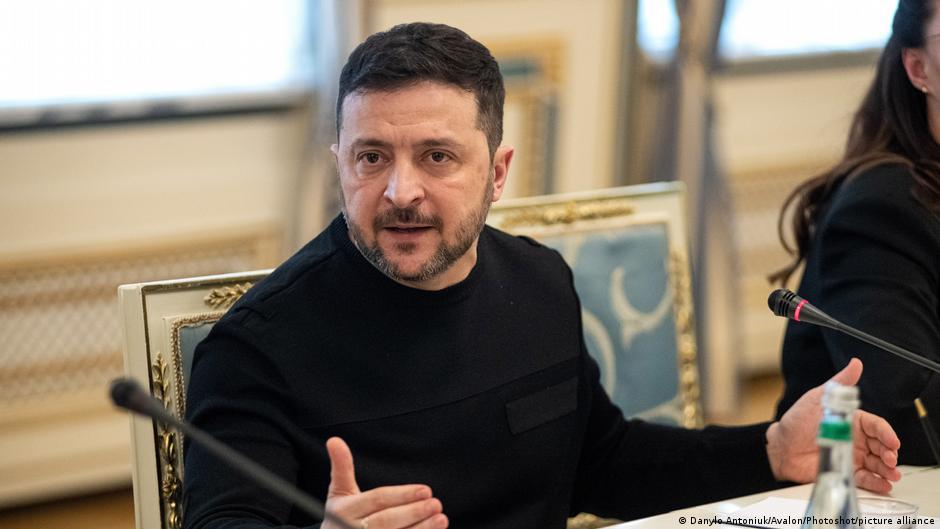
Deutsche Welle has formally debunked viral social media assertions that Ukrainian President Volodymyr Zelenskyy was killed in a Russian airstrike, identifying the claims as part of a coordinated disinformation campaign. The investigation confirms the president is alive, having recently met with OECD Secretary-General Mathias Cormann to discuss Ukraine’s bid for membership in the intergovernmental economic organisation.
The viral posts, which garnered millions of views, relied on a 15-second video depicting a massive explosion and mushroom cloud. A reverse image search traced the footage to the 2015 Tianjin warehouse explosion in China, a disaster that resulted in 173 deaths. The video, which includes audio of onlookers shouting in English, bears no connection to events in Ukraine.
Accounts disseminating the false report exhibited characteristics consistent with bot networks. Analysis identified at least 30 posts with near-identical wording, many utilising generic names such as "Russian Army" or "China HD" alongside flag avatars. Stylistic inconsistencies were also noted, including a shared typo in the phrase "Zelensky has died.!" and the specific capitalisation of "RUSSIAN AERIAL ATTACK."
The surge in disinformation coincided with heightened military activity between Russia and Ukraine. The claims emerged shortly after Ukraine attacked an oil depot in Crimea and followed an open letter from Zelenskyy to Vladimir Putin requesting a face-to-face meeting. Experts note that such narratives are designed to elicit strong emotional responses and manipulate the online information environment during periods of real-world escalation.
Major Ukrainian news outlets, including The Kyiv Post, Kyiv Independent, Ukrainska Pravda, and UNIAN, published no reports regarding the incident, further undermining the credibility of the claims. The OECD also confirmed via email that the meeting between Zelenskyy and Cormann took place, with the official OECD X account retweeting video evidence of the encounter.
Pablo Maristany de las Casas, an analyst at the Institute for Strategic Dialogue Germany specialising in pro-Russia disinformation, highlighted a broader trend of AI-generated content claiming leaders have been captured or killed. He cited similar false reports targeting Israeli Prime Minister Benjamin Netanyahu and Venezuelan President Nicolas Maduro, noting that generative AI tools are making such unrealistic scenarios visually feasible for consumers.
This incident mirrors previous attempts to spread death rumours about Zelenskyy, including a nearly identical claim earlier in June from the same accounts and a 2022 pro-Russia campaign alleging suicide, as documented by cybersecurity firm Mandiant. The recurrence of these narratives underscores the persistent effort to destabilise public trust through fabricated news cycles.