Defensive rigidity and midfield control define Spain’s path to World Cup final against Argentina
As Spain and Argentina prepare for the first-ever World Cup final between the two nations, institutional data highlights a stark contrast in defensive solidity, with Spain conceding just one goal compared to Argentina’s seven.
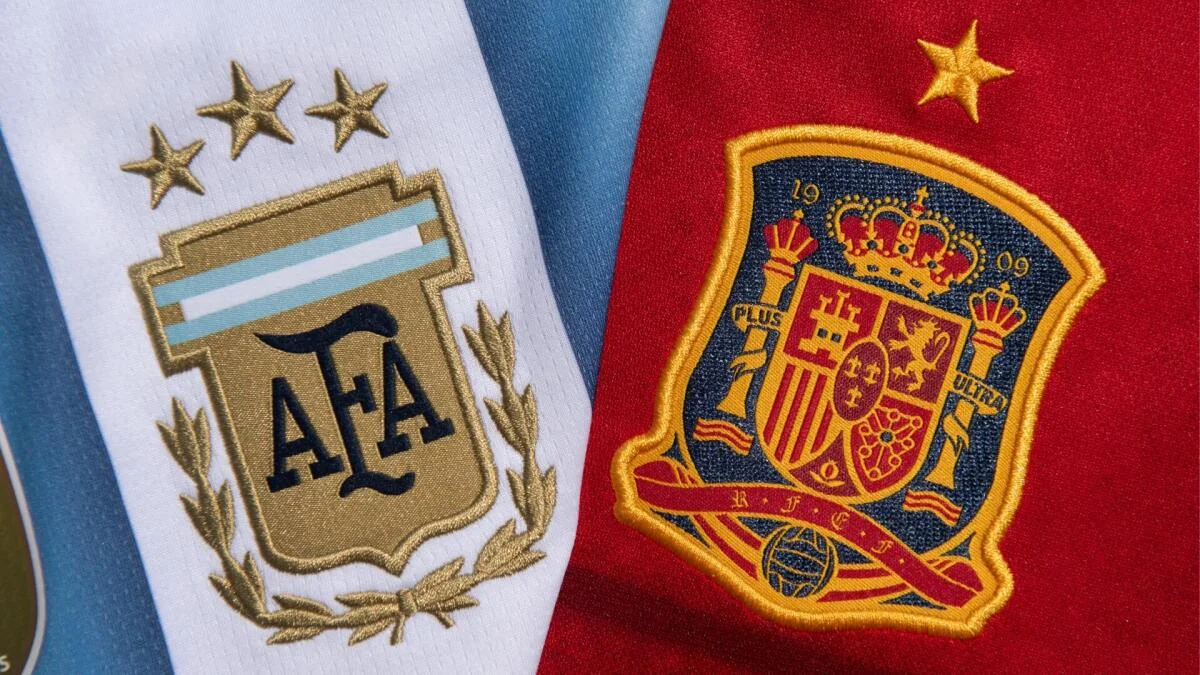
Spain and Argentina are set to contest the first-ever World Cup final between the two nations on Sunday at 3 p.m. ET in New Jersey. The match presents a historic juncture for both institutions: Spain aims to become only the third nation in history to win back-to-back World Cup titles, following Italy in the 1930s and Brazil in the 1950s, while 39-year-old Lionel Messi seeks a second World Cup title to cement his legacy.
Spain enters the final with a defensive record that underscores their institutional stability, having conceded only one goal across seven matches. This metric contrasts sharply with Argentina, who have conceded seven goals during the tournament. Spain’s defensive unit, featuring players such as Marc Cucurella, Pau Cubarsi, and Pedro Porro, has been described as one of the toughest systems to break down, combining solid defending with composure on the ball.
In goalkeeping, Spain holds a depth advantage with Unai Simon, David Raya, and Joan Garcia available, whereas Argentina relies on Emiliano Martinez, who won the Golden Glove in 2022. While Martinez has a proven track record as a difference-maker on the biggest stage, Spain’s defensive structure has provided greater consistency throughout the 2026 tournament.
The midfield battle is equally critical, with Spain fielding a roster that includes 2023 Ballon d’Or winner Rodri, Pedri, and Fabian Ruiz. These players provide creativity and control, contrasting with Argentina’s reliance on the athleticism and physicality of Leandro Paredes, Rodrigo De Paul, and Enzo Fernandez. Alexis Mac Allister has also emerged as a key contributor for Argentina in both defensive and possession phases.
Spain’s attack is anchored by Mikel Oyarzabal, who has scored five goals, including one in the 2-0 semi-final victory over France. The team also features Dani Olmo and Ferran Torres, though Lamine Yamal is still recovering from a club-season injury. Argentina’s offensive output is heavily centred on Messi, who has scored eight goals in seven matches and is tied for the tournament’s top scorer. Julián Álvarez and Lautaro Martinez have also provided crucial goals, with Martinez scoring the decisive late winner against England in the semi-final.