De Zerbi’s tactical evolution: How Spurs’ new signings fit a shifting Premier League strategy
Following six summer signings, Tottenham Hotspur’s pre-season matches reveal a refined system designed to bypass narrow defensive blocks, utilising full-backs as decoys and midfielders dropping deep to create space.
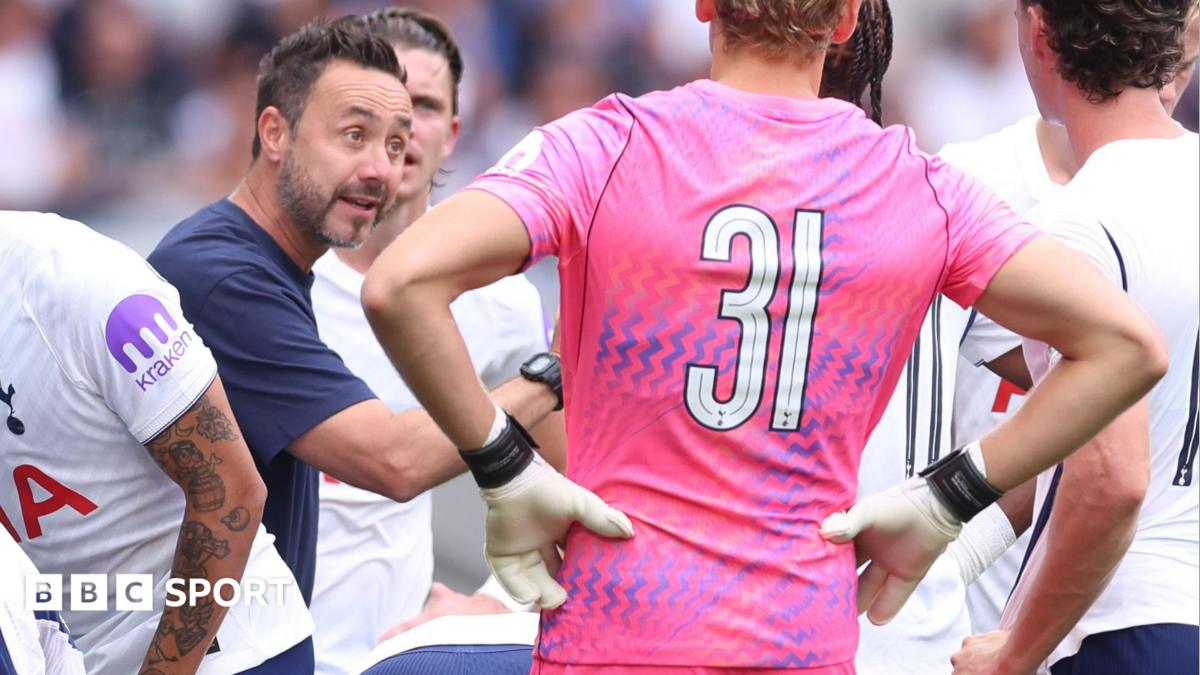
Roberto de Zerbi’s initial mandate upon arriving at Tottenham Hotspur in March was to secure Premier League survival, a target achieved before the summer transfer window opened. With that immediate pressure alleviated, the manager has used the break to sign six new players, aiming to construct a squad capable of competing at a higher level. This summer’s recruitment appears to be a direct response to tactical challenges identified during the pre-season, suggesting a deliberate alignment between the coach’s evolving philosophy and the specific attributes of the new arrivals.
The core of De Zerbi’s approach has historically relied on centre-backs standing tall to invite pressure, allowing for quick transitions through the centre of the pitch. However, opponents have increasingly adopted narrow defensive shapes to block this central pathway. Analysis of pre-season matches against Hoffenheim and Getafe indicates that Spurs have adapted by using wide full-backs as decoys. By positioning these players high and wide, Spurs pull opposition wide midfielders out of position, opening central lanes for direct passes to forwards who drop deep.
In a 3-0 win against Hoffenheim, the opposition set up in a narrow 4-4-2 mid-block, effectively crowding the middle of the pitch. Spurs responded with a 4-2-4 shape on the ball, shifting play from side to side to exploit the space created by the full-backs’ positioning. When the ball was moved to one flank, the opposition’s defensive shape shifted slowly, leaving gaps for Spurs’ defenders to find attackers in space. This pattern was replicated against Getafe, who deployed a 5-4-1 formation, further confirming the consistency of this tactical adjustment.
A key element of this new structure involves midfielders such as Lucas Bergvall and Sandro Tonali dropping into deeper, wider positions. Against Getafe, Bergvall temporarily formed a line of three alongside the central defenders, creating a dilemma for the opposition: follow him and leave the centre exposed, or hold position and allow him unopposed possession. Tonali’s physicality was also utilised in this role, with his ability to carry the ball from a deep position helping to create Spurs’ opening goal against Hoffenheim.
The summer signings reflect these specific tactical requirements. The new centre-backs are selected for their technical ability to play progressive passes under pressure, while midfielders like Mateus Fernandes and Bergvall are suited to operating in tight spaces. Wingers such as Savinho, and links to Cody Gakpo, provide the one-against-one pace needed to exploit the space created by the system. Additionally, Richarlison and Omar Marmoush offer the physicality and finishing ability required to convert the crosses generated by these patterns.
For a club previously criticised for lacking tactical consistency, the current setup suggests a coherent strategy for the upcoming season. While opponents will inevitably seek solutions to these methods, the pre-season evidence indicates that De Zerbi has tailored his squad to address the specific defensive trends in the modern Premier League.