Cygnus XL delivers fresh produce and critical research hardware to the International Space Station
The latest resupply mission includes equipment for blood stem cell research, gut health protection, and an advanced exercise system from the European Space Agency.
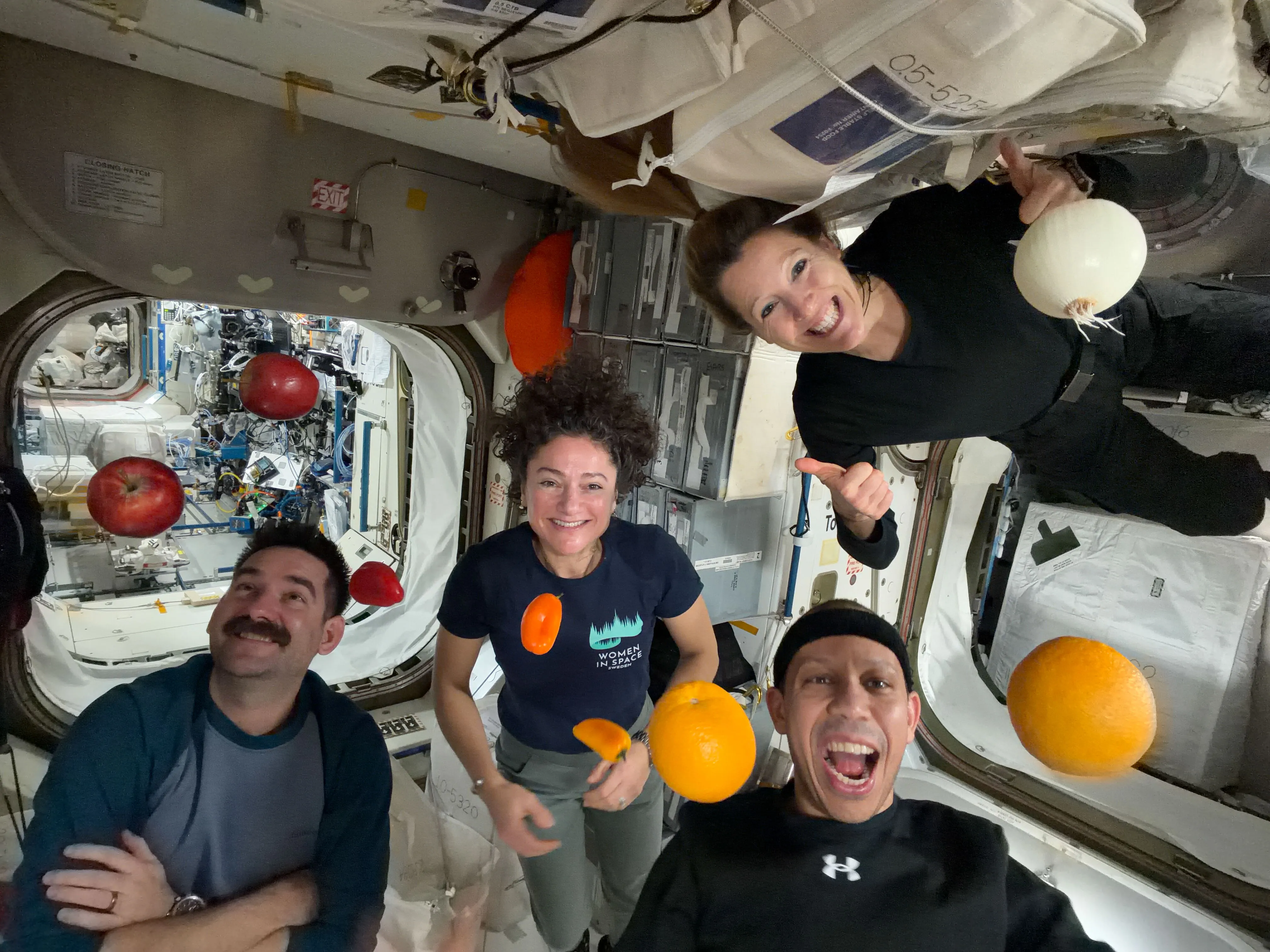
Northrop Grumman’s Cygnus XL cargo spacecraft has completed a resupply mission to the International Space Station, delivering a shipment of fresh food and over 2,300 pounds of new research hardware. The delivery supports the station’s ongoing scientific programme and provides essential consumables for the crew currently living and working in orbit.
The fresh food cargo includes oranges, apples, onions, and peppers. Imagery captured on April 19, 2026, shows NASA astronauts Jack Hathaway, Jessica Meir, and Chris Williams, alongside European Space Agency astronaut Sophie Adenot, interacting with the newly arrived produce in microgravity.
Beyond consumables, the mission transported significant scientific equipment designed to advance medical research and astronaut health. The hardware includes tools to study blood stem cells for potential treatments of cancers and blood disorders, as well as instruments to investigate methods for protecting astronaut gut health during long-duration spaceflight.
Additional cargo delivered by the Cygnus XL includes an advanced exercise system provided by the European Space Agency, new eye-imaging hardware, and oxygen and nitrogen tanks required for recharging spacesuits. These items are critical for maintaining crew fitness and supporting extravehicular activities.
The arrival of the Cygnus XL underscores the continued reliance on regular cargo missions to sustain operations on the International Space Station. The research hardware and supplies delivered in this mission will be utilised by the crew to conduct experiments and maintain life-support systems in the unique environment of low Earth orbit.