Curiosity Rover Successfully Recovers Drill Sample After Previous Entanglement Incident
Deputy Project Scientist Abigail Fraeman reports that the rover’s drill retracted correctly from the Campo Marte formation, delivering rock powder to CheMin and SAM for analysis despite a shallower-than-usual penetration depth.
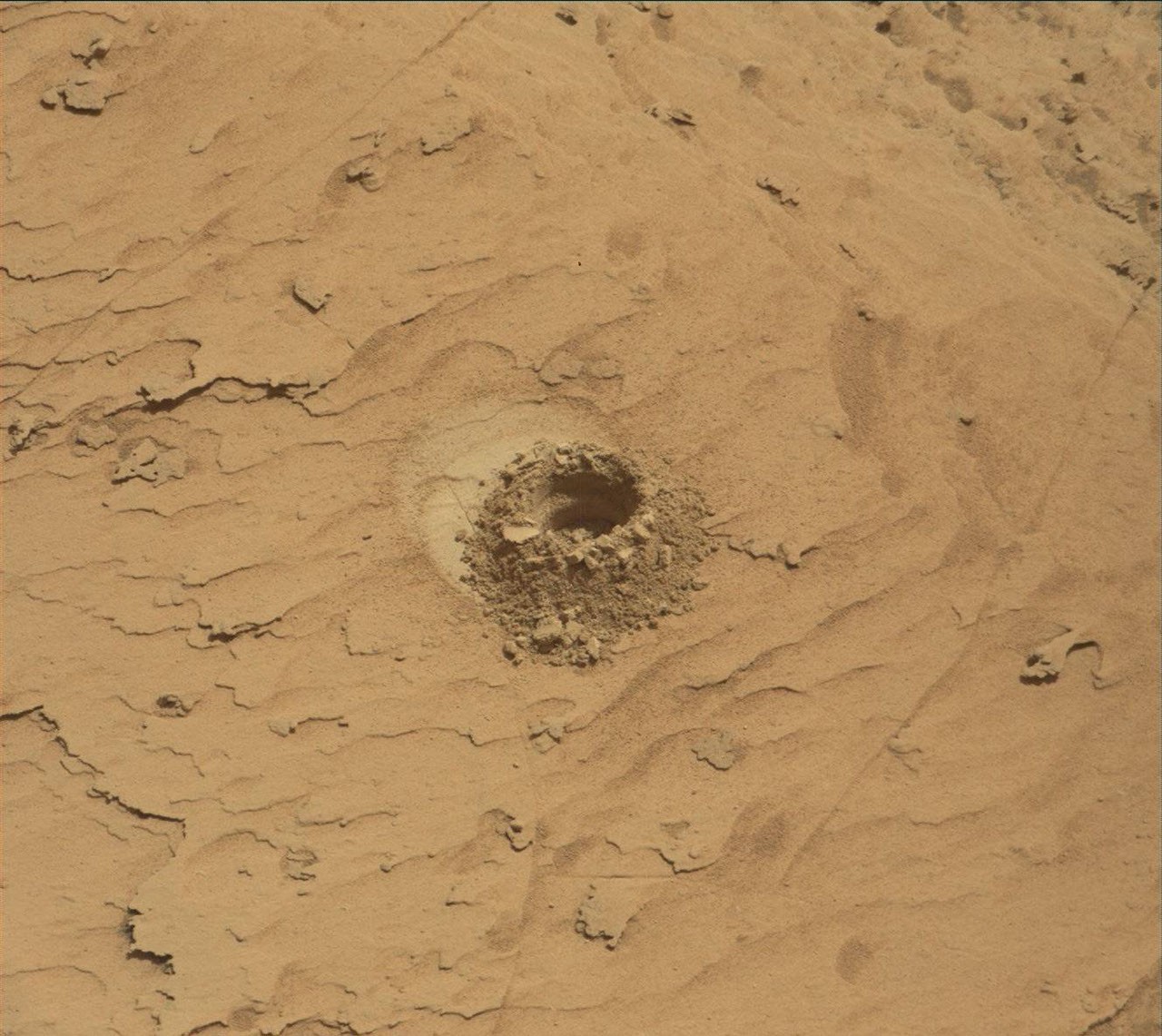
The Mars Science Laboratory team, led by Deputy Project Scientist Abigail Fraeman at the Jet Propulsion Laboratory, California Institute of Technology, has confirmed that the Curiosity rover successfully drilled into the "Campo Marte" rock formation and collected a sample. The results were downlinked to Earth on the Friday corresponding to the Earth planning date of May 22, 2026, following operations conducted during Sols 4900 to 4907.
This successful operation follows a previous incident involving the "Atacama" block, where the rover’s drill became entangled with the rock, causing the rover to pick up the entire block along with the drill. After freeing the rover from this entanglement, the team assessed telemetry and imaging data to understand the cause and mitigate future risks. Campo Marte was subsequently selected as the next target due to its suitable geologic features and its significantly larger size compared to Atacama.
Telemetry and images confirmed that the drill retracted correctly, delivering rock powder to the internal instruments CheMin and SAM. To verify the delivery, the team conducted post-drilling tests by dropping portions of the drilled rock powder onto the rover chassis. These tests allowed the team to observe the powder between sample deliveries, ensuring that the laboratory instruments inside the chassis would receive adequate samples for analysis.
The drill depth at Campo Marte was recorded at 28 millimetres, approximately 1.1 inches, which is shallower than the usual 35 millimetres. This reduced depth may affect the quantity of sample available for analysis. Initial results from CheMin were used to tailor subsequent analysis with SAM, with the team planning to analyze four portions using that instrument.
The team intends to repeat the sample drop-off test in the upcoming weekend’s plan to determine how many portions remain. While the team believes they will be nearly out of sample after the planned SAM analyses, the exact quantity remains uncertain. The operation highlights the capability of CheMin and SAM to reveal detailed information about Martian rock composition and ancient climate conditions using samples as small as tens of milligrams.