Curiosity Rover Successfully Detaches Stuck Rock 'Atacama' After Complex Maneuvre
The event, captured by the rover's hazard and navigation cameras, marks the first time a rock has remained attached to a fixed drill sleeve after extraction before being successfully dislodged.
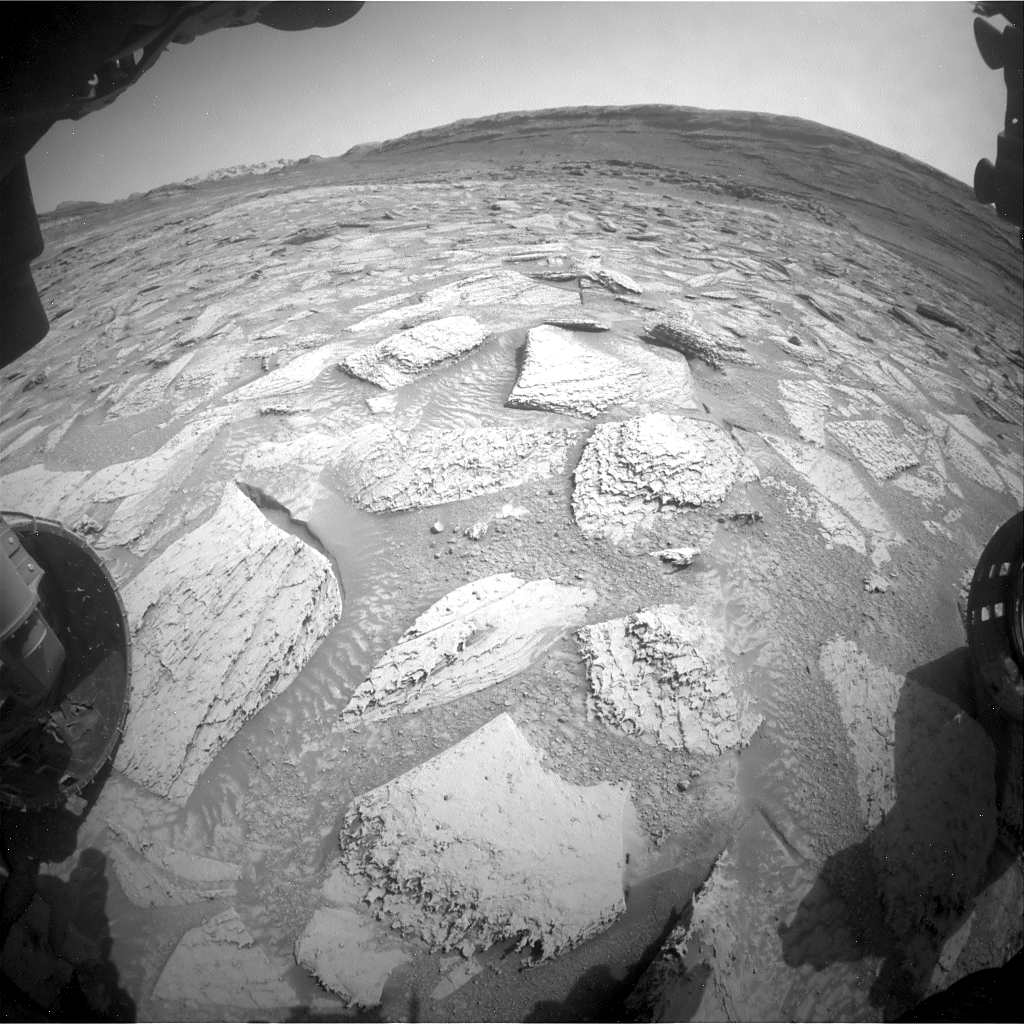
NASA's Curiosity Mars rover has successfully freed its drill from a rock nicknamed "Atacama" that had become firmly lodged in the drill sleeve. The operation, which took place on May 1, 2026, involved a precise sequence of movements executed by the rover's robotic arm to fracture and release the specimen.
The rock, estimated to be 1.5 feet in diameter at its base and weighing roughly 28.6 pounds, was first drilled on April 25. When the rover retracted its arm, the entire rock lifted out of the ground, suspended by the fixed sleeve that surrounds the rotating drill bit. This geological occurrence is notable as the first instance where a rock remained attached to the drill sleeve after extraction, a situation that had not been seen in previous drilling operations.
Initial attempts to resolve the impasse involved vibrating the drill to shake the rock loose, but these efforts yielded no change. The team then reoriented the robotic arm and attempted to vibrate the drill again, though imagery showed sand falling from Atacama while the rock itself remained attached to the rover.
On May 1, the mission team adopted a more aggressive approach. They tilted the drill further, combined rotating and vibrating actions, and spun the drill bit. This unique combination of movements caused the rock to fracture on the very first attempt, allowing it to fall away from the drill sleeve and onto the Martian surface.
The entire sequence was recorded by the rover's hazard cameras, located on the front of the chassis, and navigation cameras mounted on the mast. These visual records provide a clear account of the rock lifting out of the ground and detaching upon impact.
Curiosity was built by NASA's Jet Propulsion Laboratory, which is managed by Caltech in Pasadena, California. The laboratory leads the mission on behalf of NASA's Science Mission Directorate in Washington as part of the Mars Exploration Program portfolio.