Curiosity rover stitches largest-ever panorama of Martian boxwork formations
Between November and December 2025, the rover captured over a thousand images to create a 360-degree view of low ridges that resemble giant spiderwebs from space.
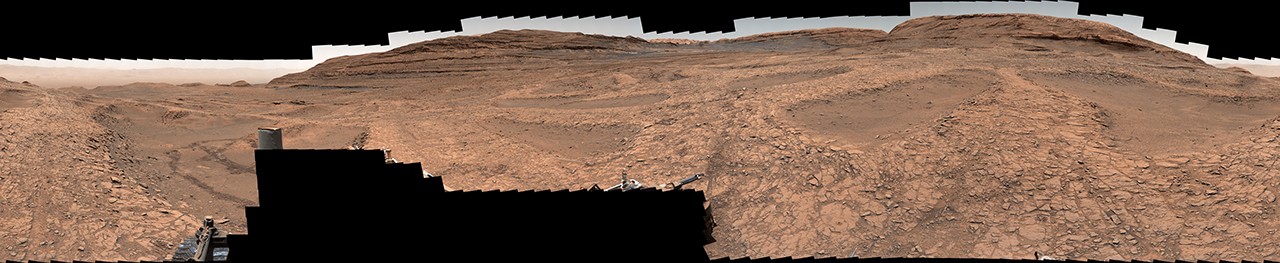
NASA's Curiosity Mars rover has completed a comprehensive survey of a region on the Red Planet known as 'Nevado Sajama'. Between November 9 and December 7, 2025, the vehicle captured a 360-degree panorama comprising 1,031 individual images. This visual record, taken by the Mastcam right camera, offers the clearest ground-level perspective yet of the area's distinctive boxwork formations.
The resulting image, which totals 1.5 billion pixels, stands as one of the largest panoramas ever assembled by the rover, though it falls slightly short of the mission record of 1.8 billion pixels. The high-resolution data was stitched together after being transmitted to Earth, providing scientists with a detailed map of the terrain. This specific site was selected because it features a ridgetop where the rover successfully collected a rock sample using its robotic arm drill.
Since May 2025, Curiosity has been investigating this region, which is crisscrossed by miles of geologic features known as boxwork. While these formations appear as giant spiderwebs when viewed from orbit, the new imagery clarifies their physical reality on the ground. The panorama reveals them as low ridges standing roughly three to six feet tall, spanning about 30 feet across with sandy hollows situated between the structures.
The images were captured using the Mastcam's right camera, which is equipped with a 100-millimetre focal length lens designed for detailed surface mapping. A separate, lower-resolution version of the panorama was also generated using the left camera's 34-millimetre lens. This secondary image includes the rover's deck, a detail typically omitted from high-resolution views to reduce the volume of data required for transmission back to Earth.
Curiosity was constructed by NASA's Jet Propulsion Laboratory, which is managed by the California Institute of Technology in Pasadena. The laboratory leads the mission on behalf of NASA's Science Mission Directorate in Washington as part of the agency's Mars Exploration Program. The Mastcam camera system itself was built and is operated by Malin Space Science Systems in San Diego.
This latest achievement continues the rover's long-term exploration of the Martian surface, contributing valuable context to the geological history of the planet. By combining precise imaging with sample collection, the mission maintains its focus on understanding the environment that shaped the Red Planet over billions of years.