Curiosity rover resumes science operations after freeing stuck drill on Mars
Following a carefully planned sequence of movements, the Mars Science Laboratory rover has returned to analysing exposed rock and sand at multiple sites
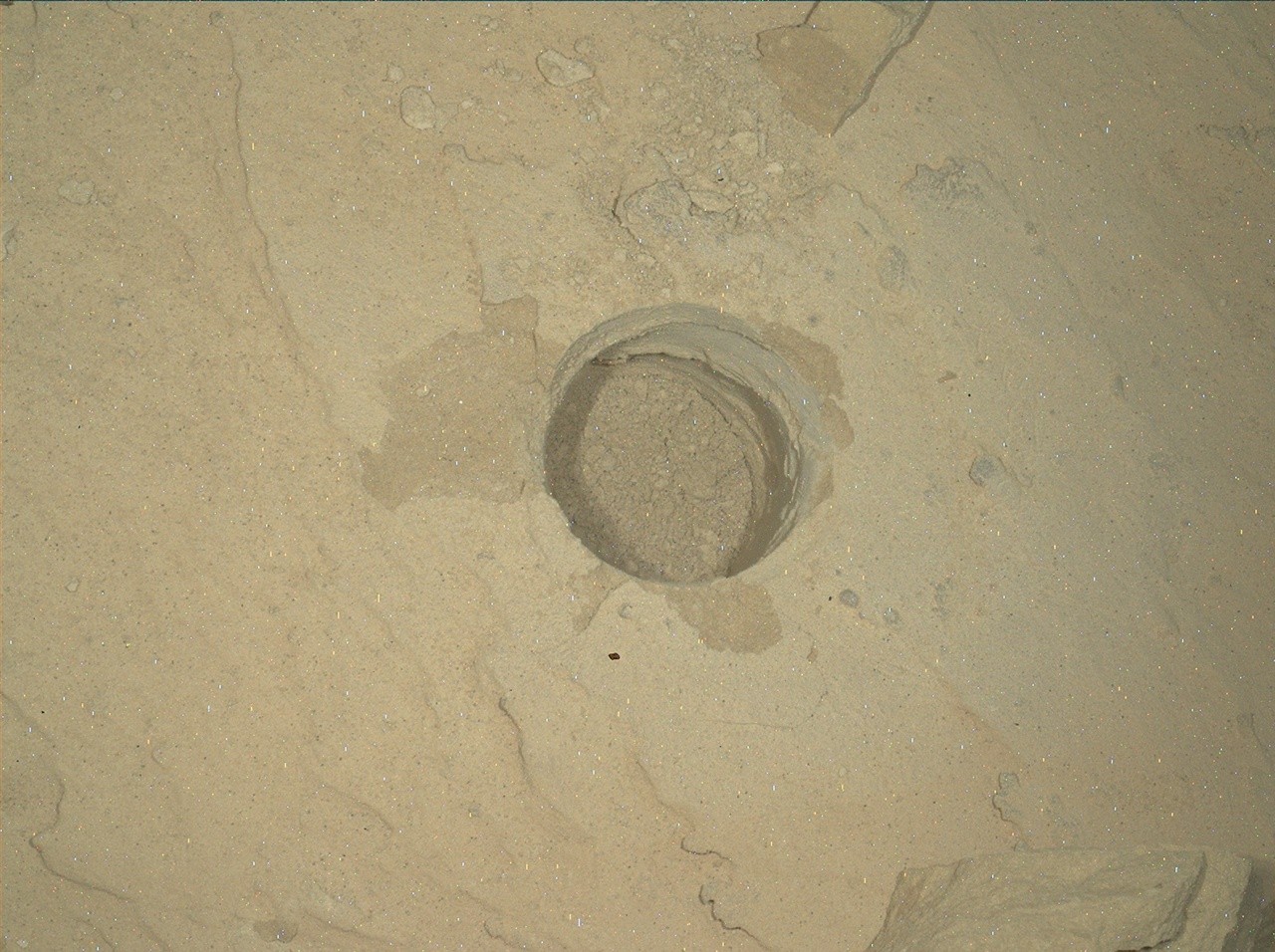
NASA's Curiosity rover has successfully resumed science operations on Mars after freeing its drill from the 'Atacama' target. The extraction required a carefully planned sequence of robotic arm movements to dislodge the tool, an operation that the science team has now confirmed left both the drill and the arm in good health.
With the hardware verified as functional, the rover immediately turned its attention to analysing the surfaces revealed by the extraction. The team conducted imaging and chemical analysis of the exposed rock and sand at several locations, including 'Tamarugal', 'Colchane', and 'Yerba Loca'. Specific instruments were deployed to examine clean fracture faces and light-toned bedrock, while others focused on the sand previously hidden beneath the rock slab.
Beyond the immediate site of the extraction, the rover utilised its suite of cameras and spectrometers to study the wider geological context. Mastcam and ChemCam captured images of large buttes and polygonal fractures at targets such as 'Cerro Elefantes' and 'Azul Pampa', while also monitoring wind-induced changes in the sand at 'Playa los Metales'. A passive spectroscopy observation was also planned for light-toned features on the 'Paniri' butte.
The mission team further investigated geological contacts to understand changes in formation conditions or potential breaks in time. Curiosity drove uphill to study the interface between two different rock types at 'Toro' and 'Inca de Oro', using MAHLI, APXS, and ChemCam to analyse the lighter-toned, layered rock against the darker, flaky material.
Environmental monitoring continued throughout the week via the REMS, RAD, and DAN instruments, which measured conditions above and below the rover. Simultaneously, Navcam and Mastcam teamed up to observe the atmosphere for clouds, dust devils, and dust, ensuring a comprehensive picture of the Martian environment alongside the geological findings.
Having confirmed the integrity of its systems, Curiosity has now moved toward a new workspace. The rover is positioning itself to attempt drilling a larger rock block, demonstrating the perseverance that has characterised its long tenure on the Red Planet. This next phase of exploration aims to uncover further details about Mars's history as the mission continues undaunted.