Curiosity Rover Marks 14 Years on Mars with Geological Focus
The rover celebrated its anniversary on Sol 4976 with instruments actively measuring chemical compositions and documenting atmospheric conditions.
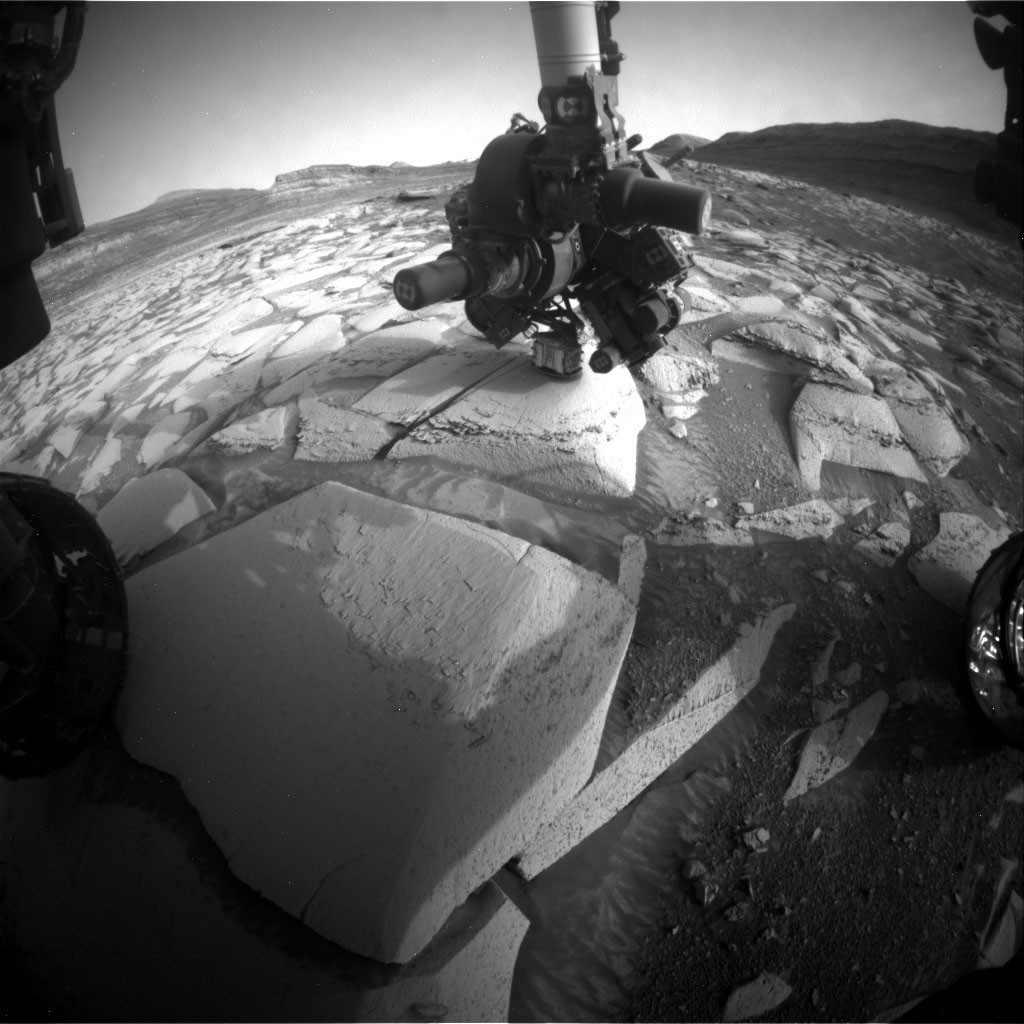
NASA’s Curiosity rover has marked the 14th anniversary of its landing on Mars, transitioning into its 15th operational year on the Red Planet. The milestone occurred on Sol 4976 at 19:47 Local Mean Solar Time, precisely when the rover’s robotic arm was deployed at the target "Tunas Khasa" performing an Alpha Particle X-ray Spectrometer (APXS) measurement.
Operating from the Mount Sharp region, the rover has been conducting detailed geological analyses to understand the planet's past environmental conditions. During the anniversary week, the team utilised instruments including the Mars Hand Lens Imager (MAHLI) and ChemCam to investigate specific rock targets. ChemCam performed laser analyses on "Lago Rupanco" and "Chulipa Punta," while also capturing high-resolution images using its Remote Micro Imager.
The mission team is currently focusing on a site characterised by intersecting rock layers and cross-bedding features. After navigating steep terrain that recorded a 24-degree tilt, the rover executed a 46-foot (14-meter) drive to a location where cross-bedded rocks are truncated by other layers. This area is described as exceptionally interesting for piecing together the geological history of the region, which involved significant wind activity and water presence billions of years ago.
Planned activities for the coming days include staying at the current location through Monday to utilise two planning cycles. The team intends to analyse targets "Salar de Gorbea" and "Uriondo" with MAHLI and APXS. A large MAHLI mosaic is also scheduled for the target "Tres Morros" to document how different rock layers meet in detail.
Concurrent with the geological work, the rover continues to monitor atmospheric conditions and radiation levels. Instruments such as Mastcam, MAHLI, and the Radiation Assessment Detector (RAD) are actively collecting data. RAD, which began monitoring during the cruise phase to Mars, is conducting ongoing radiation measurements alongside dust-devil surveys, atmospheric opacity checks, and wind monitoring.