Curiosity rover frees drill bit after six-day struggle with detached rock block on Mars
Following a complex recovery effort at the Atacama target, the rover successfully extracted the tool but will now seek a more firmly rooted rock to recover lost drill tailings.
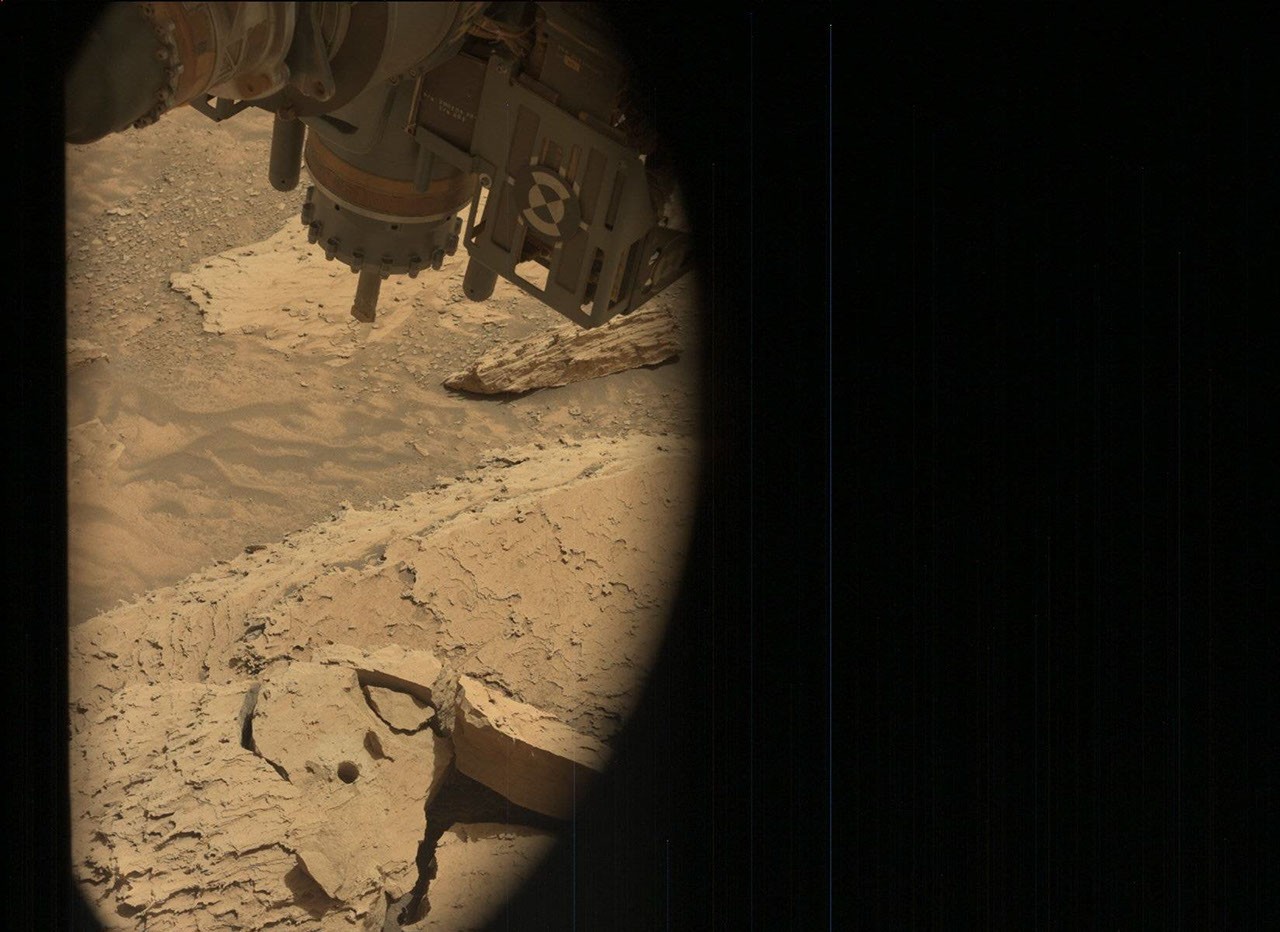
The Curiosity rover team has successfully freed its drill bit from a detached rock block that had been pulled up during an initial drilling attempt at the Atacama target on Mars. The recovery operation, which required significant effort from the mission planners, concluded on Sol 4885 after six days of attempting to separate the loose fragment from the drilling mechanism.
The incident occurred when the rover, which is not currently engaged in sample collection and caching like its twin Perseverance, drilled into a block that was not firmly rooted in the ground. As the robotic arm raised to extract the drill, the detached rock, nicknamed "Atacama," came along with it. The team immediately shifted focus from in-situ science to developing a plan to extract the bit without damaging the instrument.
Initial efforts to resolve the situation involved changing the orientation of the drill bit and the attached block, as well as carrying out percussion to try and vibrate the rock off. Despite these attempts, the rock remained stuck for several sols. Consequently, the rover suspended all in-situ science activities during this period to prioritise the mechanical recovery of the drill.
While the drill was immobilised, the spacecraft maintained its scientific output through remote sensing activities. The team utilised this time to conduct ChemCam LIBS measurements on various targets, including "Pichiacani," "Cuturipa," and "Chaitén," alongside Mastcam imaging of the site and surrounding features. These observations provided valuable data despite the inability to perform direct sampling at the Atacama location.
The successful extraction of the drill bit on Sol 4885 marked the end of the immediate crisis, though the operation resulted in the loss of drill tailings from the detached block. The team now plans to conclude the current drill campaign by seeking a more firmly rooted target to recover the lost material for analysis, ensuring the mission can continue to gather the geological data it requires.
The Atacama target on Mars is named after Chile's Atacama Desert, the driest mid-latitude desert on Earth, known for its harsh environmental conditions. While the detachment of the rock presented a challenge to the Curiosity rover, the mission team's disciplined approach ensured the instrument remained operational and ready for future drilling operations on the Red Planet.