Curiosity Rover Detaches Stuck Mars Rock 'Atacama' After Engineering Maneuvers
The rock, nicknamed Atacama, fragmented upon release after becoming lodged in the drill mechanism in late April.
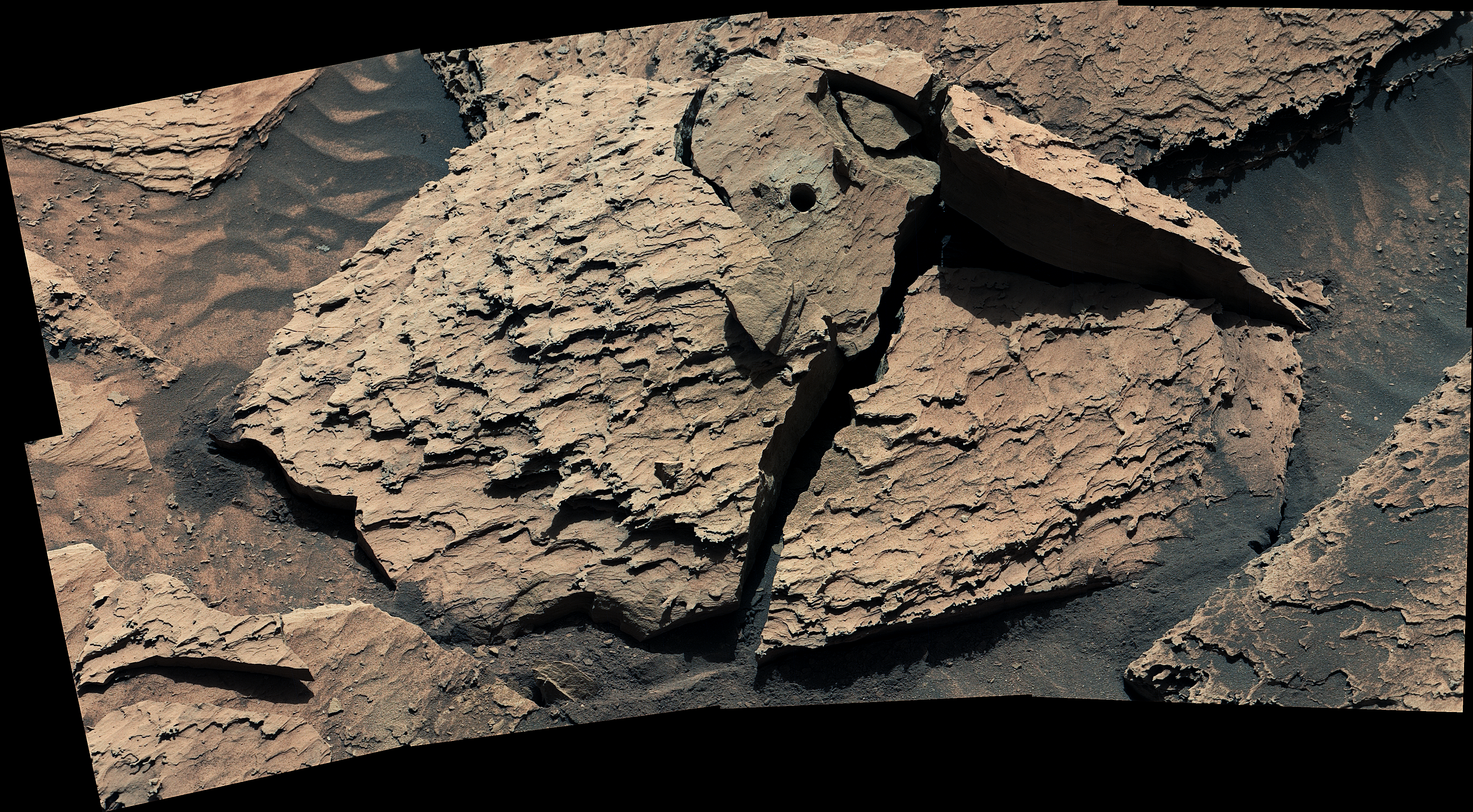
NASA’s Curiosity rover has successfully detached a rock sample from its drill mechanism, concluding a multi-day engineering effort to free the specimen. The rock, which has been nicknamed “Atacama,” became lodged in the drill after the rover extracted a sample on 25 April 2026. Mission engineers utilised a series of repositioning and vibration techniques over several days to attempt the release.
The detachment was successfully achieved on 1 May 2026. However, the release was not clean; the rock broke into pieces upon separation from the drill. The circular hole produced by Curiosity’s drilling apparatus remains visible in the fragmented specimen.
Close-up images of the detached rock fragments were captured by the rover’s Mast Camera on 6 May 2026. The images, published by NASA on 15 May 2026, document the physical state of the sample following the extraction attempt.
The rock Atacama is estimated to be 1.5 feet in diameter at its base and 6 inches thick. In terms of mass, the specimen would weigh approximately 28.6 pounds on Earth, though it weighs roughly a third of that amount under Martian gravity.
Curiosity is operated by NASA’s Jet Propulsion Laboratory, which is managed for NASA by Caltech, alongside the Mars Surface Science System. The event highlights the operational complexities inherent in planetary sampling procedures, where geological resistance can lead to mechanical challenges during sample retrieval.